The Chosen and the Beautiful By Nghi Vo (Review By Tara N. ’26)

The Chosen and the BeautifulThe Chosen and the Beautiful by Nghi Vo
My rating: 4 of 5 stars

The Chosen and the Beautiful is a retelling of The Great Gatsby from Jordan’s perspective with some fantasy elements. I loved this book! It’s explicitly in conversation with the themes and motifs of the original, rather than being its own story or trying to be quirky and twist things up— it takes Fitzgerald’s throwaway references to the dynamics of race, class and sexuality and makes those undertones explicit. The prose is gorgeous and well-paced. I often found myself rereading sentences and paragraphs just to bask in the beauty of Vo’s language. I finished this in two days, even though I knew how the story ended, or perhaps because I did. It was very refreshing to have a light read after several months in the APUSH textbook trenches.

The magic system is based off of cultural superstition/myths—I would’ve liked to see Black and Native American tradition dealt with beyond a few offhand references, especially considering how Vo relates them to Gatsby, but I also get that the author may not have felt that it was her story to tell. Regardless, the omission is a bit awkward in a story meant to fill these sorts of omissions in the original. Fitzgerald already does an excellent job of writing Daisy, but seeing her flaws through the lens of a close friend makes the banality of her cruelty feel more real. I really DO know people like that—people who can be carelessly kind and good without changing their fundamental nature, who are self-centered without being genuinely evil.

The Chosen and the Beautiful doesn’t really stand on its own; to me, that’s more of a feature than a bug, but I understand the complaint. Vo is adapting and staying faithful to a plot centered around Jay Gatsby in a book that is not about Jay Gatsby—Jordan doesn’t always meaningfully engage with the central events of the book, which can get a little awkward. Vo does a good job of filling in the gaps with Jordan’s own introspection and Jordan’s own character arc, but the story of Jordan Baker and the story of Jay Gatsby sometimes tug against each other. My biggest qualm is the ending—it doesn’t really measure up to the sense of catharsis and full-circle completion of the original. It’s not satisfying in the same way. And the magic system has some utterly insane implications that aren’t really dealt with, but perhaps the forthcoming companion/sequel will fill those gaps.

I heavily recommend reading this book during or after you read Gatsby in English 3. It will make the original feel fresh and interesting if you’re getting bored of the same characters and themes, and you’ll enjoy the essay-writing and discussion process more in class, which will probably result in (gasp!) a better English grade. 3.5 stars, rounded up.

View all my reviews

Hell Bent By Leigh Bardugo (Review By Tara N. ’26)

Hell Bent (Alex Stern, #2)Hell Bent by Leigh Bardugo
My rating: 2 of 5 stars

Spoiler warning: no major spoilers, but a lot of minor ones. This also won’t make any sense unless you’ve actually read the book.

I reread this book two years after it dropped in hopes that I had hallucinated it having been bad (I only remembered one plot point. I’ll give you a hint: it was glowing.) I was sorely disappointed.

Many elements of the book were a let-down, and it’ll be difficult for me to articulate why. I think the most pressing issue is that Hell Bent tries to pack too much plot into too short of a book and leaves character development by the wayside.

The central mystery of Ninth House is not who killed Tara Hutchins; it’s who Alex Stern is, and by extension who Darlington is, who Hellie and Len are, where did they go, why do we care. These are the questions the reader is trying to answer as they work their way through the book.

But Hell Bent just focuses on its moving parts—Eitan, Anselm, Reiter, Michelle, Walsh-Whitley, Darlington himself. In a Goodreads Q&A, Leigh Bardugo mentioned that the Alex Stern series was originally going to be, like, 12 books, then got shortened to 5, then 3, because they took so long to research… and unfortunately, that’s very apparent. Hell Bent felt like it was the premise of several different books frankensteined together.

Several books’ worth of character development gets awkwardly skipped over. Mercy, Tripp and Turner get awkwardly shoehorned into the main cast, with their character arcs hastily jammed in in the form of supercuts and flashbacks. I say this not because I think they shouldn’t be, but because I think they should’ve been given more screentime and development—each of them deserved their own book in the spotlight.

Tripp was particularly jarring; in the original book, he’s a hapless symbol of white privilege and the infinite second chances given to wealthy young boys. There’s hints of where Bardugo wants to go with his character—the minor reveal that he was instinctively aware of what Blake Keely was came all the way back in book 1—but the transition from set dressing to guy we are supposed to care about just isn’t actually executed. Mercy’s being brought into the fold is also clumsily done. She’s one of my favorite characters, but I think the revelations she has in Hell Bent can’t be contained within the span of a few conversations.

People complained about the pacing of Ninth House, but Ninth House was good because you watched things unravel slowly; Hell Bent sacrifices all of that and thus has the opposite problem (although it wasn’t a problem in the first place). Too much plot is crammed in. Nobody stops to take a breather and emotionally process what’s going on. Ninth House was self-aware in a way that Hell Bent is not.

And I really, truly hate to say this—because this series is not about Darlington, he is not the hero of this story, and that is part of the point. I’ve seen people act like the white man was the best part of the series and it drives me utterly insane—but he really should’ve had more screentime. I would’ve wanted to see his POV earlier. Hell Bent is, ostensibly, about rescuing him. The fun of Ninth House was piecing the story together from the split POVs; perhaps Hell Bent could’ve pulled a similar trick with Alex’s thoughts from above, and Darlington’s thoughts from below. I support him going off the rails, but I want to see that process occurring bit by bit, not just a jump-cut to him suddenly being naked and feral with claws and horns. Darlington’s entire premise is that he’s a gentleman—if he’s not acting the part, we need more than a few sentences on why.

The story read like one of my English essays: a haphazardly jammed-together collection of plot notes, impossible to treat with their proper gravitas. Any legitimately compelling moment fell flat, because there was no real buildup, just payoff, payoff, payoff, except for the payoff didn’t feel like payoff because there was no buildup to make it a payoff, and we didn’t even get the biggest payoff of the series that everybody was hoping for (IYKYK). Alas.

I don’t care if book 3 takes another four years (I actually do, but that’s beside the point)—just please let it make up for this.

View all my reviews
FanART contest 2025! (written by tara n. ’26)

first place

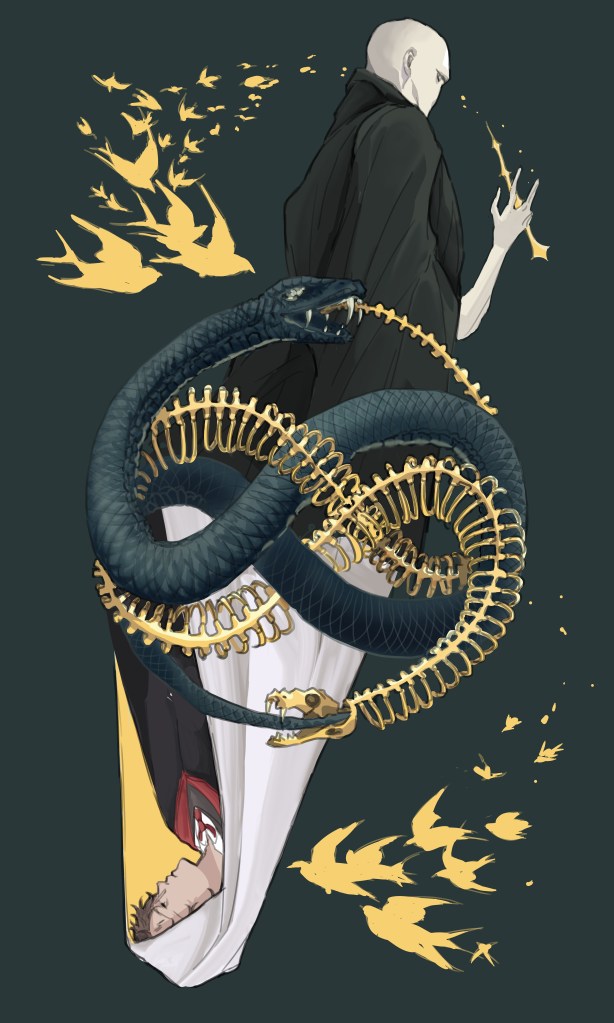
Little Birds by Anonymous (Fandom: Harry Potter)

Much like the Fanfiction Contest, we were thoroughly surprised by both the quantity and quality of submissions this year. At risk of sounding like a college rejection letter, the decision process was, indeed, very difficult—but ultimately, the thing that distinguished this piece above all others was that not only did it accurately and affectionately depict its source material, it invited deeper thought about it. The balanced composition is both visually appealing and meaningful to the source material, and the use of symbolism—the ouroboros, the golden birds, the living and dead snakes, and the various infinity symbols subtly woven into the work—universally impressed judges. It’s clear that the artist put a lot of love into this piece (and its source material). 

Second place

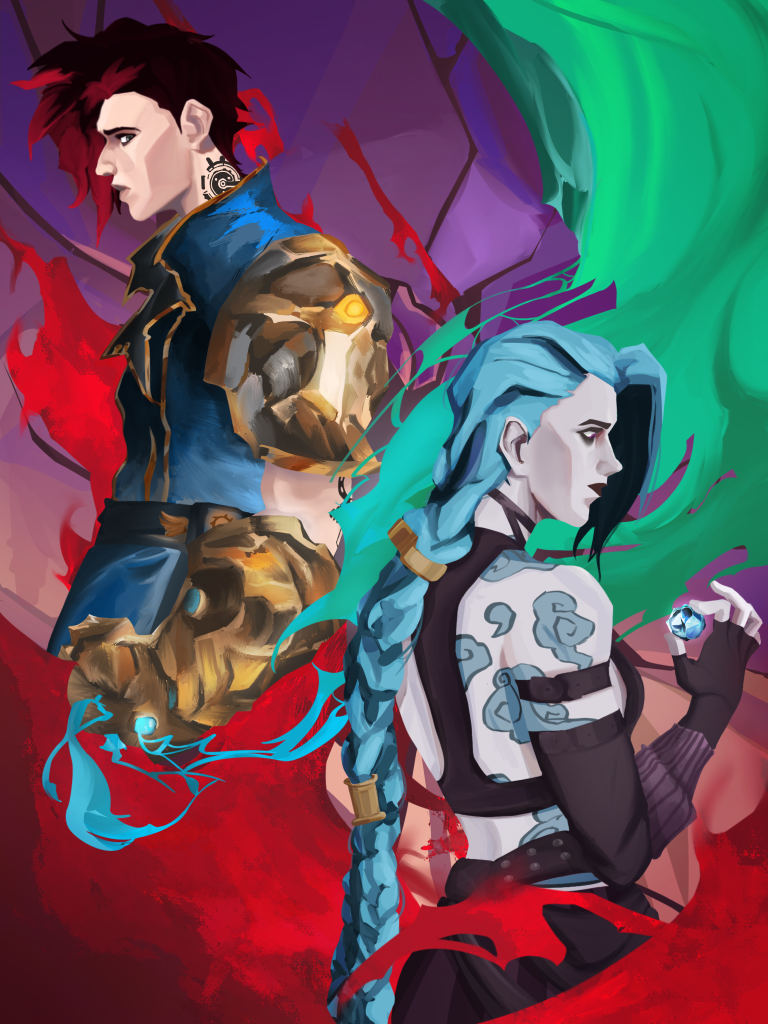
Fracture Point by Abigail L. ‘28 (Fandom: Arcane)

This piece was immediately singled out during judging as a standout, and everyone agreed near-instantly that this work deserved an award. The composition of the piece is dynamic and fluid, cleverly incorporating the details of the characters’ designs. The painting style replicates the iconic look of the original show, but is still distinctive as the artist’s own style—we especially loved the rendering of the metal shoulder plate and glove, and the blue fire. The artist successfully and subtly captured the complex emotions of the two characters in their facial expressions, their body language, and even the direction of their gaze.

Third place

Untitled by Rumi (Fandom: Batman)

This was the first piece we saw upon opening up our submissions, and it left a lasting impression. The artist’s mastery of form, lighting and color is apparent—we especially loved the sharp, Leyendecker-esque rendering of the masked Batman portrait, and the detailed, evocative lighting of the top-left portrait. One anonymous judge praised the piece’s “excellent knowledge of anatomy.” The deep, moody color palette accurately reflects the tone of the source material. The artist’s deep love for Batman is apparent. We could not, in good conscience, not give this piece an award.

Honorable mentions

In addition to our top three pieces, we also wanted to shout-out several honorable mentions that impressed our judges:

“One for sorrow two for joy” by bread herring (Fandom: Passing)

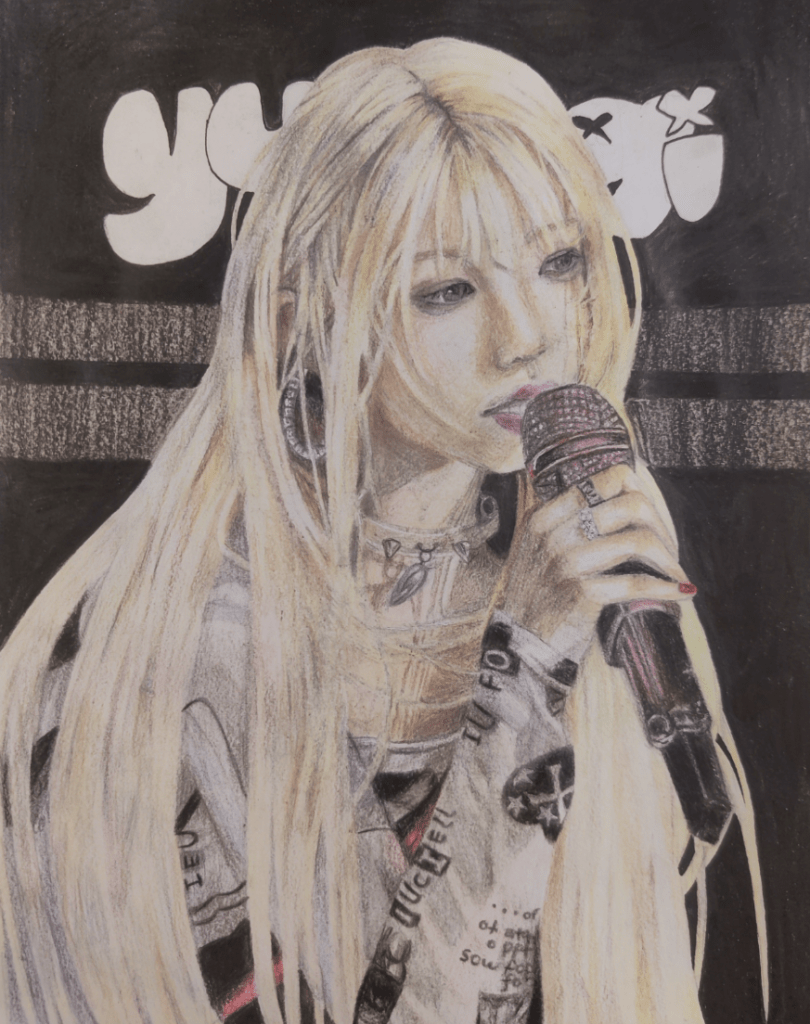
“Yuqi” by Cabbage (Fandom: G-idle)

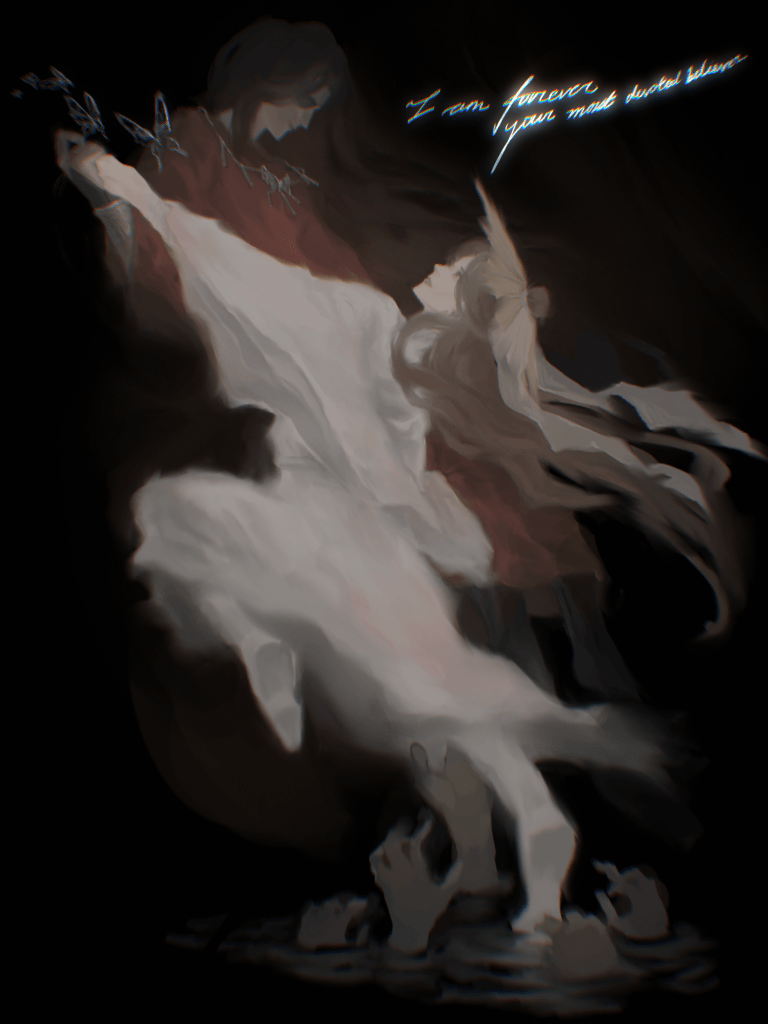
“I am forever your most devoted believer” by zaoshanghao (Fandom: Heaven Official’s Blessing (Tian Guan Ci Fu)

We had such amazing submissions this year, it wouldn’t be fair to withhold all of them from you… Please enjoy them below:

Dream of the Red Chamber By Cao Xueqin (Review By Jason S. ’25)

Dream of the Red ChamberDream of the Red Chamber by Cao Xueqin
My rating: 4 of 5 stars

“The Dream of the Red Chamber is a peculiar novel to write a review for. I’ve been reading it on-and-off over the course of the last three months, and I’ve had to reread my favorite sections to really collect my thoughts. In reflecting, I’ve come to the conclusion that the novel is pretty worthwhile.

For the uninitiated, The Dream of the Red Chamber is an 18th-century Qing Chinese novel, among the Four Great Classical Novels of Chinese literature. In the frame narrative, a humble primordial stone begs a Buddhist monk and a Taoist priest to help him experience the pleasures of the mortal “red dust.” The stone is thus incarnated as the pampered heir Jia Baoyu, who cultivates a doomed love for his cousin Lin Daiyu in the pleasurable Daguanyuan garden and navigates the declining fortunes of four aristocratic families. Due to my limited knowledge of Chinese, I elected to read Chi-chen Wang’s translation using the Wade-Giles romanization (I will refer to the characters in pinyin). Although Wang ultimately abridged the 120-chapter novel into 40 chapters and removed much of the poetry and nuance introduced by Cao, I found his adaptation to be suitable for a first read-through where those details would have been inevitably glossed over anyways.

The story reads in an almost episodic fashion, with various courtly vignettes informing an overall metanarrative of societal decline. Due to this structure, most of the characters in this novel are static, and as the novel progressed, quickly made themselves unlikeable to me, either through their actions or ignorance. Baoyu, our protagonist, was a prime example. His petulance, passivity, lust, and hedonism deeply frustrated me as the troubles of his family became clearer. In fact, at times he literally sits and stares catatonic as events unfold around him. Don’t mistake this for a negative, though — his inability to take responsibility enhanced for me the message that all pleasure regresses into dust, and a certain turning point in the middle of the book made me feel really sorry for him. The only characters I could truly root for were the truly innocent who underwent horrible psychological and physical abuse at the hands of others, usually female servants victimized by either Baoyu’s ignorance or the Macchiavellian antiheroine Wang Xifeng.

My main criticism is with the pacing. Perhaps it is a consequence of Wang’s effort to compress 120 chapters into 40, but I found myself incredibly confused as to who was who. It took me a solid few minutes with a family tree online to truly understand the complex relationships between the four families. I’d sometimes start reading a chapter and give up halfway through because I didn’t know who any of the characters were, which really hurt the episodic nature of the text and made it harder to connect with the characters. It wasn’t a huge issue, though. In my opinion, all that means is that this text will take extra effort to digest.

I want to end this review by talking about the ending (in a spoiler-free way). The thing is, it completely contradicts everything that’s been established about the characters, and subverts the overarching narrative Cao was building up. Yet it contained some of the most beautiful literature I had the pleasure of reading in the book. Puzzled, I sleuthed online and learned quickly that the last 40 chapters of the original 120 had been written by an unknown author with completely different intentions from Cao. In other words, for the last third of the book, I too was a captive of the “red dust,” too blinded by the feel-good writing to question its authenticity. Yet I maintain that the ending is beautiful, and I think its dubious authorship enhances its value. Is Baoyu’s happy conclusion illusory by necessity? This is a question I hope to revisit upon future examinations of this text later in life. The truth is that we will never know, and accepting that fact is our first step to abjuring the red dust.”

View all my reviews