TW for The Secret History: references to alcohol and substance abuse, self-harm, murder
In many ways, The Secret History was one of the most baffling, difficult, and frustrating books that I’ve ever read in my entire life. I’ve never read anything quite like this.
First, I’ll start with the good: Donna Tartt is a beautiful, sophisticated prose writer with a distinct style. The vocabulary used only serves to emphasize the academic, intellectual university setting of the novel and the exclusive, Classics-educated group of students that protagonist Richard Papen so desperately wishes to assimilate into. As a fellow Californian used to the fast-paced craze of the West, I see quaint New England as a fascinating wonderland through Richard’s fresh perspective: all falling autumn leaves, dusty and antique libraries, and elite, old-money academics.
However, the rest of the novel immediately takes a dark turn, exploring bacchanal, unthinkable concepts of evil in human nature. First of all, I consider myself sufficiently patient when it comes to arduously long books, but the sheer page count of this book became increasingly difficult to get through as each page revealed yet another shocking truth about the ostensibly perfect characters that grudgingly accepted Richard into their group: twins Camilla and Charles, Francis, and Henry (Yes, he is an enigma. Yes, I find his dark and brooding, extremely intelligent, unofficial leader of the group qualities extremely appealing).
Along with the dense chapters, I also think the emotional baggage is extremely heavy. This is not a book for light reading, nor does it have a definite beginning and ending that follow your usual story arc. As much as I enjoyed the detail and the moments of surprise, the evolving relationships of the six characters that catalyze a downward spiral of events dragged on too long for me, and the psychological thriller aspect of the book left me extremely depressed and upset with our reality. For anyone considering this book, I would probably ask you to reconsider. But if you’re into dark academia and extensive analysis of the depths of evil in the human soul, well, all I can say is brace yourself. —Review by Alysa S. ’22
This book made me smile and frown and laugh at all the right times. I loved the protagonist Odie’s character development from the moment he undertook a journey of escape towards a better future to the day he returned home, and I also greatly enjoyed the incredibly strong theme of friendship present between the four main characters on the journey.
This Tender Land begins in the rural countryside of Minnesota, and I especially appreciate the author’s accurate historical representation of the Great Depression Era and its socioeconomic effects on the various demographics that we encounter throughout the journey. Although Odie is the main focus of the book, I enjoyed the visibly significant growth of each of the four characters. I think what made this book such a feel-good read was Odie’s relatability as a protagonist: he’s clearly unsure of himself and shoulders immense responsibilities at a young age, but his resilience and inherently caring nature cause me to gravitate towards his character and admire both his strengths and weaknesses.
Though This Tender Land seems occasionally juvenile in its storytelling (understandable from the young protagonist’s POV), for anyone who wants to experience an epic, cross-country adventure while learning a bit of 1930’s history through the eyes of a teenage vagabond stepping into the role of a young adult, this coming-of-age tale proves to be a satisfactory read. —Review by Alysa S. ’22
Norwegian Wood is my comfort book, and not because reading it leaves me feeling warm or happy—but because I love its transparency. This book displays the ugly sides of human nature, yet it hints at tenderness due to how personal it is. Murakami expertly balances the dark themes of mental illness and suicide with humorous scenes, and the main character Toru makes me laugh quite a bit despite not being a funny character. Although the tale is set in the late 60s, it has a universal appeal that doesn’t feel dated, and ironically, despite the precise descriptions of nature and people, something about the story gives it an otherworldly feel.
Since technology was not as advanced nor widespread at the time, people were more in touch with nature, and Murakami’s description of scenery and rain was incredibly beautiful — one of my favorite aspects of the book. Even though this book was really unorthodox in its structure and plot compared to books I’ve read in the past, I rated it four stars because I feel like the protagonist helped me better understand a side of personal struggles and hardships that I hadn’t previously experienced myself. However, the book does go through a lot of poignant and deep discussion about the connection between life and death, and the open ending felt like a sudden and unrealistic rush that left no room for afterthought compared to the heavy plot. —Review by Alena S. ‘24
At this point, I believe this book is infamous. If you have not read it, you have certainly heard about J.D. Salinger’s The Catcher in the Rye. It seems that people either love to love it or love to hate it with no in-between. Before reading the novel, I was sure I would hate it. However, I was gravely wrong as in the book, I found the story of a deeply troubled boy who desperately needed someone to help him.
The Catcher in the Rye is a novel about a 17-year-old boy named Holden Caulfield, who, upon being kicked out of his prep school, goes on a three-day stint in New York City before he has to face his parents and tell them of his expulsion. Holden’s declining mental state is also hinted at throughout the novel and is the source of many of his rash decisions and actions.
In my opinion, many readers immediately cite Holden’s pretension, pessimism, and insufferability as the reason why they vehemently despise the novel. I believe that this is a severe disservice to Salinger’s book. Through looking deeper into Holden’s psyche, one finds a deeply damaged, isolated, and depressed boy. Holden has clearly been profoundly affected by the passing of his brother, and with allusions to possible sexual abuse/harassment, is left to fend for himself without the help he so desperately needs.
What is also interesting is the number of teenagers this book resonates with, especially male-identifying ones. Many see themselves and their perspective on the world represented through Holden’s bleak narrative. I find that this points to a larger problem surrounding how we should set out to remedy the youth’s dreary outlook on life, but that could just be spurred by the onset of changes and hormones so entwined with teenage life.
Overall, The Catcher in the Rye thoroughly surprised me, and I especially recommend it to those, who, like me, think they will despise it, as maybe, just maybe, it will surprise you too. —Review by Emma A. ’21
In an alternate 1800s France, six individuals must team up to pull off the heist of a lifetime. The thieves in question are a historian, an engineer, a performer, a gardener, and an old friend, all led by an angsty leader.
The setting is full of magic and wonder. Roshani Chokshi pulls from myths from all around the world to build a rich environment: There are references to the Bible, Greek mythology, Persian stories, and Indian deities. The words themselves are also full of magic: “History is a myth shaped by the tongues of conquerors.” Atmospheric settings and writing are not necessarily for all readers, but the lush story really worked for me.
While the plot did feel convenient at times, the success of the book came not from the events that occurred, but rather from the characters. Six characters is a lot of one book to flesh out, but this one managed to make all of them have compelling stories and character arcs. Severin, the group’s leader, struggles with wanting revenge for a lost inheritance and also wanting to protect the members of his team. Hypnos (the old friend) and Severin both struggle with being mixed-race in a society that sees whiteness as paramount. Enrique (the historian) sees parallels to his Filipino heritage and the Spanish colonization of his people. Zofia (the engineer) learns to understand how emotions work as she feels more at home with chemical reactions than with life forms. Tristan (the gardener) looks up to Severin, but is reluctant to go on any heists. And Laila (the performer), has a secret: She’s not a “normal” girl, and in the next few months, she will die.
This book has been heavily compared to Leigh Bardugo’s Six of Crows, and while the idea of having to steal something is the same, the execution is completely different. Six of Crows relies on a magic system that gives certain people (the grisha) special powers. The Gilded Wolves, however, uses logic and problem solving to complete the heist. What stood out to me is how the historian and the engineer work together to solve the puzzles. In an increasingly STEM vs humanities/social sciences world, having these two rely on each other to solve problems was so refreshing.
And if I haven’t convinced you to read this yet, the sequel The Silvered Serpents came out in late 2020, and the third book The Bronzed Beasts comes out in September 2021! —Review by Anika F. ’21
If you are at all like me, you are obsessed with Taylor Swift’s new album, folklore. The melodies are wonderful, the lyrics are mesmerizing, and every time I listen, I feel all the emotions.
folklore album cover
So, here is a list of books that correspond with songs on the album. Some have the same vibes, and others have similar content. Please be aware that some of these books deal with triggering topics; I’ve tried my best to list them under each recommendation (labeled TW).
“the 1”
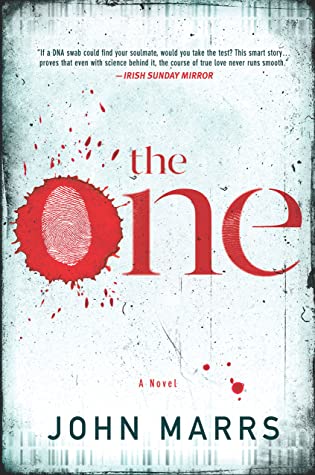
I would be remiss if I didn’t recommend a book with the exact same title: The One by John Marrs. What if there was an app that could match you to your soulmate… with DNA? But what if this app went wrong?
For this song, I’m recommending Strange the Dreamer and Muse of Nightmares by Laini Taylor. This duology has gorgeous prose, a lovely romance, and the most wonderful main character, Lazlo.
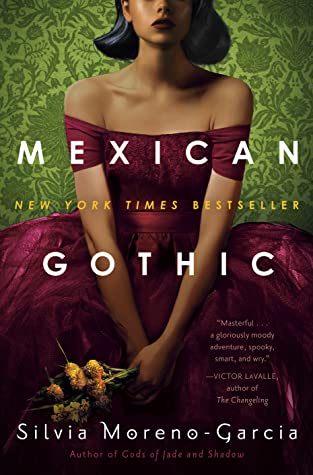
This song is about a house, a strong-willed woman, and a judging society. I recommend Mexican Gothic by Silvia Moreno-Garcia. Mexican Gothic is a 2020 release inspired by “The Yellow Wallpaper” (shout out to the sophomores reading it this year!).
If you want a series that will give you all of the feelings, I recommend The Infernal Devices by Cassandra Clare. This series is part of the giant mega Shadowhunters universe, but you don’t need to read any of the other ones in order to read this one. The Infernal Devices is my favorite series of all time, so I had to recommend it at least once. Think of 1878 London… with demon hunters!
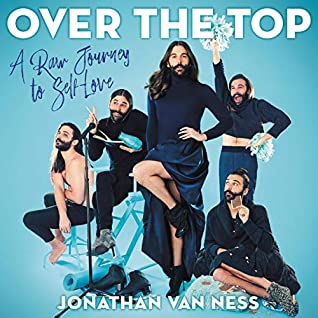
First off, I recommend Over the Top by Jonathan Van Ness. JVN (the wonderful TV personality) details their experience as a child, being bullied for being feminine and gay, but how they turned their life around to be an absolute icon.
TW: sexual abuse, drug addiction, sex addiction, cheating, bullying, homophobia, death disordered eating, mental health struggles
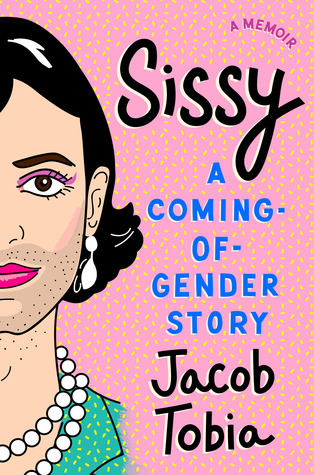
Second, I have to recommend a similar book about coming to terms with one’s gender and sexuality which is Sissy by Jacob Tobia. In this touching memoir, they discuss coming out as nonbinary while living in a highly gendered world.
TW: homophobia, transphobia, bullying, mental health struggles, violence
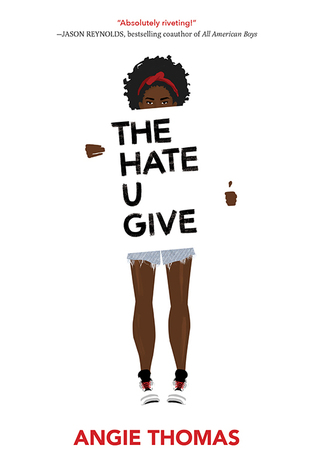
Third, I’d like to recommend a book that you may have already read, The Hate U Give by Angie Thomas. This book deals with police brutality of Black people, which is especially relevant now, with the murders of Black people, the BLM protests, and the upcoming election.
For “mirrorball,” I was particularly inspired by one line:
“I’ll show you every version of yourself tonight.”
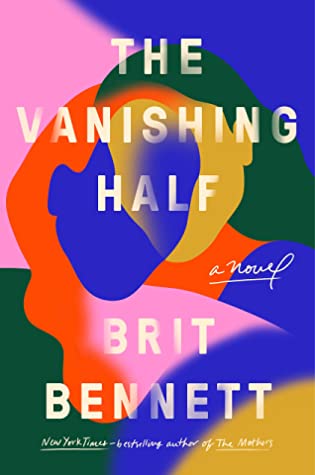
So, I picked The Vanishing Half by Brit Bennett. This novel details the lives of two twins who are Black, but white passing. One decides to live as a Black woman and the other decides to live as a white woman. We get to see the ramifications of these decisions as their lives and the lives of their children unfold.
TW: racism, colorism, domestic abuse, hate crimes, race-based violence
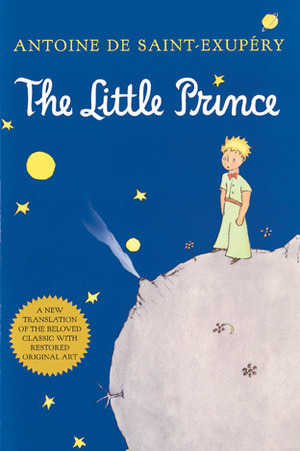
This recommendation is pretty simple: Life was better at age seven. As a little kid, your imagination can run wild, which is exactly what happens in The Little Prince by Antoine de Saint-Exupéry. If you read this in middle school, read it again. As a high schooler (or an adult), you will look at it with completely different eyes.
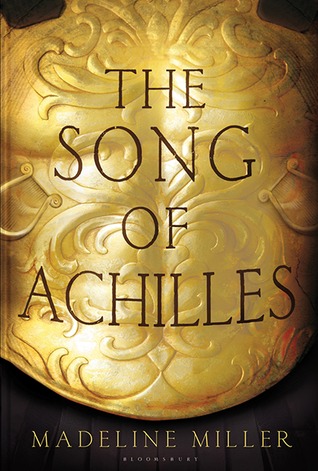
For “august,” I have a recommendation that fits the same emotions, The Song of Achilles by Madeline Miller. This book is the most incredible retelling of the Trojan War, centered around a romance between Achilles and Patroclus, our narrator. Prepare to have your heart absolutely destroyed by the ending.
TW: murder, death, slavery, abduction, abandonment, torture, mention of rape, physical violence, human trafficking, self-harm, child abuse
“They told me all of my cages were mental / So I got wasted like all my potential”
is one of the best lines I’ve ever heard in a song.
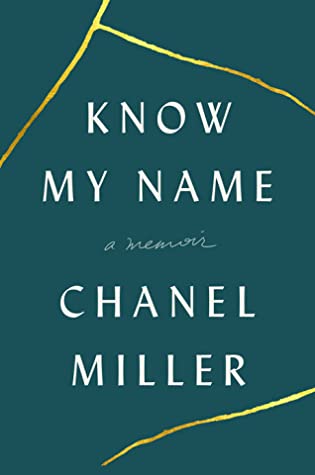
Therefore, I must recommend one of the most heartbreaking books I’ve ever read: Know My Name by Chanel Miller. In this memoir, Chanel deals with the aftermath of being sexually assaulted.
For “illicit affairs,” I would recommend Lovely War by Julie Berry. This is a historical fiction set in World War 1, following a group of four people who are brought together by music and love. Narrated by the Greek gods, this story is sure to transport you back to the past.
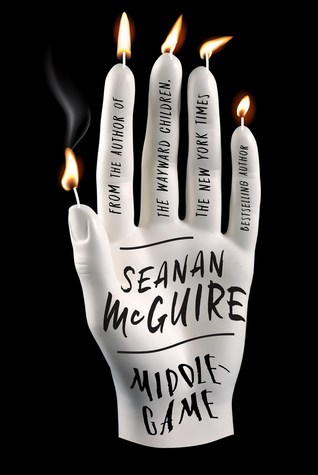
Here, I’d recommend Middlegame by Seanan McGuire. The vibes of the song and the book are completely different: The song is a slower, reflective track, and the book is weird science fiction. However, I think that the content matches. Middlegame is a novel about a duo, Roger and Dodger who are linked by special powers.
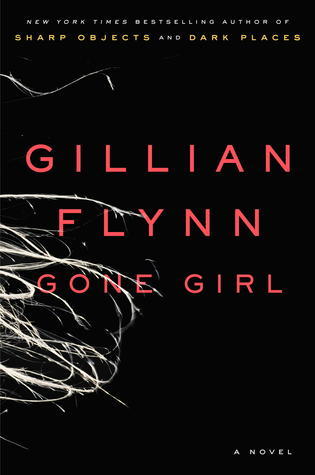
This song truly screams Gone Girl by Gillian Flynn. Gone Girl is a thriller about Nick, and his wife Amy, who goes missing. I don’t think you should know anything else about the book beforehand; it will truly take you for the most wild ride.
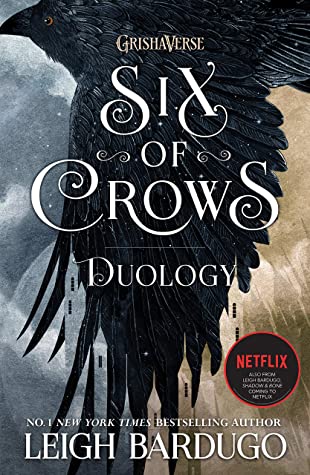
I’m going to recommend Six of Crows and Crooked Kingdom by Leigh Bardugo. I won’t say too much, but you will understand the connection after reading Crooked Kingdom.
TW: death, graphic violence, drug addiction, human trafficking, mentioned slavery
Here, I’ll recommend Everything I Never Told You by Celeste Ng. This book starts off with the death of the daughter in a family, and leads readers down a path of uncovering all of the secrets of a “perfect” family.
TW: death, drowning, emotional abuse, sexism, sexual assault, violence, racism
For a book that gives you the same feeling as “peace,” I’d recommend Radio Silence by Alice Oseman. This story, at its heart, is one of friendship and acceptance, and will leave you feeling sad but comforted. Best part is that it centers around teens in high school who are making a podcast!
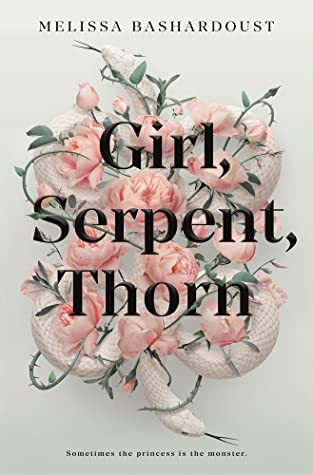
I would recommend Girl, Serpent, Thorn by Melissa Bashardoust if you want similar vibes to “hoax.” This book is a retelling of some famous Persian myths and features some very interesting and compelling characters.
Both novels depict the life of someone famous who struggles under the limelight. Evelyn Hugo is a famous actress, and Daisy Jones is part of a sensational band. These character-driven stories will pull on your heartstrings in just the way that this entire album does.
If you take any of these recommendations, please let me know. Do you agree? Disagree? –Anika Fuloria ’21
In painstaking detail, Strauss shines light on the political climate of 44 B.C. in this non-fiction, focusing on the motivations, tensions, and people involved in Caesar’s assassination on the Ides of March. In vivid prose, he brings to life the complex networking of Roman politics–a dramatic departure from the dry and factual tone of the textbooks that I am accustomed to reading for Junior Classical League (JCL).
Strauss adeptly balances intellectual rigor with broad accessibility, managing to make pages fly by without diluting their substance. I particularly enjoyed his blend of Livian day-by-day analysis in the immediate aftermath of the assassination with more episodic construction, a technique that allows him to paint broad strokes and highlight trends while still focusing deeply on pivotal moments.
I personally would give this book a deserving 4.5./5 stars, but I do think that this book only satisfies a certain niche of non-fiction history readers and might not appeal to a more general audience. However, if you’re still reading this review, I urge you to try this book! Even though this is the first of Strauss’ works that I’ve read, Strauss has earned a place among my go-to classical historians such as Mary Beard and Patrick Hunt. I look forward to reading his other works! —Review by Rupert C. ’23
Even though this was the first book I read in 2021, I’m pretty sure that this will be one of my favorites from this year. The Poppy War is a grimdark east-Asian inspired historical fantasy centers around the a young girl named Rin. She is a war orphan from the first Poppy War, raised in a poor, opium-smuggling family that treats her as a servant. Rin’s only escape from a forced marriage is to pass a merit-based exam to enter Sinegard, Nikara’s elite military academy. In a surprising shock of events, Rin places into Sinegard, but finds that the experience is not what she expects: She is isolated as a poor and dark-skinned girl from the south, but as she rises in the academy ranks, she begins to realize that the gods of legend aren’t as fictional as people think. As a war is brewing, will she be able to survive and save her nation?
Normally, novels tend to excel in one of two categories: character development or plot development. Very few manage to do both well, but The Poppy War does and does so exceptionally. All character storylines are extremely interesting to follow, and the plot is well-paced, complex, and fascinating. Rin is a determined and headstrong protagonist who makes a lot of choices that readers probably will not agree with. However, her confidence and assertiveness compels the reader to support her no matter what gory or twisted option she chooses. Each detail is action-packed and engrossing, and all the battle scenes delivered believable and heartbreaking consequences.
Lastly, this book tackles some difficult themes. It retells the Rape of Nanking, in which Japanese troops attacked China during the Second Sino-Japanese War. The impact of war on civilization is heavily discussed along with colorism and colonization. Multiple chapters delve deep into graphic scenes that involve murder, violence, and sexual assault, as well as exploring drug addiction, trauma, and self-harm. So if you do decide to try this book, please read with caution. —Review by Anika F. ’21
Lock Every Door by Riley Sager is a gothic thriller which follows Jules Larsen, who takes up a job apartment-sitting at the Bartholomew, one of Manhattan’s most mysterious buildings, after she has lost her job and boyfriend. Jules investigates the disappearance of fellow apartment sitter Ingrid and discovers the secrets of the Bartholomew.
While I normally don’t read many thrillers, this book kept me on the edge of my seat for the entirety of it with its suspenseful scenes and made me properly terrified of old buildings. The characters are likable (for the most part) and Jules is a well-developed protagonist, but the book utilizes many clichés, and I often find myself doubting the sanity of some of the characters due to their truly abysmal decisions.
Even with these flaws, I still enjoyed the majority of the plot, and Riley Sager’s writing was brilliant. The mysterious and eery tone of this book worked hand in hand with the well-thought-out plot. So, if you’re a thriller fan or just in need of a good read, I highly recommend this book for you! –Review by Varun F. ’24
If you are looking for an emotional young adult story with paranormal elements, Cemetery Boys is the perfect book for you. Cemetery Boys follows a teenaged transgender male named Yadriel who is trying to prove his identity to his family. After a string of murders, Yadriel decides to summon a ghost with his brujo powers, but ends up summoning the wrong spirit.
The strong points of the book include (but are not limited to) the characters and the culture. When I initially read that the ghost summoned would be the “high school bad boy,” I was convinced that I would not like the character. However, as I read more and more, I found Julian’s personality to be so much more than the synopsis gives him credit for: He is loyal, brave, and accepting while also being funny and sarcastic. Similarly, I found Yadriel’s character to be a delight to follow. His journey with identity is so wonderfully done; you can see his struggles and successes as he proves to his family that he truly is a brujo. Latinx culture is also seamlessly mixed with the story. There are some beautiful scenes about Día de los Muertos, where Yadriel is able to communicate with his ancestors who have passed on. In particular, this book thrives when discussing the intersection of Yadriel’s gender identity and his cultural background.
My main complaint with this book has to do with the predictability of the plot. In essence, the story is a murder mystery where a few men end up dead. I guessed the murderer at around page 50 and was not surprised at all by the ending. My second plot critique does involve some spoilers, but to keep it vague: I like when decisions have consequences. Some of these characters seemed to make tough calls, but not face adequate repercussions.
Do I think these criticisms break the book? Absolutely not. Cemetery Boys is much deeper than the plot. Rather than being about a murder-mystery, this story is about love, identity, and family. And in those aspects, this book truly shines. –Review by Anika F. ’21
For those who enjoyed this book, Anika has recommended Felix Ever After for you to check out!

 The Secret History by Donna Tartt









 Harker US Book Blog