All posts by mspelmanlibrarian

Sala by Toni Morrison (review by Andrew R. ’17)

SulaSula by Toni Morrison
My rating: 3 of 5 stars

I chose Sula as my first introduction to Toni Morrison’s work because it was slimmer, lighter, and—apparently—easier to understand than her more famous and acclaimed novels, but now that I’ve finished the last chapter I find myself wondering if this book is really representative of Morrison’s greater oeuvre. The plot sounds deceptively peaceful: young black Sula leaves her small hometown behind as she heads off to be educated, and upon her return ten years later (a significant gap in the novel’s chronology), she’s estranged and distrusted by her former friends. You can’t call Sula “peaceful,” though, because Morrison fills its pages with wanton, almost casual violence and death. A mother soaks her son’s mattress in gasoline and sets it alight; a woman burns to death trying to light a yard fire; a little boy slips from his friends’ fingers and falls into the lake, never resurfaces. Hard as I try, I can’t reconcile these near-constant, near-faceless deaths with the practices of “good novel-writing” that I’m used to, and so for the moment Sula seems more off-putting and grim than I’d wish. Maybe someday, when I’m more familiar with the rest of Morrison’s novels, I’ll be able to return to Sula and appreciate, or at least understand, its pervading sense of randomness and cruelty.

View all my reviews

The Fire Next Time by James Baldwin (Review by Daphne Y. ’16)

The Fire Next TimeThe Fire Next Time by James Baldwin
My rating: 5 of 5 stars

The Fire Next Time, written by the legendary 1960’s Civil Rights advocate James Baldwin, is a book every adolescent and young adult living in the United States should read. For the first half of his book, James Baldwin writes a letter to his nephew who is incarcerated, trying to inspire him to transcend anger in dealing with an unjust society. In the second half, the author writes about his own childhood growing up as an African-American boy in Harlem, and also his views upon the influence of Christianity on race relations. Though published in 1963, the book brings to light a problem that still exists today: a broad recognition of the inequity between races, but hardly any cooperation or a change in mindsets to be made. This book, with all its emotions, from thrilling to frustrating, is definitely something we should all read to educate ourselves about the state of our society, not just in the past, but also in the present.

View all my reviews

Mr. Potter by Jamaica Kinkaid (review by Andrew R. ’17)

Mr. PotterMr. Potter by Jamaica Kincaid
My rating: 2 of 5 stars

Mr. Potter is the story of an illiterate Antiguan chauffeur whose father was long-gone by the time of his birth, whose mother drowned herself when he was still a young child, whose clients are disdainful of his social status and the color of his skin, and whose illegitimate daughters are strangers to him because he abandoned every one of them, just as his own father abandoned him. One of these daughters narrates this novel from a distance—a distance of time, since her father died years prior (we watch her visit his grave), but also an emotional distance that causes her to treat him with a mixture of pity and contempt and guarded affection. The best one can say about Mr. Potter as a novel is that it’s lyrical; in fact, it takes lyricism and extends to an almost illogical extreme. In the interests of lyricism, then, our narrator repeats the same facts and phrases five or six times in the same sentence. “Mr. Potter was my father, my father’s name was Mr. Potter,” she tells us at least once every chapter. It’s an interesting technique, certainly, and one that lends a certain power to this novel, but more often than not it turns Jamaica Kincaid’s otherwise impressive prose into a sticky morass.

View all my reviews

To Say Nothing of the Dog by Connie Willis (review by Connie M. ’17

To Say Nothing of the Dog (Oxford Time Travel, #2)To Say Nothing of the Dog by Connie Willis
My rating: 4 of 5 stars

To Say Nothing of the Dog is perhaps Connie Willis’s most humorous Oxford Time Travel book, set mainly on the outskirts of Victorian Oxford. The novel features two main characters: Verity/Kindle, who is sent back in time by the frustratingly persistent Lady Schrapnell to help figure out the location of the Bishop’s Bird Stump, and Ned Henry, who is sent back to help right a supposed discrepancy caused by Verity. Willis often pokes fun at aspects of Victorian life through Ned’s nonchalant humor (he is the narrator). The story reads much like a mystery novel as Ned and Verity attempt to understand the nature of their first time discrepancy while simultaneously trying to prevent more time-travel disasters. The final solution is amusingly explained but leaves some unanswered questions. To Say Nothing of the Dog is certainly worth reading for its humorous, science fiction, and historical fiction aspects, but those who are not interested in the Victorian era will be disappointed.

View all my reviews

Doomsday Book by Connie Willis (review by Connie M. ’17)

Doomsday Book (Oxford Time Travel, #1)Doomsday Book by Connie Willis
My rating: 5 of 5 stars

Doomsday Book, Connie Willis’s first Oxford Time Travel novel, is one of her most famous, featuring young time traveler-historian Kivrin on an expedition to medieval England. Shifting between modern and medieval times, the novel combines first person “journal” accounts and traditional narration. Like many of Willis’s novels, Doomsday Book is (in comparison) relatively slow moving for a good half of the book (though certainly not uninteresting) and speeds up to an incredibly moving ending. The book makes the horrors of the Black Death devastatingly real, and continuously questions the role of religion in our lives. While perhaps more interesting to those who have some background on the middle ages, I had little interest in medieval times but still found the book hauntingly captivating. I found myself pondering Doomsday Book for days after I had finished reading it.

View all my reviews

The Scorpio Races by Maggie Stiefvater (review by Emily C. ’18)

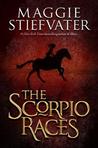
The Scorpio RacesThe Scorpio Races by Maggie Stiefvater
My rating: 4 of 5 stars

At the beginning of each November, riders on the tiny island of Thisby attempt to capture and gain control of spirited water horses in a deadly contest: the Scorpio Races. From this fierce battle of horsemanship and grudges two particular individuals emerge–Sean Kendrick and Puck Connolly. Though they ride for different reasons, when their paths cross an unlikely bond is formed. However, the issues Sean and Puck face are not limited to survival in this perilous competition; Stiefvater weaves a web of emotional and practical intricacies that range from sexism to finance to hostile and dangerous schemes. Maggie Stiefvater outdoes herself once again with a singular legend-inspired plot, well-developed characters, and touches of heartwarming loyalty and devotion.

View all my reviews

The Haunting of Hill House by Shirley Jackson (review by Andrew R. ’17)

The Haunting of Hill House The Haunting of Hill House by Shirley Jackson
My rating: 4 of 5 stars

No one who’s read Shirley Jackson’s short story “The Lottery” is likely to forget it anytime soon: even sixty-five years after its explosive debut, the narrative of sinister small-town ritualism retains an impressive staying power that makes it as jarring to modern readers as it was to its original audiences. Shirley Jackson draws on the same arsenal of subtly suspenseful plot devices in her 1959 novel The Haunting of Hill House, in which the scarred and unstable Eleanor Vance joins a research party to live in a crumbling Victorian mansion for the summer. Part Edgar Allen Poe and part Henry James, this psychological ghost story isn’t quite a horror novel, at least not in the Stephen King sense; its terror, as in “The Lottery,” is so understated that the full force of the book’s scariest scenes isn’t likely to manifest itself until days after you’ve read them. (From what I’ve heard, Jackson’s last novel, We Have Always Lived in the Castle, ramps up this creepiness to an even more intense and chilling pitch.) For a haunted-house story, this novel is very strong, and rates only one notch below “The Lottery” in its quality and spine-tingling effect.

View all my reviews

Rook by Sharon Cameron (review by Andrew R. ’17)

RookRook by Sharon Cameron
My rating: 4 of 5 stars

There are only so many post-apocalyptic dystopia concepts that exist in the world, and, thanks to the mad rush of YA science fiction sprang into being following the enormous success of The Hunger Games, it’s almost—almost—impossible at this point for an author to come up with a brand-new one. In Rook, however, Sharon Cameron may just have pulled it off. The world that protagonists Sophia Bellamy and René Hasard inhabit is full of not-so-subtle overtones of the French Revolution, with lower-class mobs overrunning the Upper City and a massive, blood-spattered blade decapitating enemies of the state. But this isn’t eighteenth-century Paris—this is Europe hundreds of years after the polar shift that wiped out most of humanity. The loss of all pre-apocalypse technology has forced society to backtrack several centuries to a bloodier and more brutal time. The characters are almost as interesting as the setting—Sophia may be a classic YA heroine fighting off the advances of two devilishly handsome suitors, but at least the love triangle has some political intrigue to spice things up. (Nearly all the characters are benevolent criminals of some sort.) Rook is lengthy, but readers will forgive its heft once they get caught up in the engaging narrative and well-conceived setting.

View all my reviews

All Clear by Connie Willis (review by Connie M. ’17)

All Clear (Oxford Time Travel, #4)All Clear by Connie Willis
My rating: 5 of 5 stars

All Clear is the second half of the time travel Blackout/All Clear duo by Connie Willis, set in World War II. While I found Blackout a bit frustratingly repetitive in places, All Clear was a whirlwind of plot twist after plot twist, with an emotional range of unfathomable despair to shock to tentative joy. Willis will leave you gasping aloud in both excitement and frustration as the three main characters attempt to return to 2060 from WWII. Willis leaps back and forth between different times, places and characters, thus weaving in an element of mystery (pay attention to the date printed at the beginning of each chapter). Blackout and All Clear are must-reads for any time travel or historical fiction fan, but as a message about the strength of the common person undergoing unimaginable hardship and sacrifice, these two novels would be enjoyed by anyone.

View all my reviews

An Ember in the Ashes by Sabaa Tahir (review by Andrew R. ’17)

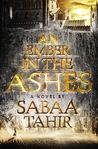
An Ember in the Ashes (An Ember in the Ashes, #1)An Ember in the Ashes by Sabaa Tahir
My rating: 1 of 5 stars

The Hunger Games. Eragon. Star Wars. Odds are you’re already perfectly familiar with these stories, in which case there is no reason for you to pick up Sabaa Tahir’s new novel. For me, An Ember in the Ashes reads like a half-hearted cut-and-paste of all the fantasy/sci-fi books that came before it, an unapologetic catalog of tired genre clichés—romantic tension! teenagers fighting to the death! orphaned protagonists! unimaginative fantasy names! faceless demonic warlords!—without a single page of original material. Faced with such an apparent lack of inspiration, the author repeats her ideas and plot points thirty times throughout the book. That’s standard practice with many YA authors, unfortunately, when it comes to romance (“Does he love me or doesn’t he?”), but it gets downright tiresome when we have to hear this sentence repeated ad nauseam: “As my grandmother always told me, ‘Where there’s life there’s hope.’” According to the American Library Association, there are approximately 5,000 YA books published per year, and I can safely list (without much exaggeration) about 4,999 new books that are more worth your time than this one. I was not a fan.

View all my reviews