All posts by mspelmanlibrarian

The Game of Love and Death by Martha Brockenbrough (review by Andrew R. ’17)

The Game of Love and DeathThe Game of Love and Death by Martha Brockenbrough
My rating: 2 of 5 stars

In The Game of Love and Death, the deities Love and Death come together to play a high-stakes cosmic game of strategy. The board: Jazz-Age Seattle, still deeply rooted in racial prejudice. The pawns: Henry, an affluent white high-school student, and Flora, a black jazz singer (and, improbably, airplane pilot). The objective: for Love to manipulate Henry into winning Flora’s heart, and for Death to twist Flora into rejecting his advances. The stakes: the pawns’ lives. It’s the perfect premise for a historical-fiction-romance-supernatural genre mashup, but from the first chapter it’s clear that Brockenbrough can’t quite pull off the ingenious plot she’s cooked up. The characters are sadly underdeveloped: Henry’s sole obsession is Flora, Flora’s sole obsession is flight, Love is maddeningly altruistic, Death is irrationally destructive. Worse, we’re granted near-omniscience when it comes to the plot, making the entire novel read like a tiresome textbook example of dramatic irony. (Case in point: Henry is convinced that his infatuation is true love, whereas we know from page one that it’s a ridiculous idea planted in his head by a manipulative deity.) Thanks to the wild originality of this novel’s premise, the jacket blurb makes excellent reading; the book itself, though, is a disappointment.

View all my reviews

X: A Novel by Ilyasah Shabazz (review by Andrew R. ’17)

X: A NovelX: A Novel by Ilyasah Shabazz
My rating: 4 of 5 stars

The premise of Ilyasah Shabazz’s most recent novel, X, is so unusual as to seem off-putting at first: in a narrative geared specifically toward young adults, a fictionalized Malcolm X plays out the early part of his life, starting with his exodus from Michigan to Boston and ending just before he begins the outspoken racial and religious activism for which we remember him today. The story is doubly odd because the author, the daughter of Malcolm X himself, has taken the liberty to novelize her famous father’s turbulent life—and in the first person. I’m not sure how, but Shabazz has taken this dubious stew of almost overambitious narrative points and crafted a surprisingly engaging story, which, although it contains hallmarks of the young adult genre like forbidden love and coming-of-age internal conflict, also features pacing and setting that are remarkably sophisticated for a YA novel. (Most of the first six chapters takes place on a largely uneventful train ride, and it takes a measure of patience to get to the meat of the book.) The protagonist Malcolm, even if he bears suspiciously little resemblance to the more weathered and polarizing Malcolm X most of us are familiar with, is a memorable and magnetic character, and this narrative of his life is strange in concept but impressive in execution.

View all my reviews

Blackout by Connie Willis (review by Connie M. ’17)

Blackout (Oxford Time Travel, #3)Blackout by Connie Willis
My rating: 4 of 5 stars

This was the first time I read a work by Connie Willis. Blackout is, at its core, historical fiction, though laced with elements of sci-fi in the form of time travel. The premise of all of Willis’s time travel novels is that in the near future (2060) Oxford University historians will conduct their research by traveling back in time to their periods of study. In Blackout, several historians travel to England during World War II, disguising themselves in various locations including London during the Blitz, Dunkirk during the evacuation, and a countryside manor house. However, something has gone wrong with the historians’ return mechanism (called the drop), and our heroes are trapped. At first, I found Blackout to be immensely interesting, as the story exuded all the emotions and attitudes of WWII life and at times even made me feel slightly panicked. However, 500 pages of nearly the same phrase (“Where is the retrieval team? Why is my drop not working?”) began to get frustrating. I will be reading the sequel, which essentially is a direct continuation from the 1st book with hardly a transition at all, but only because I’m curious to find out how/if the characters return to 2060. In the end, I would recommend this book, as the story is extremely immersive, but don’t attempt it unless you’re ready to read 1000 pages of WWII historical fiction.

View all my reviews

The Goldfinch by Donna Tartt (review by Tiffany Z. ’17)

The GoldfinchThe Goldfinch by Donna Tartt
My rating: 4 of 5 stars

Something has to give in the life of young Theodore Decker, who, at the novel’s opening, has but one reliable companion: his mother, artistic and compassionate, reverent toward the Renaissance masters yet never condescending to her apartment’s two doormen. In one trick of Fate, this bulwark is ripped away, and Theodore finds a new anchor thrown into his arms: Carol Fabritius’ masterpiece painting, The Goldfinch. Throughout his turbulent life, from his troubled stay with sometime friend Andy Barbour, to thrilling (if alcohol-filled) teenage years alongside the passionate intellectual Boris Pavlikovsky, to evenings sealing sketchy deals on antique furniture in order to clear his associate’s debts, the painting remains the undercurrent of Theodore’s life. When the disparate storylines eventually converge, it is Fabritius’ Goldfinch that unifies them. Tartt’s artistic language enlivens the novel, from the smallest details of Sheraton furniture to the greatest messages about the art of life. She exposes the elusive art of living to one’s fullest and the beautifully bizarre twists that life reveals to those who explore it. While some critics might argue that this intricate work is nothing but a series of crude brushstrokes upon close inspection, The Goldfinch will no doubt strike a chord with anyone who appreciates the beauty and mystery of art.

View all my reviews

Red Queen by Victoria Aveyard (review by Kaitlyn N. ’18)

Red Queen (Red Queen, #1)Red Queen by Victoria Aveyard
My rating: 4 of 5 stars

Aveyard skillfully combines a dystopian society with the world of fantasy in Red Queen, which addresses segregation and the conflict between different social classes. In the genetically modified future, humans are divided into two castes: those with silver blood (Silvers), and those with red (Reds). Those with silver blood enjoy a wealthier lifestyle and magical abilities, while people with red blood work as peasants and slaves. Even so, Mare, a Red, discovers that she straddles the border between the Reds and Silvers, and she is forced to become a princess under the watchful eye of the despotic king and her newly betrothed, the prince. Her plans for a rebellion go unnoticed, but Mare also faces internal struggles within her lovestruck heart and in her decision to sacrifice hundreds of innocent people for the sake of her cause. Aveyard’s unique plot and her taut writing from Mare’s perspective build suspense until the end. However, the lack of description and detail may easily confuse the reader. Fans of fantasy, adventure and strong female leads would certainly enjoy Red Queen.

View all my reviews

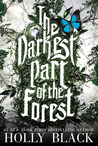
The Darkest Part of the Forest by Holly Black (review by Andrew R. ’17)

The Darkest Part of the ForestThe Darkest Part of the Forest by Holly Black
My rating: 5 of 5 stars

The tiny town of Fairfold teeters right on the border between the human and faerie worlds, and its inhabitants know it. On one side of this border are the local public high school, the general store, the partying teenagers, the clueless tourists; on the other side are vicious monsters made of twigs and dirt, goblins who bathe in human blood, and a horned prince lying dormant in the middle of the woods. Not your typical story-book creatures, these faeries, but, as long as they’re not provoked, they’re willing to live in a fragile balance with their human neighbors—until local teenager Hazel and her brother Ben, wishful monster hunters extraordinaire, upset that balance beyond repair. Holly Black’s masterful world-building is on display in the court of the faerie king (modeled off the legendary German Erlkönig) and on the ominous small-town streets of Fairfold, but the novel’s real creativity lies in the intersection between the two worlds. The border separating the humans and faeries, it becomes clear, is frighteningly porous, and the influence of faerie magic in Fairfold is stronger than its inhabitants would like to admit… Black never relinquishes nuance in her characters in favor of plot, and as a result the novel feels neither simplistic nor rushed. Here is YA fantasy at its best: a world that seems as real as, or realer than, our own.

View all my reviews

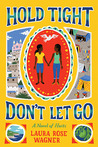
Hold Tight, Don’t Let Go by Laura Rose Wagner (review by Andrew R. ’17)

Hold Tight, Don't Let Go: A Novel of HaitiHold Tight, Don’t Let Go: A Novel of Haiti by Laura Rose Wagner
My rating: 3 of 5 stars

Hold Tight, Don’t Let Go begins with a strangely subdued account of the catastrophic earthquake that killed more than 100,000 Haitians on January 12, 2010. Over the course of a few pages, the teenage narrator, Magdalie, witnesses the almost instantaneous leveling of the city of her childhood. But the reader can’t comprehend the magnitude of the tragedy until, months later, Magdalie forces herself to sit down and pour her memories onto the page, even as she admits that, “It doesn’t change anything if I write it down or not … It doesn’t change a thing.” Only here does the reader stop and say, Oh—she is upset, she is scarred, this is a tragedy. It hurts to read the passage: we feel Magdalie’s pain. The rest of the novel follows a similar trajectory. Intense emotion is the most important element of a story that deals with a disaster on this scale, and while that emotion is very often deferred by stumbling plot-lines and flat characters, it’s never forgotten. Sooner or later, the author’s point hits home, and we can’t help but feel empathy for Magdalie and the hundreds of thousands of real-life Haitians in her situation. In that respect, at least, Hold Tight, Don’t Let Go is a success.

View all my reviews

In Persuasion Nation by George Saunders (review by Shannon H. ’16)

In Persuasion NationIn Persuasion Nation by George Saunders
My rating: 4 of 5 stars

I was almost addicted, inhaling this collection of dark short stories at an alarmingly fast pace. George Saunders creates a world in which advertising and persuasion overcome rational thought – his stories read like television commercials, slowly convincing the reader that the grotesque and brutal scenes are real. One short story begins with a polar bear lamenting his doomed existence to repeat the same patterns each day (he lives in a advertising scene). Each day he steals Cheetos from an igloo and is subsequently caught; afterwards, the owner of the igloo swings an ax to the polar bear’s head, and the day ends. Unsurprisingly, the polar bear engages in existential discussion and falls down the wormhole of philosophy. What a brilliant mix of realism and complete absurdism, and of course, it’s great satire. Would highly recommend to anyone looking for some grim reality mixed with a dosage of humor and science fiction.

View all my reviews

Love Medicine by Louise Erdrich (review by Andrew R. ’17)

Love MedicineLove Medicine by Louise Erdrich
My rating: 4 of 5 stars

Louise Erdrich’s Love Medicine, a sort of novel-in-stories that unflinchingly paints a portrait of Native American life in the modern world, opens with a beautifully elaborate family tree: the names get progressively more Catholic, the adoptions and marriages and remarriages more convoluted, as the generations pass. It’s a fitting way to begin this collection. Almost every person on the tree is featured either as a narrator or as a protagonist of one of the stories, but in my mind the three members of the oldest generation mentioned are the real heroes of Love Medicine. The lives of Nector Kashpaw (introduced in “Wild Geese” as a brash young tribesman), his future wife Marie Lazarre (still a teenager in “Saint Marie”), and their sometime ally Lulu Lamartine (who comes of age in “The Island”) are chronicled in full, from adolescence to old age, and it’s their obsessions and fatal flaws that ultimately give the book wings. Love Medicine has a rocky start: its younger characters, not nearly as complex or engaging as their grandparents, open the collection in a less-than-impressive introductory sequence. But the later stories are beautifully enough rendered to do their subject, the Ojibwe nation, proud.

View all my reviews

Bone Gap by Laura Ruby (review by Andrew R. ’17)

Bone GapBone Gap by Laura Ruby
My rating: 3 of 5 stars

Laura Ruby’s Bone Gap, while almost effortlessly unique in its setting and characters, too often gets bogged down in the tropes of other genres—especially star-crossed romance and magical realism—to feel entirely convincing or satisfying by the last page. The rural Illinois town that protagonists Finn and Roza inhabit is summed up in consistent, symbolic motifs, which Ruby invokes whenever possible: bees, cornfields, gossip, and (most effectively) the “gaps” of the title. As successful as these images are, other aspects of the novel fall flat, ultimately distracting readers from the complexity of the setting. Classic scenes of teenage social cruelty, for instance, feel painfully out-of-sync with a rural setting that is otherwise frozen in the past, and incessant references to Craig Thompson’s graphic novel Blankets quickly grow stale—especially since Ruby seems oddly reluctant to refer to that novel by name. Perhaps most disappointing are the author’s halfhearted attempts at magical realism in certain scenes, which more frequently reek of coincidence than true enchantment. Roza and Finn’s shared story has plenty to commend it, especially to fans of less traditional YA fiction, but its restless shifting between disjunct genres rendered it difficult both to follow and to enjoy. – Andrew R. ’17

View all my reviews