Category Archives: Uncategorized

Tell Me Again How a Crush Should Feel by Sara Farizan (review by Jenny B. ’16)

Tell Me Again How a Crush Should FeelTell Me Again How a Crush Should Feel by Sara Farizan
My rating: 4 of 5 stars

Tell Me Again How a Crush Should Feel is a fantastic book, one of the only good books I’ve found that includes a lesbian romance. Aside from the love story, however, the book lacks interest. Its somewhat clichéd series of events could happen in any YA book and some of the character development was not believable. Despite its shortcomings, I loved the romance and the way the book portrayed real feelings that teenagers experience, awkwardness included. The book follows Leila, a young Iranian girl, on her journey of self-discovery. She makes new friends and participates in ever fun high school romances, and finds her ‘love nugget’. It will appeal to anyone looking for a cheerful LGBT YA romance, or anyone bored on a long bus ride.

View all my reviews

Oh the Moon: Stories from the Tortured Mind by Charlyne Yi (review by Shannon H. ’16)

Oh the MoonOh the Moon by Charlyne Yi
My rating: 5 of 5 stars

Oh the moon made me laugh and made me cry with hundreds of pages that flew by (literally, some pages didn’t have words on them). The book is relatable, fun, and of course, mindblowing. The frankness of the stories gave me pause, waking me up from the banality of college applications. In one story, a woman who is ALL LEGS (literally) takes control of her destiny and runs away from her repetitive life. In another, two people who are in love are stuck in separate snowglobes — whatever shall they do? I appreciated Charlyne Yi’s randomness (like when an old lady gives birth to a giant on the second page), and her writing made me feel like she actually understood me and my optimistic cynicism (people say teenagers are the cross section of idealistic and intelligent/aware). Reading these short stories was an adventure in grasping odd metaphors, suspending disbelief, and finding the beauty of life.

View all my reviews

The Marriage Bureau for Rich People by Farahad Zama (review by Shannon H. ’16)

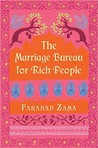
The Marriage Bureau for Rich PeopleThe Marriage Bureau for Rich People by Farahad Zama
My rating: 3 of 5 stars

Overall, this book was a fun read — I enjoyed learning about marriage practices in India (although I am not entirely sure how accurately the practices are portrayed). The depiction of modern India resonates with me; I understood the ever-present inequality and the social turmoil, and I felt the heated debates between traditional cultural values and modern interpretations of humanity. However, I found that the novel dissolved from a potential critique of the system into a contrived love story between a rich Brahmin male (upper class) and a poor, but still Brahmin, working woman. I was mildly disappointed, but I still found The Marriage Bureau for Rich People a quick and fun read.

View all my reviews

The Pentagon’s Brain by Annie Jacobsen (review by Enya L. ’19)

The Pentagon's Brain: An Uncensored History of DARPA, America's Top-Secret Military Research AgencyThe Pentagon’s Brain: An Uncensored History of DARPA, America’s Top-Secret Military Research Agency by Annie Jacobsen
My rating: 4 of 5 stars

The Pentagon’s Brain: An Uncensored History of DARPA, America’s Top-Secret Military Research Agency, is original, provocative, and unforgettable. Starting with the nuclear device Castle Bravo, to the biomedical engineering of limb regeneration, Annie Jacobsen takes us behind-the-scenes to show what military technology is really doing. As a history book, this book was far from boring. Jacobsen’s writing is fluid and nothing like the writing in textbooks. The topics outlined in the book are very interesting and sometimes altogether shocking. However, given Jacobsen’s reputation, some scenes, I felt, strayed a bit far from reality. While most of the facts were taken from many sources, some “facts” only came from one source. All in all, whether you take it as fact or fiction, The Pentagon’s Brain is a very enjoyable ride.

View all my reviews

An Officer and a Spy by Robert Harris (review by Mr. Silk, Teacher)

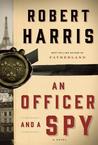
An Officer and a SpyAn Officer and a Spy by Robert Harris
My rating: 4 of 5 stars

Falling somewhere between history, historical fiction and spy novel, An Officer and a Spy is a fact-based account of the Dreyfus Affair, one of the more troubling times of the French military. When Alfred Dreyfus is accused and convicted of treason, it takes the newly appointed head of the French spy division, Georges Picquart to ferret out the truth. Robert Harris is a master story-teller, and this book is surely a page turner. At times the story seems unbelievable, or, at best, inconceivable, but the reader has to remember that all the events did actually occur. A definite must for anyone who has read and enjoyed Harris or Jean le Carre, or who is interested in French history.

View all my reviews

Sala by Toni Morrison (review by Andrew R. ’17)

SulaSula by Toni Morrison
My rating: 3 of 5 stars

I chose Sula as my first introduction to Toni Morrison’s work because it was slimmer, lighter, and—apparently—easier to understand than her more famous and acclaimed novels, but now that I’ve finished the last chapter I find myself wondering if this book is really representative of Morrison’s greater oeuvre. The plot sounds deceptively peaceful: young black Sula leaves her small hometown behind as she heads off to be educated, and upon her return ten years later (a significant gap in the novel’s chronology), she’s estranged and distrusted by her former friends. You can’t call Sula “peaceful,” though, because Morrison fills its pages with wanton, almost casual violence and death. A mother soaks her son’s mattress in gasoline and sets it alight; a woman burns to death trying to light a yard fire; a little boy slips from his friends’ fingers and falls into the lake, never resurfaces. Hard as I try, I can’t reconcile these near-constant, near-faceless deaths with the practices of “good novel-writing” that I’m used to, and so for the moment Sula seems more off-putting and grim than I’d wish. Maybe someday, when I’m more familiar with the rest of Morrison’s novels, I’ll be able to return to Sula and appreciate, or at least understand, its pervading sense of randomness and cruelty.

View all my reviews

The Fire Next Time by James Baldwin (Review by Daphne Y. ’16)

The Fire Next TimeThe Fire Next Time by James Baldwin
My rating: 5 of 5 stars

The Fire Next Time, written by the legendary 1960’s Civil Rights advocate James Baldwin, is a book every adolescent and young adult living in the United States should read. For the first half of his book, James Baldwin writes a letter to his nephew who is incarcerated, trying to inspire him to transcend anger in dealing with an unjust society. In the second half, the author writes about his own childhood growing up as an African-American boy in Harlem, and also his views upon the influence of Christianity on race relations. Though published in 1963, the book brings to light a problem that still exists today: a broad recognition of the inequity between races, but hardly any cooperation or a change in mindsets to be made. This book, with all its emotions, from thrilling to frustrating, is definitely something we should all read to educate ourselves about the state of our society, not just in the past, but also in the present.

View all my reviews

Mr. Potter by Jamaica Kinkaid (review by Andrew R. ’17)

Mr. PotterMr. Potter by Jamaica Kincaid
My rating: 2 of 5 stars

Mr. Potter is the story of an illiterate Antiguan chauffeur whose father was long-gone by the time of his birth, whose mother drowned herself when he was still a young child, whose clients are disdainful of his social status and the color of his skin, and whose illegitimate daughters are strangers to him because he abandoned every one of them, just as his own father abandoned him. One of these daughters narrates this novel from a distance—a distance of time, since her father died years prior (we watch her visit his grave), but also an emotional distance that causes her to treat him with a mixture of pity and contempt and guarded affection. The best one can say about Mr. Potter as a novel is that it’s lyrical; in fact, it takes lyricism and extends to an almost illogical extreme. In the interests of lyricism, then, our narrator repeats the same facts and phrases five or six times in the same sentence. “Mr. Potter was my father, my father’s name was Mr. Potter,” she tells us at least once every chapter. It’s an interesting technique, certainly, and one that lends a certain power to this novel, but more often than not it turns Jamaica Kincaid’s otherwise impressive prose into a sticky morass.

View all my reviews

To Say Nothing of the Dog by Connie Willis (review by Connie M. ’17

To Say Nothing of the Dog (Oxford Time Travel, #2)To Say Nothing of the Dog by Connie Willis
My rating: 4 of 5 stars

To Say Nothing of the Dog is perhaps Connie Willis’s most humorous Oxford Time Travel book, set mainly on the outskirts of Victorian Oxford. The novel features two main characters: Verity/Kindle, who is sent back in time by the frustratingly persistent Lady Schrapnell to help figure out the location of the Bishop’s Bird Stump, and Ned Henry, who is sent back to help right a supposed discrepancy caused by Verity. Willis often pokes fun at aspects of Victorian life through Ned’s nonchalant humor (he is the narrator). The story reads much like a mystery novel as Ned and Verity attempt to understand the nature of their first time discrepancy while simultaneously trying to prevent more time-travel disasters. The final solution is amusingly explained but leaves some unanswered questions. To Say Nothing of the Dog is certainly worth reading for its humorous, science fiction, and historical fiction aspects, but those who are not interested in the Victorian era will be disappointed.

View all my reviews

Doomsday Book by Connie Willis (review by Connie M. ’17)

Doomsday Book (Oxford Time Travel, #1)Doomsday Book by Connie Willis
My rating: 5 of 5 stars

Doomsday Book, Connie Willis’s first Oxford Time Travel novel, is one of her most famous, featuring young time traveler-historian Kivrin on an expedition to medieval England. Shifting between modern and medieval times, the novel combines first person “journal” accounts and traditional narration. Like many of Willis’s novels, Doomsday Book is (in comparison) relatively slow moving for a good half of the book (though certainly not uninteresting) and speeds up to an incredibly moving ending. The book makes the horrors of the Black Death devastatingly real, and continuously questions the role of religion in our lives. While perhaps more interesting to those who have some background on the middle ages, I had little interest in medieval times but still found the book hauntingly captivating. I found myself pondering Doomsday Book for days after I had finished reading it.

View all my reviews