Love Medicine by Louise Erdrich (review by Andrew R. ’17)

Love MedicineLove Medicine by Louise Erdrich
My rating: 4 of 5 stars

Louise Erdrich’s Love Medicine, a sort of novel-in-stories that unflinchingly paints a portrait of Native American life in the modern world, opens with a beautifully elaborate family tree: the names get progressively more Catholic, the adoptions and marriages and remarriages more convoluted, as the generations pass. It’s a fitting way to begin this collection. Almost every person on the tree is featured either as a narrator or as a protagonist of one of the stories, but in my mind the three members of the oldest generation mentioned are the real heroes of Love Medicine. The lives of Nector Kashpaw (introduced in “Wild Geese” as a brash young tribesman), his future wife Marie Lazarre (still a teenager in “Saint Marie”), and their sometime ally Lulu Lamartine (who comes of age in “The Island”) are chronicled in full, from adolescence to old age, and it’s their obsessions and fatal flaws that ultimately give the book wings. Love Medicine has a rocky start: its younger characters, not nearly as complex or engaging as their grandparents, open the collection in a less-than-impressive introductory sequence. But the later stories are beautifully enough rendered to do their subject, the Ojibwe nation, proud.

View all my reviews

Bone Gap by Laura Ruby (review by Andrew R. ’17)

Bone GapBone Gap by Laura Ruby
My rating: 3 of 5 stars

Laura Ruby’s Bone Gap, while almost effortlessly unique in its setting and characters, too often gets bogged down in the tropes of other genres—especially star-crossed romance and magical realism—to feel entirely convincing or satisfying by the last page. The rural Illinois town that protagonists Finn and Roza inhabit is summed up in consistent, symbolic motifs, which Ruby invokes whenever possible: bees, cornfields, gossip, and (most effectively) the “gaps” of the title. As successful as these images are, other aspects of the novel fall flat, ultimately distracting readers from the complexity of the setting. Classic scenes of teenage social cruelty, for instance, feel painfully out-of-sync with a rural setting that is otherwise frozen in the past, and incessant references to Craig Thompson’s graphic novel Blankets quickly grow stale—especially since Ruby seems oddly reluctant to refer to that novel by name. Perhaps most disappointing are the author’s halfhearted attempts at magical realism in certain scenes, which more frequently reek of coincidence than true enchantment. Roza and Finn’s shared story has plenty to commend it, especially to fans of less traditional YA fiction, but its restless shifting between disjunct genres rendered it difficult both to follow and to enjoy. – Andrew R. ’17

View all my reviews

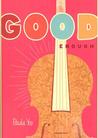
Good Enough by Paula Yoo (review by Melissa K. ’18)

Good EnoughGood Enough by Paula Yoo
My rating: 4 of 5 stars

High school students can relate to Patti Yoon, a high school senior juggling six AP classes, SAT boot camp, and college applications. At her Korean church youth group, overachieving is the norm and everyone has their own unique “hook” into the Ivy Leagues: Lisa Kang is a nationally ranked fencer; Isaac Rhee is the captain of the academic decathlon team at his high school; Sally Kim is a Siemens Competition winner. Patti’s “hook” into college is her violin. As a B-tier violin prodigy, she is the concertmaster of her youth orchestra and considered one of the best violinists in Connecticut.

However, Patti’s seemingly predetermined life takes a turn when she meets Ben Wheeler, a trumpet player who invites her over for jamming sessions, takes her to a punk concert, and encourages her to apply to Juilliard even though her parents think that a career in music is too risky. Sprinkled with Spam recipes, SAT tips, and lists of ways to “Make Your Korean Parents Happy,” Good Enough is a candid and surprisingly funny take on the pressures facing today’s high school students. – Melissa K. ’18

View all my reviews

I Know Why the Caged Bird Sings by Maya Angelou (review by Andrew R. ’17)

I Know Why the Caged Bird SingsI Know Why the Caged Bird Sings by Maya Angelou
My rating: 5 of 5 stars

Maya Angelou, the beloved and decorated author who passed away just under a year ago, is known equally well as a poet and a memoirist, but reading I Know Why the Caged Bird Sings has left no doubt in my mind as to which part of her legacy is more accurate. Dr. Angelou was a poet. Yes, Caged Bird is a prose memoir, one that spans Angelou’s adoption by her grandmother (at age three) to the birth of her first child (at age 17), but the book is written like no autobiography I have ever encountered: the language possesses a lyricism and a flow that very little poetry, much less prose, can lay claim to. In fact, Caged Bird often felt like a long, simple poem, free of the intimidating erudition that so often accompanies book-length verse. Although Angelou writes in the voice of maturity, her narrative convincingly portrays the confusion of a young black child in the Deep South—and the portrait of racism that results is painful and jarring. Caged Bird is more than the sum of its parts: it’s not a poetic memoir or an autobiographical poem, but a beautiful and frightening vision of our country’s past. – Andrew R.’17

View all my reviews

World and Town by Gish Jen (review by Andrew R. ’17)

World and TownWorld and Town by Gish Jen
My rating: 4 of 5 stars

Gish Jen is a wittier Amy Tan: her novels and stories, usually told through the perspective of first- or second-generation Chinese immigrants to America, fearlessly tackle religious issues, the mystery of death, and the folly of American culture, all without forsaken the signature lightness and incisiveness of her prose. World and Town is split into five narrative sections. One follows Sophy Chung, the daughter of Cambodian immigrants, who takes refuge in fundamentalist Christianity to escape her past sins; another follows Everett, the scorned and scornful backwoods lover of a born-again evangelist. The majority of the book, though, is from the perspective of Hattie (Hăi dì) Kong, an aging immigrant whose existence in the Southern town of Riverlake is somehow more American than any of its native inhabitants. As Hattie struggles with her religion and heritage (and messes with those of her neighbors—she can’t help herself), Riverlake becomes so vivid and complex that it feels as real as life to the reader, and sometimes realer. While Sophy’s and Everett’s narrative voices were not always convincing, World and Town was as a whole engaging, even addictive. Strongly recommended for readers who enjoy having their beliefs challenged and their prejudices called out. – Andrew R. ’17

View all my reviews

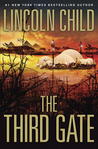
The Third Gate by Lincoln Child (review by Mr. Silk, Harker teacher)

The Third GateThe Third Gate by Lincoln Child
My rating: 3 of 5 stars

Not quite “page turner” status, The Third Gate is a decent thriller that takes place in the Sudd (a swamp) of Egypt where a vast team of archaeologists are searching for the remains of Narmer, the Pharaoh that unified the country. To help discover this long lost tomb a doctor who specializes in “near death experiences” is enlisted. Unfortunately, when one “crosses over,” in the neighborhood of tombs with curses on them, bad things are bound to happen, and they do. While the history is interesting (although not all true), and paced pretty well, there really are not enough surprises here to make the book reach its potential to be either truly scary or truly exciting. But it is fun enough for a day on the beach, and definitely for anyone who is a fan of “The Mummy” or similar stories in this genre. – Mr. Silk, Harker teacher

View all my reviews

The Crystal Fountain and Other Stories by Malachi Whitaker (review by Andrew R. ’17)

The Crystal Fountain & Other StoriesThe Crystal Fountain & Other Stories by Malachi Whitaker
My rating: 3 of 5 stars

Sometimes being forgotten is almost an honor in the literary world. It’s an invitation to be rediscovered decades after one’s death, then to enjoy revival as a cult favorite before breaking triumphantly back out into the mainstream market. When I read my first Malachi Whitaker short story, “Landlord of the Crystal Fountain,” I was sure I’d stumbled upon one of these forgotten masters: despite the near-impossibility of finding any of her work, which hasn’t been collected since the mid-1980s, the story’s flowing language (not to mention its intriguing title) indicated that Whitaker’s work deserves much more attention than it’s been given. The Crystal Fountain and Other Stories is one of very few collections by Whitaker that’s still in circulation, so I sought it out and devoured all its stories over the course of a few days, searching for the quality that had made the title story so appealing. What a disappointment to discover that the other stories were nearly indistinguishable in their plots: rural Britain, lonely working-class woman, innocent dreams developed for several pages then suddenly crushed. That’s not to say the stories weren’t enjoyable, but, unlike “Landlord of the Crystal Fountain,” they weren’t quite worth the effort taken to procure them. – Andrew R. ’17

View all my reviews

Fortress Besieged by Qian Zhong Shu (review by Andrew R. ’17)

Fortress BesiegedFortress Besieged by Qian Zhong Shu
My rating: 4 of 5 stars

It’s a sad fact of English-language literature that the number of books translated from English and shipped around the world far outstrips that of books translated into English from other languages. That means the pool of books available to American readers in translation from, say, Mandarin is relatively limited—only works of scholarly interest, unusual acclaim, or specifically Western appeal make their way to our libraries. Fortunately, Qian Zhongshu’s classic Fortress Besieged meets all three criteria. Not only has it been the object of intense study and widespread consumption in the seventy-five years since its publication, but its consistent references to Western proverbs and literature make it uniquely relatable to an American audience. (The excellent translation by Nathan K. Mao and Jeanne Kelly also helps.) The reader follows Fang Hung-Chien, a graduate student returning home from Europe, as he stumbles through a sticky love triangle, an exhaustive trip to China’s interior, and finally a bitter and loveless marriage. The author’s intent sometimes seems to be to poke fun at every subject he can come up with, from the Chinese to the Jews, from government officials to university professors, from bachelors to husbands to women of every age. None of this, though, changes the novel’s unique and undeniable cultural value. – Andrew R. ’17

View all my reviews

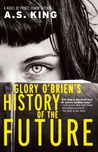
Glory O’Brien’s History of the Future by A. S. King (review by Mrs. Vaughan, Harker librarian)

Glory O'Brien's History of the FutureGlory O’Brien’s History of the Future by A.S. King
My rating: 4 of 5 stars

Glory O’Brien is about to graduate from high school but her future remains uncertain despite her apparent talents and a supportive single father. Glory remains haunted by the suicide of her artistic and even more talented mother fourteen years previous. Confident in her tendency to eschew the passing trends celebrated by teens around her, Gloria is nonetheless crippled by the fear that she harbors some unidentified trait that will lead her down the un-understandable path her mother traveled long ago. In a bizarre twist, Glory acquires the ability to see people’s futures and a terrifying dystopia, in which girls and women are reduced to less than chattel, reveals itself in sudden flashes as she encounters friends and strangers. By accident of circumstance, Glory not only needs to reconcile her identity and future, but ward off the impending devolution of society.

The beauty of King’s story is the character of Glory — a fully realized personality that subtly draws the reader into what at first seems a compelling coming-of-age story. Indeed, the much more frightening threat of societal dissolution is beautifully cloaked in the power of Glory’s story. Glory is a character drawn of perfectly believable contradictions: she simultaneously exudes self confidence and self questioning. She is both determined and terrified. Little does she know that the mystery of her personal circumstances may unlock more than her own salvation.

King’s is not a fantastic tale. Beyond the convention of the future visions, the existing discomfort in Glory’s life, the misogynistic forebodings and the novel’s satisfying ending are grounded in reality. Readers who enjoyed Chbosky’s Perks of Being a Wallflower and Lockhart’s We Were Liars, as well as King’s Please Ignore Vera Dietz will be thoroughly pleased with Glory O’Brien’s History of the Future. – Mrs. Vaughan, Harker librarian

View all my reviews

I Am a Strange Loop by Douglas R. Hofstadter (review by Andrew R. ’17)

I Am a Strange LoopI Am a Strange Loop by Douglas R. Hofstadter
My rating: 4 of 5 stars

In I Am a Strange Loop, Pulitzer Prize-winning professor Douglas Hofstadter proves that nonfiction doesn’t necessarily have to be built on fact; without much more than a lattice of elaborate metaphors and classical allusions to support the credibility of his arguments, he makes a case that’s both cogent and convincing. It boils down to this: in a brain comprised of complex neural symbols, the concept of “I” (also referred to as the “soul” or “self-symbol”) is a self-referential feedback loop of indefinite duration. Hofstadter presents a host of comparisons to better illustrate his abstract point, invoking repeatedly the ideas of a spring-loaded domino circuit, a video camera that points to its own screen, and, most effectively, a famous self-referential theorem by the mathematician Kurt Gödel. (Three chapter are spent providing mathematical context alone.) It’s in these creative metaphors that Hofstadter is most at home, and every time he spins off on a bizarre tangent you can be sure he’ll twist it to make his point even more forceful. In the end, his most abstract ideas were a little hard to swallow, but it’s easy to respect and value his arguments without totally agreeing with them. – Andrew R. ’17

View all my reviews