Normal People by Sally Rooney (Review by Varsha R. ’21)

Normal PeopleNormal People by Sally Rooney
My rating: 4 of 5 stars

TW for Normal People: Sexual assault and suicide

The first thing I noticed when I started Sally Rooneyโ€™s Normal People was that she does not use quotation marks in dialogue. What was initially jarring became understandable to me over the course of the novel. At the heart of Rooneyโ€™s writing is an innate desire to fully immerse the reader into the narrative; in real life, we donโ€™t talk or perceive language with quotation marks, and her aversion towards such conventional punctuation made me feel as though I myself was a side character in the book, watching the story unfold with an outside, yet involved, perspective.

Rooneyโ€™s sentences are short, blunt, and zany. At first glance, her words leave almost no room for interpretation, but she also manages to craft an intense, emotionally draining and, at times, frustrating love story that leaves an impact. Itโ€™s perhaps for this reason that people either seem to adore Rooneyโ€™s writing or despise it. It takes a while to get used to, especially after reading the more standard works of basically any other established author.

Normal People takes a classic, time-and-time-again-told story of misunderstanding amid romance while weaving key threads of social class, mental turmoil, and simultaneous self-discovery and self-depression. Itโ€™s impossible not to sympathize with the lead characters, Marianne and Connell, as they make their individual footprints in their legacies while constantly surrounded by the otherโ€™s memory and presence.

They start a clandestine relationship with one another in their senior year of high school with the cliche trope of a popular soccer player and a quiet, misunderstood ugly duckling. What separates Normal People from any other coming-of-age romantic comedy is an unmistakable backdrop of social inequality, emotional uncertainty, and poignant thoughts of philosophy and self-questioning, which are furthered by a strong use of the third person.

Rooney has an irksome talent to keep the magnetically attached Marianne and Connell in her books apart at the most inopportune moments, a trope that gets exasperating after the first couple times. But as she puts it, โ€œAll these year theyโ€™ve been like two little plants sharing the same plot of soil, growing around one another, contorting to make room, taking certain unlikely positions.โ€

And of course, a key hallmark of Rooneyโ€™s books is a disappointing ending that almost came off as a final โ€œscrew youโ€ to the reader after having been swept up in Marianne and Connellโ€™s intertwining tale for so long. But it was impossible for me to stay annoyed for long after having reflected on the profound impact that this book had on me, my perception of myself, and my understanding of how Iโ€™m perceived in the world around me. โ€”Review by Varsha R. ’21

For those who enjoyed Normal People, Varsha also suggests Conversations with Friends by Sally Rooney and The Outline Trilogy: Outline, Transit and Kudos by Rachel Cusk.

View all my reviews

The Ballad of Songbirds and Snakes by Suzanne Collins (5 Star Review by Ritu B. ’24)

The Ballad of Songbirds and Snakes (The Hunger Games, #0)The Ballad of Songbirds and Snakes by Suzanne Collins
My rating: 5 of 5 stars

The Ballad of Songbirds and Snakes is a jaw-dropping, lip-eroding (from biting in constant anticipation), breath-snatching tsunami of a novel. After completing it, I guarantee that you will be unable to formulate a coherent sentence for the next few hours.

This stellar prequel addresses questions Hunger Games fans didnโ€™t even know they had, like who really thought up the idea for the Hunger Games, how the eerie โ€œHanging Treeโ€ came about, and what itโ€™s really like to be a Peacekeeper. But for every question the novel answers, it creates ten more that go unanswered. I think that the reason the book lingered so long in my head is because it left so many roads open with the way it told Snowโ€™s story.

With The Ballad of Songbirds and Snakes, Suzanne Collins proved that she doesnโ€™t need Katniss Everdeen to weave a thrilling narrativeโ€”the entire book filters the world through the eyes of none other than eighteen year old Coriolanus Snow. (If you donโ€™t recognize his name, does โ€œcreepy dictator with no morals but a heck ton of white roses” ring a bell?) Right from the first chapter, his narcissism and his willingness to do anything to get ahead stood out to me. Collins voices his thoughts incredibly so that we can see his callous calculation of every minute incident and the cogs in his brain revolving to warp it into a tool to augment his reputation.

Not only do we get a better understanding of Snow in the prequel, but we also see an older Panem up close. The initial war between the districts and the Capitol enormously impacted Snowโ€™s childhood and the Capitol in ways we never could have inferred from just seeing the districtsโ€™ perspective on Panemโ€™s history. Plus, itโ€™s amazing to think about how the Hunger Games have evolved over timeโ€”the crude, primitive ones that occur in this novel (the tributes stay together in one cell of a zoo like animals!) are a far cry from Katnissโ€™s flashy, spectacular games 64 years later. More interesting yet is the surnames of Capitol characters present in this book, including a Plutarch. I donโ€™t want to spoil anything, but a Flickerman plays a role as a weatherman and games commentator!

Iโ€™m not going to say that after seeing Snowโ€™s life up close, I think his actions in the Hunger Games trilogy are justified. However, I would argue that the prequel brings a touch of humanity to his character, or at the very least, elicits sympathy for him. The main reason that propels the reader to continue flipping the pages of The Ballad of Songbirds and Snakes is the question โ€œHow does Snow get from here to where he is in the trilogy?โ€ Perhaps we receive a complete answer as to his mental and emotional frame, but Suzanne Collins does not provide a line-by-line list of the logistics of it. As a result, once I finished reading this book, I had no choice but to watch two hours of book nerds on YouTube discussing their reaction to the novel and popular fan theories out there. I donโ€™t doubt that this prequel will draw in an abundance of fan fiction. (If you do write a Ballad of Songbirds and Snakes fanfiction, please send it to meโ€”I would love to read it!) Lastly, Lionsgate announced last summer that a movie version for this prequel is in the making. I, for one, canโ€™t wait. โ€“Ritu B. ’24

Have you read The Ballad of Songbirds and Snakes? Let us know what you thought in the comments!

View all my reviews

Celebrating AAPI Literature (By Ms. Pelman)

Out of countless prodigious options, here are four books that Iโ€™ve read recently written by Asian American authors. They each represent just one facet (of infinite) perspectives. While these books take on wildly different subject matter, each one is fascinating, eye-opening, and riveting in its own right.


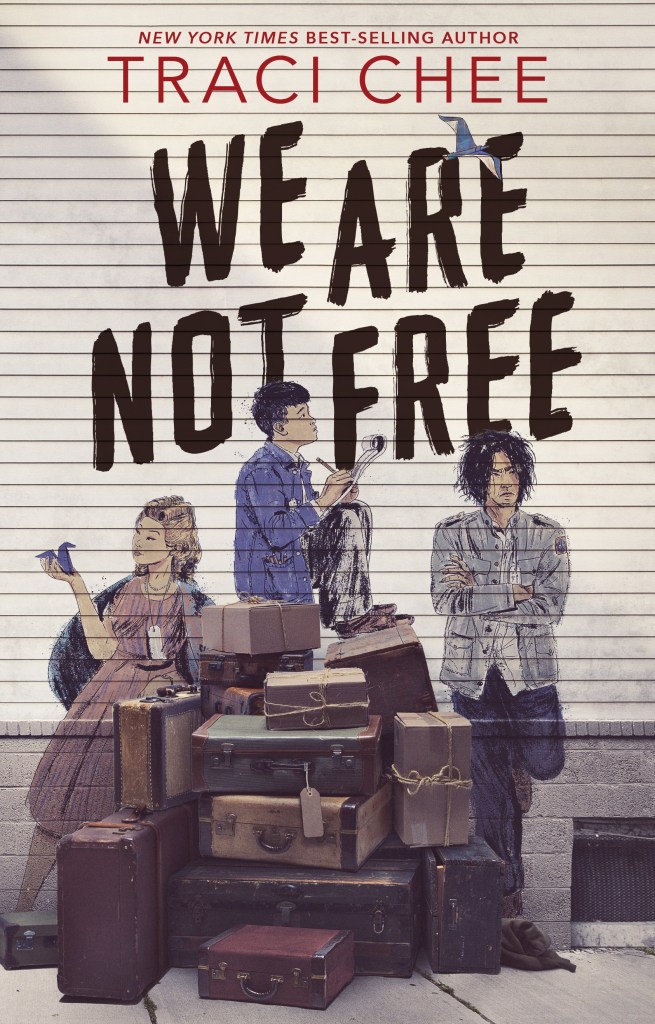
We Are Not Free by Traci Chee

This work of historical fiction follows a group of Japanese American teens who live in San Francisco during World War II. Their lives are thrown into tumult and their bonds are tested as some of them face the decision to fight in the war, and others are sent to an internment camp. If you like books told from multiple perspectives, you wonโ€™t be let down by this vivid and moving book.


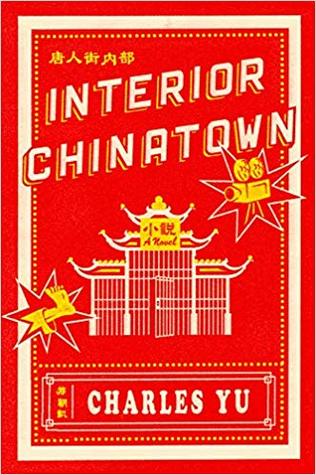
Interior Chinatown by Charles Yu

This offbeat National Book Award winner is written in a screenplay format. Willis Wu is a Chinese American actor who hopes to graduate from the bit parts of โ€œgeneric Asian manโ€ to the ultimate role for Asian men: Kung Fu Guy. Clever, funny, and fast-paced, this book skewers Hollywood in the most satisfying way.


Last Night at the Telegraph Club by Malinda Lo

Another historical fiction set in San Francisco, though this one follows Lily, a shy and obedient girl living in Chinatown in the 1950s. As Lily navigates a growing discomfort with her family, culture, and best friend, she discovers truths about herself and her sexuality that will change her life forever. A lovely tribute to self-discovery amidst painful realities.

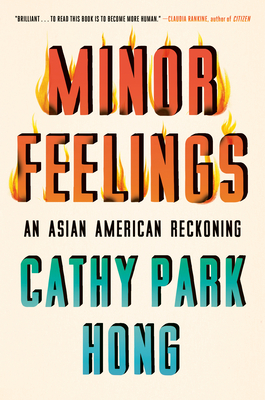
Minor Feelings by Cathy Park Hong

This nonfiction book of essays contains brilliant commentary and criticism on race in the United States as the author explores and explains her Korean American identity. It is also beautifully written and complemented by memoir-like personal experiences. A memorable experience that makes you think and feel.

Have you read any great books by AAPI authors? Share them in the comments!

Introducing: Fanfiction contest

The Harker Book Blog is hosting our first ever FanFiction Contest!! You can write about any work (book, movie, television, show, K-Pop groupโ€ฆ). Spin the original work into anything that you want (for example: rewrite Twilight from the perspective of Jacob, or make Percy Jackson have a brain made of seaweed that zombies want to eat). There is no length requirement, but we recommend your writing be 1-5 pages long.ย Your story can comprise all your marvelous imaginings, but the content must be Harker appropriate. The deadline to enter is May 1st at 8pm!

Feeling shy about this secret talent of yours? Not to worry, you are allowed to submit under a pen name and can therefore remain entirely anonymous! 

We will announce winning entries on the blog. To avoid any copyright issues, submissions will only be accessible to the Harker community via protected PDFs. Feel free to email harkerusbookblog@gmail.com if you have any questions, or if you would like prompt ideas for your story. 

For more info and to learn how to enter, go to tiny.cc/harkerfanfic. We look forward to reading your entries!

The Picture of Dorian Gray by Oscar Wilde (5 Star Review by Ananya B. ’23)

The Picture of Dorian GrayThe Picture of Dorian Gray by Oscar Wilde
My rating: 5 of 5 stars

The Picture of Dorian Gray is a philosophical novel featuring main characters Basil Hallward, Lord Henry Wotton, and of course, Dorian Gray. Basil Hallward is an artist who paints a portrait of Dorian Gray, and Lord Henry is a friend of his who has extremely questionable morals and ideals, unlike those that Dorian has been exposed to before. I loved this book, mostly because of the characters themselves.

First, we have Dorian Gray, who starts off the novel as a young, naive, child-like character, but he undergoes many changes and a great deal of character development throughout the novel, mainly under the influence of Lord Henry. I honestly cannot tell if I loved or hated Lord Henry, who brings up numerous witty and intelligent insights and ways of thinking. He corrupts Dorian with his deplorable deeds and persuasive words.

Next, there is Basil, who is the foil to Lord Henry, serving as the angel to his devil. The relationships between the characters, their interactions, and how they influence each other was engrossing, although I would have liked to have seen more of Basil and Dorian.

My one main criticism of the book is that Wilde sometimes goes on long tangents describing furniture, tapestries, and other such things. However, Wilde explores the themes of depravity, corruption, and hedonism in an enthralling and captivating way, forcing the mind to think about different philosophies and their effect on a person such as Dorian. โ€”Review by Ananya B. โ€˜23

View all my reviews

The Secret History by Donna Tartt (Review by Alysa S. ’22)

The Secret HistoryThe Secret History by Donna Tartt
My rating: 3 of 5 stars

TW for The Secret History: references to alcohol and substance abuse, self-harm, murder

In many ways, The Secret History was one of the most baffling, difficult, and frustrating books that I’ve ever read in my entire life. Iโ€™ve never read anything quite like this.

First, I’ll start with the good: Donna Tartt is a beautiful, sophisticated prose writer with a distinct style. The vocabulary used only serves to emphasize the academic, intellectual university setting of the novel and the exclusive, Classics-educated group of students that protagonist Richard Papen so desperately wishes to assimilate into. As a fellow Californian used to the fast-paced craze of the West, I see quaint New England as a fascinating wonderland through Richard’s fresh perspective: all falling autumn leaves, dusty and antique libraries, and elite, old-money academics.

However, the rest of the novel immediately takes a dark turn, exploring bacchanal, unthinkable concepts of evil in human nature. First of all, I consider myself sufficiently patient when it comes to arduously long books, but the sheer page count of this book became increasingly difficult to get through as each page revealed yet another shocking truth about the ostensibly perfect characters that grudgingly accepted Richard into their group: twins Camilla and Charles, Francis, and Henry (Yes, he is an enigma. Yes, I find his dark and brooding, extremely intelligent, unofficial leader of the group qualities extremely appealing).

Along with the dense chapters, I also think the emotional baggage is extremely heavy. This is not a book for light reading, nor does it have a definite beginning and ending that follow your usual story arc. As much as I enjoyed the detail and the moments of surprise, the evolving relationships of the six characters that catalyze a downward spiral of events dragged on too long for me, and the psychological thriller aspect of the book left me extremely depressed and upset with our reality. For anyone considering this book, I would probably ask you to reconsider. But if youโ€™re into dark academia and extensive analysis of the depths of evil in the human soul, well, all I can say is brace yourself. โ€”Review by Alysa S. โ€™22

View all my reviews

This Tender Land by William Kent Krueger (Review by Alysa S. ’22)

This Tender LandThis Tender Land by William Kent Krueger
My rating: 4 of 5 stars

This book made me smile and frown and laugh at all the right times. I loved the protagonist Odie’s character development from the moment he undertook a journey of escape towards a better future to the day he returned home, and I also greatly enjoyed the incredibly strong theme of friendship present between the four main characters on the journey.

This Tender Land begins in the rural countryside of Minnesota, and I especially appreciate the author’s accurate historical representation of the Great Depression Era and its socioeconomic effects on the various demographics that we encounter throughout the journey. Although Odie is the main focus of the book, I enjoyed the visibly significant growth of each of the four characters. I think what made this book such a feel-good read was Odie’s relatability as a protagonist: he’s clearly unsure of himself and shoulders immense responsibilities at a young age, but his resilience and inherently caring nature cause me to gravitate towards his character and admire both his strengths and weaknesses.

Though This Tender Land seems occasionally juvenile in its storytelling (understandable from the young protagonistโ€™s POV), for anyone who wants to experience an epic, cross-country adventure while learning a bit of 1930’s history through the eyes of a teenage vagabond stepping into the role of a young adult, this coming-of-age tale proves to be a satisfactory read. โ€”Review by Alysa S. โ€™22

View all my reviews

Spin the Dawn by Elizabeth Lim (Review by Ananya B. โ€˜23)

Spin the Dawn (The Blood of Stars, #1)Spin the Dawn by Elizabeth Lim

My rating: 2 of 5 stars

I originally picked up the first installment of this duology, โ€œSpin the Dawn,โ€ because the plot summary sounded very appealing. I was very drawn to the Mulan-like concept and Project Runway theme as well as the promise of magical elements, and I had also seen many reviews promising that this series was a definite must-read. The plot follows the story of Maia, a tailor in a strongly patriarchal East Asian-inspired country who must take part in a competition similar to those on Project Runway.

The book, though not exactly terrible, turned out to be very forgettable. The worldbuilding is lackluster, and I feel that the author could have executed it much better. For example, a war is currently underway, but there is barely any memorable backstory as to why it is happening. The magic system is also fairly underdeveloped in my opinion since random elements appear in the storyline with barely any logic. Limโ€™s writing style is decently descriptive and helps to make up for some of the missing elements, but there are still many scenes that โ€œtellโ€ rather than โ€œshow.โ€ Also, as a YA fantasy novel, this book uses many common cliches and YA tropes. Maia seems to fall right into the mold of the simple young adult female protagonist, and her character feels flat.

Even the romance aspect of this book is underwhelming. While not entirely unpleasant, it once again seems basic and cliche. About halfway through the novel, Maiaโ€™s relationship overtakes the plotline and shifts the focus away from Maia and her quest. The obstacles and problems of Maiaโ€™s journey become completely sidelined and are dealt with too quickly, producing a lackluster effect on a mission that is supposed to be engrossing and filled with formidable hardships.

One plus, though, is the cover. I usually dislike book covers that depict the character, but this cover is gorgeously made and a large part of the reason why I even picked it up. All in all, this book is an entertaining read, but it fails to live up to my original expectations due to the writing style and underdeveloped story. โ€”Review by Ananya B. โ€˜23

Norwegian Wood by Haruki Murakami (Review by Alena S. ’24)

Norwegian WoodNorwegian Wood by Haruki Murakami
My rating: 4 of 5 stars

Norwegian Wood is my comfort book, and not because reading it leaves me feeling warm or happyโ€”but because I love its transparency. This book displays the ugly sides of human nature, yet it hints at tenderness due to how personal it is. Murakami expertly balances the dark themes of mental illness and suicide with humorous scenes, and the main character Toru makes me laugh quite a bit despite not being a funny character. Although the tale is set in the late 60s, it has a universal appeal that doesn’t feel dated, and ironically, despite the precise descriptions of nature and people, something about the story gives it an otherworldly feel.

Since technology was not as advanced nor widespread at the time, people were more in touch with nature, and Murakami’s description of scenery and rain was incredibly beautiful โ€” one of my favorite aspects of the book. Even though this book was really unorthodox in its structure and plot compared to books Iโ€™ve read in the past, I rated it four stars because I feel like the protagonist helped me better understand a side of personal struggles and hardships that I hadnโ€™t previously experienced myself. However, the book does go through a lot of poignant and deep discussion about the connection between life and death, and the open ending felt like a sudden and unrealistic rush that left no room for afterthought compared to the heavy plot. โ€”Review by Alena S. โ€˜24

View all my reviews

Allegiant: Book to Movie Review (by Ritu B. โ€˜24)

โ€œI canโ€™t believe that they have desecrated something so sacred!โ€ I burst out as soon as the Allegiant movie credits flashed onto the screen. My family can attest to that.

Let me back up.

In fourth grade, I finished the sumptuous feast that is the Divergent series, books that were so important to me in my childhood. Having been pleased years ago by the first movie adaption of the series, I had high, high hopes coming into the Allegiant movie…that you can already guess were not fulfilled.

[Warning: Reading ahead will reveal spoilers for the Divergent series]

If youโ€™re familiar with the book and youโ€™ve seen the movie, then you already know my largest grievance. Come on, say it with me out loud, and letโ€™s relieve our agony together: orange!!

In the book, the world outside of Chicago is described as gloomy and dark, but in the movie, we get Kraftโ€™s mac-and-cheese-flavored radioactivity!

I have no problem whatsoever with producers taking creative rights with the storylineโ€”if the movie were the same as the book, no one would want to watch it, right?

Wrong.

Little plot meanderings and trimmings here and there will make a movie more enjoyable to sit through, but when itโ€™s obvious that a three hour film won’t do justice to such a heavy bookโ€™s plot, then the movie project must be split into two. (Think Harry Potter and The Hunger Games.) Allegiant undoubtedly fell under this category, and Iโ€™m devastated that instead of making two films, the movie cut out half of the bookโ€™s plot, half of the characters, and hacked away at Veronica Rothโ€™s masterpiece until it arrived at a sloppy post-apocalyptic world.

Uriah who? Cara who? So many members of the crew that accompanied Tris and Tobias out of Chicago werenโ€™t present at all. Instead, the movie blew 90% of its precious duration on slow camera pans to show off “breath-taking”โ€”but really, irrelevantโ€”technology.

However, I did appreciate a few partsโ€”that is, when I wasnโ€™t being blinded by the orange. In spite of the twisted storyline in the movie, the script stayed true to the main charactersโ€™ identities. Tobias was Theo James (sorry but I canโ€™t find any flaws with that.) Evelyn, his dictator mother, maintained her redemptive arc in the end, giving up power to be with her son. Peter, the โ€œbad guyโ€ who hangs out with the โ€œgood guys,โ€ was sharp, sarcastic, and self-absorbed. My favorite line of the movie was โ€œ[t]hatโ€™s why you pick a guy like me for a job like this,โ€ intended for his boss to hear, which he delivers after shooting Evelyn in the knee when she turns back on their dark plan.

But, ok, Iโ€™ve reached my last complaint: Tris didnโ€™t die in her quest to restore goodness in the world. This movie doesnโ€™t deserve the name Allegiant if the ending doesnโ€™t plunge its claws into your chest, wrench your heart out, and render you a sobbing shell of a human being for the next week.

Have you watched Allegiant? Share your thoughts in the comments! โ€” Ritu B. โ€™24

For those who enjoyed this book, Ritu has recommended The Lunar Chronicles series for you to check out!