Tag Archives: Adult

Hell Bent By Leigh Bardugo (Review By Tara N. ’26)

Hell Bent (Alex Stern, #2)Hell Bent by Leigh Bardugo
My rating: 2 of 5 stars

Spoiler warning: no major spoilers, but a lot of minor ones. This also won’t make any sense unless you’ve actually read the book.

I reread this book two years after it dropped in hopes that I had hallucinated it having been bad (I only remembered one plot point. I’ll give you a hint: it was glowing.) I was sorely disappointed.

Many elements of the book were a let-down, and it’ll be difficult for me to articulate why. I think the most pressing issue is that Hell Bent tries to pack too much plot into too short of a book and leaves character development by the wayside.

The central mystery of Ninth House is not who killed Tara Hutchins; it’s who Alex Stern is, and by extension who Darlington is, who Hellie and Len are, where did they go, why do we care. These are the questions the reader is trying to answer as they work their way through the book.

But Hell Bent just focuses on its moving parts—Eitan, Anselm, Reiter, Michelle, Walsh-Whitley, Darlington himself. In a Goodreads Q&A, Leigh Bardugo mentioned that the Alex Stern series was originally going to be, like, 12 books, then got shortened to 5, then 3, because they took so long to research… and unfortunately, that’s very apparent. Hell Bent felt like it was the premise of several different books frankensteined together.

Several books’ worth of character development gets awkwardly skipped over. Mercy, Tripp and Turner get awkwardly shoehorned into the main cast, with their character arcs hastily jammed in in the form of supercuts and flashbacks. I say this not because I think they shouldn’t be, but because I think they should’ve been given more screentime and development—each of them deserved their own book in the spotlight.

Tripp was particularly jarring; in the original book, he’s a hapless symbol of white privilege and the infinite second chances given to wealthy young boys. There’s hints of where Bardugo wants to go with his character—the minor reveal that he was instinctively aware of what Blake Keely was came all the way back in book 1—but the transition from set dressing to guy we are supposed to care about just isn’t actually executed. Mercy’s being brought into the fold is also clumsily done. She’s one of my favorite characters, but I think the revelations she has in Hell Bent can’t be contained within the span of a few conversations.

People complained about the pacing of Ninth House, but Ninth House was good because you watched things unravel slowly; Hell Bent sacrifices all of that and thus has the opposite problem (although it wasn’t a problem in the first place). Too much plot is crammed in. Nobody stops to take a breather and emotionally process what’s going on. Ninth House was self-aware in a way that Hell Bent is not.

And I really, truly hate to say this—because this series is not about Darlington, he is not the hero of this story, and that is part of the point. I’ve seen people act like the white man was the best part of the series and it drives me utterly insane—but he really should’ve had more screentime. I would’ve wanted to see his POV earlier. Hell Bent is, ostensibly, about rescuing him. The fun of Ninth House was piecing the story together from the split POVs; perhaps Hell Bent could’ve pulled a similar trick with Alex’s thoughts from above, and Darlington’s thoughts from below. I support him going off the rails, but I want to see that process occurring bit by bit, not just a jump-cut to him suddenly being naked and feral with claws and horns. Darlington’s entire premise is that he’s a gentleman—if he’s not acting the part, we need more than a few sentences on why.

The story read like one of my English essays: a haphazardly jammed-together collection of plot notes, impossible to treat with their proper gravitas. Any legitimately compelling moment fell flat, because there was no real buildup, just payoff, payoff, payoff, except for the payoff didn’t feel like payoff because there was no buildup to make it a payoff, and we didn’t even get the biggest payoff of the series that everybody was hoping for (IYKYK). Alas.

I don’t care if book 3 takes another four years (I actually do, but that’s beside the point)—just please let it make up for this.

View all my reviews

Tender is the Flesh by Agustina Bazterrica (Review by James B. ’24)

Tender is the FleshTender is the Flesh by Agustina Bazterrica
My rating: 4 of 5 stars

Before reading this review or the novel itself, I caution you because it is classified as psychological horror and contains many disturbing themes, such as cannibalism, animal abuse, and sexual assault. I will also briefly mention these in my review, but nothing nearly as explicit as the novel itself.

Tender Is the Flesh is a psychological horror novel by Agustina Bazterrica featuring a dystopian future in which a virus carried by animals, livestock in particular, proves lethal to humans. In an attempt to curb the massive death count, the livestock industry halts all production and all animals capable of carrying the virus are slaughtered, including domestic animals as well as wild ones. Marginalized groups start to go missing as the demand for meat arises, and due to pressure from the livestock and animal product industries, the Government legalizes the breeding and processing of humans for food.

The story is fed to us through the perspective of a higher-up at a human processing plant several years after the “Transition” occurs, when the industry has already picked up steam the the government and media have successfully coerced the general public into viewing it all as normal and consuming the “special” meat. Marcos Tejo, the protagonist, goes about an eventful week at his job with a chilling aloofness as the reader is introduced to the horrors of this potential future, alongside commentary primarily featuring Marcos’ own misgivings as well as his struggle with his father’s dementia and wife’s grief after the loss of their child.

Even as I sat, enthralled, by the both direct and implicit horrors of the dystopia, I couldn’t help but to admire the terrible beauty that this book was. Unlike a lot of other disturbing media I’ve consumed, the characters were complex and compelling, storylines weaving together like sinews to bone to form one whole intricate machine of a story. It also didn’t rely on shock value for depth, laying out all its gory cards on the table where similar books hold them to their chest. The simplicity of the concept left the reader to strip from it the humanity until the bare commentary is shown, an addictive quality that had me finishing it in only a little over a day.

Without revealing too much of the plot, grotesque details combined with coerced normality paint a gruesome tale of grief, guilt, and the ease with which change comes if the right parties are enforcing it. Marcos is by no means a hero but he presents a sympathetic front as a part of the majority who were made uneasy by the Transition, but don’t openly oppose it. At times he is obviously unreliable and I wouldn’t say I was ever rooting for him, and yet I still felt a sting of betrayal by the end of the book.

In conclusion, Tender Is the Flesh is not a novel for the faint of heart or weak of stomach, but I would consider it a somewhat introductory read for those interested in psychological horror or disturbing media in general. One of its best qualities in my opinion is that the story holds its own outside of the horror, and I can imagine it would be a great read for its social commentary alone. For the avid horror fans, I will admit that I found it to tame considering what I’d heard about it, but it’s still fairly skin-crawling and certainly a novel concept that reaches beyond the usual scares.

Happy(?) reading! -Review by James B. ’24

View all my reviews

Ninth House by Leigh Bardugo (Review by James B. ’24)

Ninth House (Alex Stern, #1)Ninth House by Leigh Bardugo
My rating: 3 of 5 stars

TW for the book: Drug Overdose, Murder, Sexual Assault

As Leigh Bardugo’s debut into Adult Fantasy, Ninth House is a stunning dark thriller that takes place on the modern day Yale campus. Be aware that this book may make you question your college apps however, as there is much murder and magic afoot.

The book follows Galaxy (Alex) Stern, a freshman with an unusual ability, through various timelines as she attempts to piece together the details of an oddly familiar murder and figure out how it relates to her mentor’s disappearance. You see, Alex is by no means qualified to study at Yale, but has rather been enlisted by a governing body that oversees the activities of the university’s ancient secret societies. It is through her ability to see ghosts, called Greys in the book, that Alex is recruited as Lethe House’s new Dante, serving under the previous Dante, now Virgil, Daniel Arlington. From a hospital bed after being found overdosed on the scene of a brutal killing, to controlling the magical powers of several groups of entitled rich kids at one of the most prestigious schools in the country, Alex Stern must fight for her life and the promise of a better future.

For the record, I wanted to like this book so badly, and even having finished it I still want to. The world-building is incredible and Leigh Bardugo once again proves that somehow she can still create new magic systems as well as lovable morally-grey characters. Alex Stern had potential to be among my favorite characters I’ve read in fantasy; she’s dynamic, persistent, and brutal while also remaining very human (ever when she is very much not). This book had all the makings to be a favorite and somehow it all just fell flat.

I am by no means a slow reader, but Ninth House took me months to conquer. It’s not that there isn’t plenty of hard-hitting action, but the back and forth between timelines quickly became dizzying. I found myself frustrated that another segment had gone by without answering my biggest questions, and even once they were answered, it didn’t feel satisfying. One of my biggest red flags for a book is whether it makes me question if I, the reader, am reading it incorrectly somehow. Too often I felt I was slipping off the hook, like the line itself was too taut for me to think about anything else.

Having said that, there are some truly gorgeous scenes in this book that stand extremely well on their own, and I think it is worth reading if you have the patience for a lot of unanswered questions. Just be sure to prepare yourself as Ninth House does explore some intense topics that might be upsetting, and that I was frankly unprepared for. —Review by James B. ’24

View all my reviews

No Longer Human by Osamu Dazai (5 Star Review by Jason S. ’25)

No Longer HumanNo Longer Human by Osamu Dazai
My rating: 5 of 5 stars

TW: suicide, substance abuse, misogyny

No Longer Human, Osamu Dazai’s last work, is a heavy semi-autobiographical novel told mostly through the abandoned memoirs of Oba Yozo, a man whose failure to understand and properly interact with a thoroughly westernized pre-WWII Japanese society forces him to live under the assumption that he is disqualified from humanity. The narrative is bookended by an observer whose findings reframe Yozo’s life through a set of more forgiving, though by no means rose-tinted, lenses.

I find Yozo to be an incredibly well-written character. This does not mean that I like him as a person; on the contrary he is melancholy, irresponsible, and thus extremely difficult to like. However, his mistakes are painfully human. This being said, Yozo’s narration is at times dominated by an unusual misogyny that uncomfortably extends beyond the already alienating context of his misanthropy. Even more concerning for a semi-autobiographical novel, quite a few women are written by Dazai to passively conform to Yozo’s views concerning a vulnerable, inscrutable woman.

This intolerance, though, is a human fault. Inexcusable, but quietly human. Passing judgements onto Yozo’s faults inevitably made me question my own. The text, though genuinely depressing, sits at an extremely accessible 177 pages. No Longer Human is a novel I will return to when my values will have unrecognizably shifted, and one that I recommend best with a highlighter, a good pen, and an open mind. —Review by Jason S. ’25

Jason’s book recommendations for those who enjoyed No Longer Human:

Notes from the Underground is a strikingly similar work; indeed, Dazai even explicitly communicates his Dostoevsky influences at one point in No Longer Human.

Siddhartha is a very interesting piece in comparison.

Brief Interviews with Hideous Men explores many of the same issues in radically different contexts, particularly the story “The Depressed Person.”

View all my reviews

Normal People by Sally Rooney (Review by Varsha R. ’21)

Normal PeopleNormal People by Sally Rooney
My rating: 4 of 5 stars

TW for Normal People: Sexual assault and suicide

The first thing I noticed when I started Sally Rooney’s Normal People was that she does not use quotation marks in dialogue. What was initially jarring became understandable to me over the course of the novel. At the heart of Rooney’s writing is an innate desire to fully immerse the reader into the narrative; in real life, we don’t talk or perceive language with quotation marks, and her aversion towards such conventional punctuation made me feel as though I myself was a side character in the book, watching the story unfold with an outside, yet involved, perspective.

Rooney’s sentences are short, blunt, and zany. At first glance, her words leave almost no room for interpretation, but she also manages to craft an intense, emotionally draining and, at times, frustrating love story that leaves an impact. It’s perhaps for this reason that people either seem to adore Rooney’s writing or despise it. It takes a while to get used to, especially after reading the more standard works of basically any other established author.

Normal People takes a classic, time-and-time-again-told story of misunderstanding amid romance while weaving key threads of social class, mental turmoil, and simultaneous self-discovery and self-depression. It’s impossible not to sympathize with the lead characters, Marianne and Connell, as they make their individual footprints in their legacies while constantly surrounded by the other’s memory and presence.

They start a clandestine relationship with one another in their senior year of high school with the cliche trope of a popular soccer player and a quiet, misunderstood ugly duckling. What separates Normal People from any other coming-of-age romantic comedy is an unmistakable backdrop of social inequality, emotional uncertainty, and poignant thoughts of philosophy and self-questioning, which are furthered by a strong use of the third person.

Rooney has an irksome talent to keep the magnetically attached Marianne and Connell in her books apart at the most inopportune moments, a trope that gets exasperating after the first couple times. But as she puts it, “All these year they’ve been like two little plants sharing the same plot of soil, growing around one another, contorting to make room, taking certain unlikely positions.”

And of course, a key hallmark of Rooney’s books is a disappointing ending that almost came off as a final “screw you” to the reader after having been swept up in Marianne and Connell’s intertwining tale for so long. But it was impossible for me to stay annoyed for long after having reflected on the profound impact that this book had on me, my perception of myself, and my understanding of how I’m perceived in the world around me. —Review by Varsha R. ’21

For those who enjoyed Normal People, Varsha also suggests Conversations with Friends by Sally Rooney and The Outline Trilogy: Outline, Transit and Kudos by Rachel Cusk.

View all my reviews

Celebrating AAPI Literature (By Ms. Pelman)

Out of countless prodigious options, here are four books that I’ve read recently written by Asian American authors. They each represent just one facet (of infinite) perspectives. While these books take on wildly different subject matter, each one is fascinating, eye-opening, and riveting in its own right.


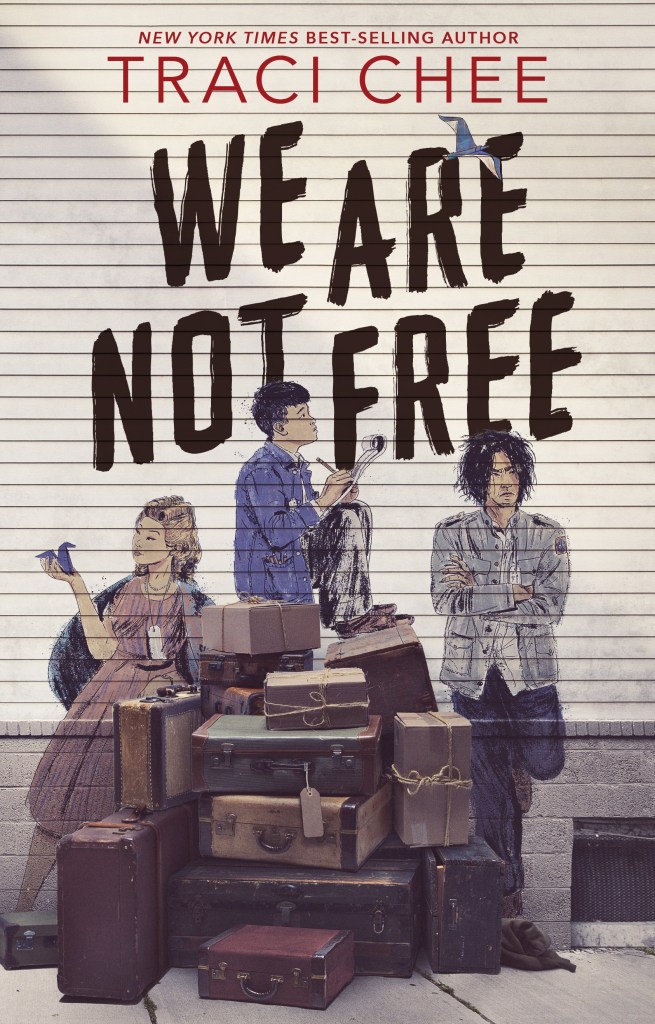
We Are Not Free by Traci Chee

This work of historical fiction follows a group of Japanese American teens who live in San Francisco during World War II. Their lives are thrown into tumult and their bonds are tested as some of them face the decision to fight in the war, and others are sent to an internment camp. If you like books told from multiple perspectives, you won’t be let down by this vivid and moving book.


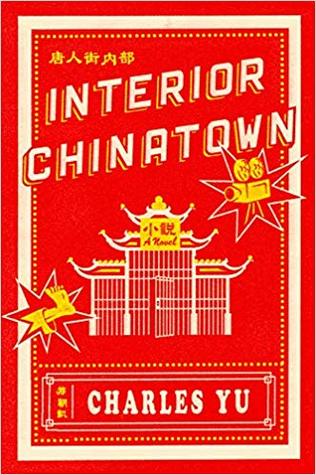
Interior Chinatown by Charles Yu

This offbeat National Book Award winner is written in a screenplay format. Willis Wu is a Chinese American actor who hopes to graduate from the bit parts of “generic Asian man” to the ultimate role for Asian men: Kung Fu Guy. Clever, funny, and fast-paced, this book skewers Hollywood in the most satisfying way.


Last Night at the Telegraph Club by Malinda Lo

Another historical fiction set in San Francisco, though this one follows Lily, a shy and obedient girl living in Chinatown in the 1950s. As Lily navigates a growing discomfort with her family, culture, and best friend, she discovers truths about herself and her sexuality that will change her life forever. A lovely tribute to self-discovery amidst painful realities.

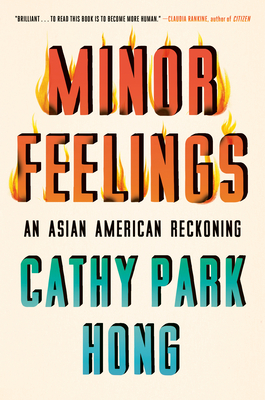
Minor Feelings by Cathy Park Hong

This nonfiction book of essays contains brilliant commentary and criticism on race in the United States as the author explores and explains her Korean American identity. It is also beautifully written and complemented by memoir-like personal experiences. A memorable experience that makes you think and feel.

Have you read any great books by AAPI authors? Share them in the comments!

The Poppy War by R. F. Kuang (Review by Anika F. ’21)

The Poppy War (The Poppy War, #1)The Poppy War by R.F. Kuang
My rating: 5 of 5 stars

Even though this was the first book I read in 2021, I’m pretty sure that this will be one of my favorites from this year. The Poppy War is a grimdark east-Asian inspired historical fantasy centers around the a young girl named Rin. She is a war orphan from the first Poppy War, raised in a poor, opium-smuggling family that treats her as a servant. Rin’s only escape from a forced marriage is to pass a merit-based exam to enter Sinegard, Nikara’s elite military academy. In a surprising shock of events, Rin places into Sinegard, but finds that the experience is not what she expects: She is isolated as a poor and dark-skinned girl from the south, but as she rises in the academy ranks, she begins to realize that the gods of legend aren’t as fictional as people think. As a war is brewing, will she be able to survive and save her nation?

Normally, novels tend to excel in one of two categories: character development or plot development. Very few manage to do both well, but The Poppy War does and does so exceptionally. All character storylines are extremely interesting to follow, and the plot is well-paced, complex, and fascinating. Rin is a determined and headstrong protagonist who makes a lot of choices that readers probably will not agree with. However, her confidence and assertiveness compels the reader to support her no matter what gory or twisted option she chooses. Each detail is action-packed and engrossing, and all the battle scenes delivered believable and heartbreaking consequences.

Lastly, this book tackles some difficult themes. It retells the Rape of Nanking, in which Japanese troops attacked China during the Second Sino-Japanese War. The impact of war on civilization is heavily discussed along with colorism and colonization. Multiple chapters delve deep into graphic scenes that involve murder, violence, and sexual assault, as well as exploring drug addiction, trauma, and self-harm. So if you do decide to try this book, please read with caution. —Review by Anika F. ’21

For those who enjoyed this book, Anika has recommended The Priory of the Orange Tree for you to check out!

View all my reviews

The Night Circus by Erin Morgenstern (Review by Lizzie B. ’24)

The Night CircusThe Night Circus by Erin Morgenstern
My rating: 4 of 5 stars

The Night Circus by Erin Morgenstern is an eloquent urban fantasy that takes place from 1873 to 1902. It follows Celia Bowen, born with magical ability, and Marco Alisdair, trained in magic from a young age, as they battle head-to-head in a competition with no clear rules or boundaries. The story twists and turns back and forth through time, flashing between the perspectives of different characters and concluding in a satisfying if not perfect ending. Morgenstern’s mastery over description brings Le Cirque de Rêves to life and the discourse between characters proves engaging if not a bit complicated.

I enjoyed the book greatly because all my questions were answered by the end of the book and I fell in love with the characters and little romances. With that having been said, the story has plenty of complexities that might make this read difficult if you aren’t willing to stick it out. I loved those complexities as they added depth to the story and I absolutely loved the idea of being among the Rêveurs or attending one of the Circus Dinners. As much as I enjoyed it and will encourage others to read it, it is certainly not for everyone. –Review by Lizzie B. ’24

View all my reviews

He Started It by Samantha Downing (Review by Anika F. ’21)

He Started ItHe Started It by Samantha Downing
My rating: 2 of 5 stars

October has officially begun, and it is finally socially acceptable to start sharing some mystery, thriller, and horror reads. To begin, here is a 2020 release: He Started It, by Samantha Downing, tells the recreation of a childhood road trip by adult siblings Eddie, Beth, and Portia, as instructed by their grandfather’s will. Although they oblige, their relationships reveal avarice, family tensions, and ongoing conflicts as the storyline progresses with the trip.

Personally, I have a criteria when it comes to thrillers. Firstly, and most importantly, the ending needs to be satisfying and make sense based off of the clues revealed along the way. Secondly, the plot leading up to the final twist needs to be captivating enough to hold my interest, maybe through small turns here and there that can introduce some shock value. And if I ever feel like putting the book down mid-read, it is not a good sign.

For these reasons, He Started It truly disappointed me. The events leading up to the final reveal were honestly underwhelming. I thought the ending might save the storyline, but once I reached it, I found myself slightly annoyed. The book provided me no way to piece together the preceding events and how each scene led to the resolution. Nothing made sense.

If you have the time to spare, I suppose you could give it a try. But if not, sit this one out and pick up My Lovely Wife, another one Samantha Downing’s works that will definitely be more worth your time. —Review by Anika. F ’21

View all my reviews

Daisy Jones & The Six (review by Emma A. ’21)

Daisy Jones & The SixDaisy Jones & The Six by Taylor Jenkins Reid
My rating: 5 of 5 stars

About a page into the book, I was completely hooked! Daisy Jones and The Six by Taylor Jenkins Reid tells the story of the rise and fall of a fictional band in the 70s. The story depicts unconditional love, addiction, self-help, and the golden era of rock, all while set to a soundtrack of some of the best made up songs I have ever read. Loosely modeled off of Fleetwood Mac, the drama and events of the novel are so realistic that you will have to keep telling yourself the band doesn’t exist!

The novel is divided into parts, each progressing through the story of the whimsical, carefree Daisy Jones and the emerging musical powerhouse The Six. Daisy and the band’s stories begin to intertwine and new group dynamics emerge and are tested. The characters are each imperfect in their own ways and there is a sense of humanity given to each of them. Unsurprisingly, my favorite character was Daisy. Daisy is headstrong, stubborn, self sabotaging, and possesses natural born talent, but she grows and develops over the course of the story. As the novel was told in an interview format, each character was reflecting on the decisions they made in the past while providing commentary and witty remarks. Each character’s voice emerged distinctly and proved a testament to their personalities.

This book was honestly a perfect shelter in place read for me and a great addition to my favorite books of all time list! I found myself eager to keep reading and couldn’t put the book down (I finished it in one night!). The story is incredibly engrossing and realistic, and though I grew up in the 2000s, I felt fully immersed in the bustle of LA and the rock scene of the 70s. -Review by Emma A. ’21

View all my reviews