Tag Archives: Coming of Age

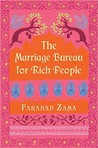
The Marriage Bureau for Rich People by Farahad Zama (review by Shannon H. ’16)

The Marriage Bureau for Rich PeopleThe Marriage Bureau for Rich People by Farahad Zama
My rating: 3 of 5 stars

Overall, this book was a fun read — I enjoyed learning about marriage practices in India (although I am not entirely sure how accurately the practices are portrayed). The depiction of modern India resonates with me; I understood the ever-present inequality and the social turmoil, and I felt the heated debates between traditional cultural values and modern interpretations of humanity. However, I found that the novel dissolved from a potential critique of the system into a contrived love story between a rich Brahmin male (upper class) and a poor, but still Brahmin, working woman. I was mildly disappointed, but I still found The Marriage Bureau for Rich People a quick and fun read.

View all my reviews

Sala by Toni Morrison (review by Andrew R. ’17)

SulaSula by Toni Morrison
My rating: 3 of 5 stars

I chose Sula as my first introduction to Toni Morrison’s work because it was slimmer, lighter, and—apparently—easier to understand than her more famous and acclaimed novels, but now that I’ve finished the last chapter I find myself wondering if this book is really representative of Morrison’s greater oeuvre. The plot sounds deceptively peaceful: young black Sula leaves her small hometown behind as she heads off to be educated, and upon her return ten years later (a significant gap in the novel’s chronology), she’s estranged and distrusted by her former friends. You can’t call Sula “peaceful,” though, because Morrison fills its pages with wanton, almost casual violence and death. A mother soaks her son’s mattress in gasoline and sets it alight; a woman burns to death trying to light a yard fire; a little boy slips from his friends’ fingers and falls into the lake, never resurfaces. Hard as I try, I can’t reconcile these near-constant, near-faceless deaths with the practices of “good novel-writing” that I’m used to, and so for the moment Sula seems more off-putting and grim than I’d wish. Maybe someday, when I’m more familiar with the rest of Morrison’s novels, I’ll be able to return to Sula and appreciate, or at least understand, its pervading sense of randomness and cruelty.

View all my reviews

X: A Novel by Ilyasah Shabazz (review by Andrew R. ’17)

X: A NovelX: A Novel by Ilyasah Shabazz
My rating: 4 of 5 stars

The premise of Ilyasah Shabazz’s most recent novel, X, is so unusual as to seem off-putting at first: in a narrative geared specifically toward young adults, a fictionalized Malcolm X plays out the early part of his life, starting with his exodus from Michigan to Boston and ending just before he begins the outspoken racial and religious activism for which we remember him today. The story is doubly odd because the author, the daughter of Malcolm X himself, has taken the liberty to novelize her famous father’s turbulent life—and in the first person. I’m not sure how, but Shabazz has taken this dubious stew of almost overambitious narrative points and crafted a surprisingly engaging story, which, although it contains hallmarks of the young adult genre like forbidden love and coming-of-age internal conflict, also features pacing and setting that are remarkably sophisticated for a YA novel. (Most of the first six chapters takes place on a largely uneventful train ride, and it takes a measure of patience to get to the meat of the book.) The protagonist Malcolm, even if he bears suspiciously little resemblance to the more weathered and polarizing Malcolm X most of us are familiar with, is a memorable and magnetic character, and this narrative of his life is strange in concept but impressive in execution.

View all my reviews

The Goldfinch by Donna Tartt (review by Tiffany Z. ’17)

The GoldfinchThe Goldfinch by Donna Tartt
My rating: 4 of 5 stars

Something has to give in the life of young Theodore Decker, who, at the novel’s opening, has but one reliable companion: his mother, artistic and compassionate, reverent toward the Renaissance masters yet never condescending to her apartment’s two doormen. In one trick of Fate, this bulwark is ripped away, and Theodore finds a new anchor thrown into his arms: Carol Fabritius’ masterpiece painting, The Goldfinch. Throughout his turbulent life, from his troubled stay with sometime friend Andy Barbour, to thrilling (if alcohol-filled) teenage years alongside the passionate intellectual Boris Pavlikovsky, to evenings sealing sketchy deals on antique furniture in order to clear his associate’s debts, the painting remains the undercurrent of Theodore’s life. When the disparate storylines eventually converge, it is Fabritius’ Goldfinch that unifies them. Tartt’s artistic language enlivens the novel, from the smallest details of Sheraton furniture to the greatest messages about the art of life. She exposes the elusive art of living to one’s fullest and the beautifully bizarre twists that life reveals to those who explore it. While some critics might argue that this intricate work is nothing but a series of crude brushstrokes upon close inspection, The Goldfinch will no doubt strike a chord with anyone who appreciates the beauty and mystery of art.

View all my reviews

Love Medicine by Louise Erdrich (review by Andrew R. ’17)

Love MedicineLove Medicine by Louise Erdrich
My rating: 4 of 5 stars

Louise Erdrich’s Love Medicine, a sort of novel-in-stories that unflinchingly paints a portrait of Native American life in the modern world, opens with a beautifully elaborate family tree: the names get progressively more Catholic, the adoptions and marriages and remarriages more convoluted, as the generations pass. It’s a fitting way to begin this collection. Almost every person on the tree is featured either as a narrator or as a protagonist of one of the stories, but in my mind the three members of the oldest generation mentioned are the real heroes of Love Medicine. The lives of Nector Kashpaw (introduced in “Wild Geese” as a brash young tribesman), his future wife Marie Lazarre (still a teenager in “Saint Marie”), and their sometime ally Lulu Lamartine (who comes of age in “The Island”) are chronicled in full, from adolescence to old age, and it’s their obsessions and fatal flaws that ultimately give the book wings. Love Medicine has a rocky start: its younger characters, not nearly as complex or engaging as their grandparents, open the collection in a less-than-impressive introductory sequence. But the later stories are beautifully enough rendered to do their subject, the Ojibwe nation, proud.

View all my reviews

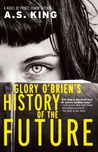
Glory O’Brien’s History of the Future by A. S. King (review by Mrs. Vaughan, Harker librarian)

Glory O'Brien's History of the FutureGlory O’Brien’s History of the Future by A.S. King
My rating: 4 of 5 stars

Glory O’Brien is about to graduate from high school but her future remains uncertain despite her apparent talents and a supportive single father. Glory remains haunted by the suicide of her artistic and even more talented mother fourteen years previous. Confident in her tendency to eschew the passing trends celebrated by teens around her, Gloria is nonetheless crippled by the fear that she harbors some unidentified trait that will lead her down the un-understandable path her mother traveled long ago. In a bizarre twist, Glory acquires the ability to see people’s futures and a terrifying dystopia, in which girls and women are reduced to less than chattel, reveals itself in sudden flashes as she encounters friends and strangers. By accident of circumstance, Glory not only needs to reconcile her identity and future, but ward off the impending devolution of society.

The beauty of King’s story is the character of Glory — a fully realized personality that subtly draws the reader into what at first seems a compelling coming-of-age story. Indeed, the much more frightening threat of societal dissolution is beautifully cloaked in the power of Glory’s story. Glory is a character drawn of perfectly believable contradictions: she simultaneously exudes self confidence and self questioning. She is both determined and terrified. Little does she know that the mystery of her personal circumstances may unlock more than her own salvation.

King’s is not a fantastic tale. Beyond the convention of the future visions, the existing discomfort in Glory’s life, the misogynistic forebodings and the novel’s satisfying ending are grounded in reality. Readers who enjoyed Chbosky’s Perks of Being a Wallflower and Lockhart’s We Were Liars, as well as King’s Please Ignore Vera Dietz will be thoroughly pleased with Glory O’Brien’s History of the Future. – Mrs. Vaughan, Harker librarian

View all my reviews

South of the Border, West of the Sun by Haruki Murakami (review by Andrew R. ’17)

South of the Border, West of the SunSouth of the Border, West of the Sun by Haruki Murakami
My rating: 3 of 5 stars

South of the Border, West of the Sun is infuriating—not in the manner of books that disappoint and disgust from beginning to end, but in the way of plots that, after a few failed early chapters, reward readers with tantalizing tastes of undeniable brilliance. If only Haruki Murakami had seen fit to split the first half of the book, which chronicles the narrator’s over dramatic childhood in a wearyingly trite style, from the second half… Then I could assign a one-star rating to the first segment and forget about it, focusing instead on the simple, understated beauty that underlines the later chapters as they trace the protagonist Hajime’s relationships, past and present, with other characters. But, alas, the tale of Hajime’s later life is tainted by the cringe-worthy opening chapters; there’s no way to get the best parts of the novel without the worst. If there were, though, I would recommend the second half of South of the Border, West of the Sun to anyone and everyone who’s ever laid hands on a book. – Andrew R. ’17

View all my reviews

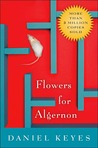
Flowers for Algernon by Daniel Keyes (review by Andrew R. ’17)

Flowers for AlgernonFlowers for Algernon by Daniel Keyes
My rating: 4 of 5 stars

In Daniel Keyes’ beloved short story “Flowers for Algernon,” a mentally retarded adult named Charlie Gordon undergoes a miraculous surgery that nearly triples his IQ, plunging him headfirst into a world of intellectuals even as he comes to terms with his life before the operation. Here, in Keyes’ later novelization of the same narrative, Charlie’s IQ still rockets up at a dangerous pace—but instead of having to accept his shameful past as an adult with the mind of a child, the newly-created genius must also navigate a crushing tide of memories and feelings that his old brain could never have handled. Watching Charlie stumble through his new life, even more confused and emotionally shredded than he had been with his old IQ of 70, is just as tragic as a novel as in the short story format. My only issue is that it was much more difficult to suspend my disbelief about the miraculous surgery and its effects for three hundred pages than it was for thirty. Those who have never read either “Flowers for Algernon” should pick one and get started immediately, but I’m not sure it’s worthwhile to read both variations on the same theme. – Andrew R. ’17

View all my reviews

David Copperfield by Charles Dickens (review by Andrew R. ’17)

David CopperfieldDavid Copperfield by Charles Dickens
My rating: 5 of 5 stars

According to the introduction to this mainstay of British literature, Tolstoy believed that “if you sift the world’s prose literature, Dickens will remain; sift Dickens, David Copperfield will remain.” What lends David Copperfield its renown and mastery, even among Dickens’s other novels and stories, is the almost unbelievable complexity of its small fifty-character cast, from the ominous, crafty villain Uriah Heep to the protagonist David Copperfield, gallant and righteous despite his crippling naivety. The first third of the novel — which is itself a three-hundred-page section — introduces the major players in Copperfield’s life as he struggles through his childhood, leaving the remainder of the novel to experiment with different mixtures of characters: What happens when the ostentatious pauper Mr. Micawber walks into Heep’s dining room? How will David’s iron stepmother respond when placed in a room with his equally iron great-aunt? The results are often spectacular and always play a role in the larger narrative of David Copperfield’s “personal history.” The humor, symbols, and messages in this novel, still as relevant as they were a century and a half ago, make it worthwhile to any modern reader. – Andrew R. ’17

View all my reviews

Four by Veronica Roth (review by Catherine H. ’17)

Four: The Transfer (Divergent, #0.1)Four: The Transfer by Veronica Roth
My rating: 4 of 5 stars

Four is a collection of several short stories that help clarify the background of the character Four in Veronica Roth’s Divergent series. This book has several sections that begin with his Choosing Ceremony and end a short while after he meets Tris. I found this an intriguing read and thought it was nice for a quick read. I would recommend this to anyone who read and enjoyed the Divergent series. – Catherine H. ’17

View all my reviews