Tag Archives: Friendship

Hold Tight, Don’t Let Go by Laura Rose Wagner (review by Andrew R. ’17)

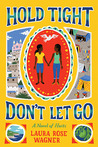
Hold Tight, Don't Let Go: A Novel of HaitiHold Tight, Don’t Let Go: A Novel of Haiti by Laura Rose Wagner
My rating: 3 of 5 stars

Hold Tight, Don’t Let Go begins with a strangely subdued account of the catastrophic earthquake that killed more than 100,000 Haitians on January 12, 2010. Over the course of a few pages, the teenage narrator, Magdalie, witnesses the almost instantaneous leveling of the city of her childhood. But the reader can’t comprehend the magnitude of the tragedy until, months later, Magdalie forces herself to sit down and pour her memories onto the page, even as she admits that, “It doesn’t change anything if I write it down or not … It doesn’t change a thing.” Only here does the reader stop and say, Oh—she is upset, she is scarred, this is a tragedy. It hurts to read the passage: we feel Magdalie’s pain. The rest of the novel follows a similar trajectory. Intense emotion is the most important element of a story that deals with a disaster on this scale, and while that emotion is very often deferred by stumbling plot-lines and flat characters, it’s never forgotten. Sooner or later, the author’s point hits home, and we can’t help but feel empathy for Magdalie and the hundreds of thousands of real-life Haitians in her situation. In that respect, at least, Hold Tight, Don’t Let Go is a success.
View all my reviews

Good Enough by Paula Yoo (review by Melissa K. ’18)

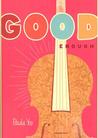
Good EnoughGood Enough by Paula Yoo
My rating: 4 of 5 stars

High school students can relate to Patti Yoon, a high school senior juggling six AP classes, SAT boot camp, and college applications. At her Korean church youth group, overachieving is the norm and everyone has their own unique “hook” into the Ivy Leagues: Lisa Kang is a nationally ranked fencer; Isaac Rhee is the captain of the academic decathlon team at his high school; Sally Kim is a Siemens Competition winner. Patti’s “hook” into college is her violin. As a B-tier violin prodigy, she is the concertmaster of her youth orchestra and considered one of the best violinists in Connecticut.

However, Patti’s seemingly predetermined life takes a turn when she meets Ben Wheeler, a trumpet player who invites her over for jamming sessions, takes her to a punk concert, and encourages her to apply to Juilliard even though her parents think that a career in music is too risky. Sprinkled with Spam recipes, SAT tips, and lists of ways to “Make Your Korean Parents Happy,” Good Enough is a candid and surprisingly funny take on the pressures facing today’s high school students. – Melissa K. ’18

View all my reviews

Bitterblue by Kristine Cashore (review by Catherine H. ’17)

Bitterblue (Graceling Realm, #3)Bitterblue by Kristin Cashore
My rating: 5 of 5 stars
< After letting her advisers rule the kingdom for eight years, eighteen year old Bitterblue decides to begin ruling Monsea herself. She realizes that she is too high up to see down to the commoners and then sneaks out at night, posing as a commoner girl. Her escapades only bring more confusion, trouble, and secrets to her attention and she must battle the fog left in the minds of the people by her sadistic father. The third installment in Kristin Cashore's Graceling Realm series, I found Bitterblue enthralling. There is so much character development and so many secrets revealed, it left me wanting more when I finished. – Catherine H. ’17

View all my reviews

A Separate Peace by John Knowles (review by Andrew R. ’17)

A Separate PeaceA Separate Peace by John Knowles
My rating: 5 of 5 stars

A Separate Peace is such a refreshing change of pace, it deserves its own genre. Set at a boys’ boarding school in the final years of the World War II draft, it follows the powerful friendship and all-consuming rivalry between Gene and Phineas as the two students battle their teachers, the war, and each other. A Separate Peace is worth a read simply for its historical aspect—written in 1946, it chronicles the overlooked perspective of an adolescent during wartime, and its setting is as far as can be from Normandy and Auschwitz. But Knowles’s true mastery lies in his themes, deeply nuanced and constantly developed to more complex and enlightening forms, and by the end of Gene’s tale he has painted a beautiful portrait of conflict in any setting. A Separate Peace may make a perfect subject for an English essay, but at the same time its gravity and depth merit at least one read from any serious student of the Second World War. – Andrew R. ’17

View all my reviews

Cat’s Eye by Margaret Atwood (review by Elizabeth S. ’16)

Cat's EyeCat’s Eye by Margaret Atwood
My rating: 5 of 5 stars

Cat’s Eye details the life of stream-of-consciousness narrator Elaine as she reflects as an aged artist on her years growing up in the time after World War II in Toronto. Elaine has recently returned to Toronto in order to manage a retrospective gallery of her own critically acclaimed work. She reconnects with specters from her past, like the phantom Cordelia who tormented her as a child, whom she now sees and hears everywhere she goes even though she is long gone. Atwood captures Elaine’s apathetic, passerby-like thoughts and describes her world in the most visceral way, making her writing a true joy to behold as it brings the story to life. Atwood also uses Elaine as a lens through which she can explore her own judgments and thoughts about growing up as a girl through elementary, middle, high school, and university, finding love, hate, strength, and weakness in all of these events that seem so cataclysmic when undergone for the first time. Cat’s Eye is a true masterpiece, recommended to anyone for a more adult spin on a coming of age story.

View all my reviews

Girlfriend in a Coma by Douglas Coupland (review by Elisabeth S. ’16)

Girlfriend in a ComaGirlfriend in a Coma by Douglas Coupland
My rating: 4 of 5 stars

Girlfriend in a Coma is an excessively thought-provoking look at the world in the present and the future. The book details the lives of a group of high school friends whose lives fall apart after one of them, Karen, goes into a coma for 17 years without any explanation. Karen’s boyfriend Richard is left with a letter she wrote the day before about disturbing visions of the future she had been having. Well written to an extreme (and quotable to an extreme), this novel is filled with wry wisdom through the various POV characters’ thoughts, especially Karen’s perspective, because she can note exactly how the world changed between when she went to sleep and when she woke up, and the changes are not always positive. Another highlight is Jared, the other protagonist who also happens to be dead. Towards the end, the novel has an apocalyptic twist that eventually serves to comment on the general condition of adults at the turn of the century. Overall, though the novel was excellent, I would caution against it for readers who get bored easily with the mundanities of life. – Elisabeth S. ’16

View all my reviews

Code Name Verity by Elizabeth Wein (review by Mrs. Vaughan, Harker librarian)

Code Name VerityCode Name Verity by Elizabeth Wein
My rating: 5 of 5 stars

Wein’s novel is wonderful! Deeply researched and eminently plausible, this fictional account of two young British women — one a pilot and one a spy — during WWII is gripping and heartrending. The novel is told from alternating points of view including the gripping narrative of the captured spy “Verity.” So involved in Wein’s plot, I felt as if I was abandoning the characters when I put down the book — and read it in one sitting. She’s done an amazing job a creating two powerful characters and embedding them in a thrilling tale of espionage, history and undying loyalty. Code Name Verity is an excellent choice for both adult and young adult fans of historical thrillers. – Mrs. Vaughan, Harker librarian

View all my reviews