Tag Archives: Historical Fiction

The Last Days of Night by Graham Moore (review by Connie M. ’17)

The Last Days of NightThe Last Days of Night by Graham Moore
My rating: 4 of 5 stars

When I picked up The Last Days of Night from the “free book” rack, I was doubtful of whether Graham Moore’s second novel would live up to the whirlwind Gilded Age adventure the back cover promised. However, the fact that this novel is based on, of all things, a patent lawsuit, impressed me all the more when I found myself completely absorbed in the incredibly intelligent and fast-paced plot. Moore skillfully paints his characters with depth and unique personalities, many of whom are well-known historical figures (Thomas Edison, Nikola Tesla, J.P. Morgan, etc.). I loved getting to know the eccentricities of these almost legendary people, and Moore periodically provides wonderfully profound insights into the way their minds operate. My only reservation is that Moore can sometimes overdo the most unique parts of his writing. For example, I found the quotes that he placed before each of the very short chapters more distracting than helpful, and his insights can occasionally be presented more subtly. Overall, The Last Days of Night was refreshing and exciting and would be a great read in particular for fans of historical fiction, law, or the history of inventions. – Connie M. ’17

View all my reviews

The Samurai’s Garden by Gail Tsukiyama (review by Catherine H. ’17)

The Samurai's GardenThe Samurai’s Garden by Gail Tsukiyama
My rating: 5 of 5 stars

Gail Tsukiyama’s The Samurai’s Garden tells the tale of a young Chinese man, Stephen, who travels to a sea-side town in Japan to recover from tuberculosis during the Second Sino-Japanese war in the late 1930s. He stays with Matsu, who has worked for Stephen’s family all his life, and learns to live in the quiet town of Tarumi while he regains his strength. Stephen also meets Matsu’s friend Sachi, also an outcast, and slowly gains her trust. This book tells a touching story about friendship in a time of war and Tsukiyama’s simple, yet elegant language really draws the reader into Stephen’s story. I really appreciated learning about the war and how Tsukiyama incorporated Stephen’s identity as a Chinese man who is immersed in Japanese culture and makes friends at Tarumi during this time period. I would recommend this book to anyone looking for a satisfying read.

View all my reviews

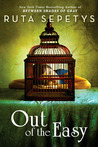
Out of the Easy by Ruta Sepetys (review by Melissa K. ’18)

Out of the EasyOut of the Easy by Ruta Sepetys
My rating: 5 of 5 stars

Out of the Easy begins with seventeen-year-old Josie Moraine’s stark opening line: “My mother’s a prostitute.” From the very first sentence, author Ruta Sepetys sucks the reader into the world of 1950s New Orleans, a place rife with scandal and mystique. Desperate to escape the stigma of her mother’s reputation, Josie dreams of leaving New Orleans by attending college far from the South.

Everyone in the novel has something to conceal—the wealthy Mr. Lockwell hides his trips to the French Quarter from his wife; Josie’s friend Patrick hides his aging father’s memory loss from the authorities; Josie hides a pistol under her skirt. The inexplicable death of a wealthy Memphis businessman in the French Quarter only adds to Josie’s list of secrets, especially when she suspects her mother’s involvement.

Ruta Sepetys writes flawlessly, revealing striking historical details through Josie’s observant eye. As historical fiction, Out of the Easy is painstakingly researched and powerfully told. Do I need to say more?

View all my reviews

The Golem and the Jinni by Helene Wecker (review by Andrew R. ’17)

The Golem and the Jinni (The Golem and the Jinni, #1)The Golem and the Jinni by Helene Wecker
My rating: 3 of 5 stars

The premise of The Golem and the Jinni has an irresistible sort of cosmic balance to it: when a female homunculus named Chava and a male fire spirit named Ahmad collide in nineteenth-century New York, earth meets fire, the mythology of the West means that of the East, the Judeo-Christian tradition collides with one far older, and the ancient past meets the modern era. If only this novel could shed its affected writing, its chronically flat characters, and about a hundred and fifty pages, it might be able to meet this impressive potential. Wecker makes the unfortunate decision to relay the entire story in a faux-historical voice, weighing her sentences down with unwieldy vocabulary and convoluted syntax in a misguided effort (like so many other writers of historical fiction) to stay true to the literary style of the time she portrays. Uninspired prose might be excusable, but, in my view, weak characters are not; populating a fantasy world as Wecker does with transparent characters, single-minded and invariably “good at heart,” is a cardinal sin in any sort of fiction. I have to give the author credit for the alluring symmetry of her premise, but her execution is unremarkable and doesn’t nearly deserve the 500 pages it takes up.

View all my reviews

Gone with the Wind by Margaret Mitchell (review by Jacqueline H. ’18)

Gone with the WindGone with the Wind by Margaret Mitchell
My rating: 5 of 5 stars

Gone With the Wind is a refreshing twist on your typical classic novel. It’s one of those books that leaves an indelible impression on you, the kind that you find yourself re-reading every so often.

We start off in the rolling red hills of the antebellum South. Scarlett O’Hara, a sixteen-year-old debutante with a self-centered personality and a sharp mind to match, comes of age during the tumultuous Civil War. In a surprisingly short time, Scarlett’s life of luxury degenerates into one of starvation and poverty. The book is a masterful subversion of many common literature tropes. Rather than becoming the sweet-natured lady she was groomed to be, Scarlett is selfish and vindictive to the core. She doesn’t get her initial love interest, nor her second – despite her former status as belle of the South. Lastly, Gone With the Wind is told from the perspective of the Confederates. Racial prejudice is a glossed-over issue in this novel, which reinforces the uncertain morality of the characters.

Overall, this is an amazingly well-written novel. I loved the vivid prose, the heart-wrenching moments, and the abrupt ending that yearns to be extended. I recommend this book to anyone searching for an interesting read.

View all my reviews

Into the Valley by Ruth Galm (review by Jacqueline H. ’18)

Into the ValleyInto the Valley by Ruth Galm
My rating: 4 of 5 stars

Into the Valley is a debut novel by Ruth Galm that chronicles the adventure of B., a thirty year old woman who wanders through 1970s California, trying to assuage a “carsickness” that plagues her thoughts. B. is unable to cope with the coarseness of the present world, yet rejects the traditional binds of the past. This tension is an interesting dichotomy throughout the novel, although it is never resolved at the end. The ending was surprising, but it left me hanging. Into the Valley reminds me more of a collection of individual narratives than a cohesive plot. Nevertheless, the novel was beautifully written and I found it hard to put down. The characterization of B. is excellent – the author represents her as an eccentric and neuroatypical itinerant. Written in raw, haunting prose, Galm’s exceptional use of unreliable narration and stunning portrayal of California in the 1970s leaves an indelible mark in the reader’s mind. I would recommend this book to anyone craving a dreamy, existential read.

View all my reviews

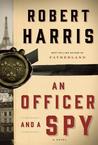
An Officer and a Spy by Robert Harris (review by Mr. Silk, Teacher)

An Officer and a SpyAn Officer and a Spy by Robert Harris
My rating: 4 of 5 stars

Falling somewhere between history, historical fiction and spy novel, An Officer and a Spy is a fact-based account of the Dreyfus Affair, one of the more troubling times of the French military. When Alfred Dreyfus is accused and convicted of treason, it takes the newly appointed head of the French spy division, Georges Picquart to ferret out the truth. Robert Harris is a master story-teller, and this book is surely a page turner. At times the story seems unbelievable, or, at best, inconceivable, but the reader has to remember that all the events did actually occur. A definite must for anyone who has read and enjoyed Harris or Jean le Carre, or who is interested in French history.

View all my reviews

To Say Nothing of the Dog by Connie Willis (review by Connie M. ’17

To Say Nothing of the Dog (Oxford Time Travel, #2)To Say Nothing of the Dog by Connie Willis
My rating: 4 of 5 stars

To Say Nothing of the Dog is perhaps Connie Willis’s most humorous Oxford Time Travel book, set mainly on the outskirts of Victorian Oxford. The novel features two main characters: Verity/Kindle, who is sent back in time by the frustratingly persistent Lady Schrapnell to help figure out the location of the Bishop’s Bird Stump, and Ned Henry, who is sent back to help right a supposed discrepancy caused by Verity. Willis often pokes fun at aspects of Victorian life through Ned’s nonchalant humor (he is the narrator). The story reads much like a mystery novel as Ned and Verity attempt to understand the nature of their first time discrepancy while simultaneously trying to prevent more time-travel disasters. The final solution is amusingly explained but leaves some unanswered questions. To Say Nothing of the Dog is certainly worth reading for its humorous, science fiction, and historical fiction aspects, but those who are not interested in the Victorian era will be disappointed.

View all my reviews

Doomsday Book by Connie Willis (review by Connie M. ’17)

Doomsday Book (Oxford Time Travel, #1)Doomsday Book by Connie Willis
My rating: 5 of 5 stars

Doomsday Book, Connie Willis’s first Oxford Time Travel novel, is one of her most famous, featuring young time traveler-historian Kivrin on an expedition to medieval England. Shifting between modern and medieval times, the novel combines first person “journal” accounts and traditional narration. Like many of Willis’s novels, Doomsday Book is (in comparison) relatively slow moving for a good half of the book (though certainly not uninteresting) and speeds up to an incredibly moving ending. The book makes the horrors of the Black Death devastatingly real, and continuously questions the role of religion in our lives. While perhaps more interesting to those who have some background on the middle ages, I had little interest in medieval times but still found the book hauntingly captivating. I found myself pondering Doomsday Book for days after I had finished reading it.

View all my reviews

All Clear by Connie Willis (review by Connie M. ’17)

All Clear (Oxford Time Travel, #4)All Clear by Connie Willis
My rating: 5 of 5 stars

All Clear is the second half of the time travel Blackout/All Clear duo by Connie Willis, set in World War II. While I found Blackout a bit frustratingly repetitive in places, All Clear was a whirlwind of plot twist after plot twist, with an emotional range of unfathomable despair to shock to tentative joy. Willis will leave you gasping aloud in both excitement and frustration as the three main characters attempt to return to 2060 from WWII. Willis leaps back and forth between different times, places and characters, thus weaving in an element of mystery (pay attention to the date printed at the beginning of each chapter). Blackout and All Clear are must-reads for any time travel or historical fiction fan, but as a message about the strength of the common person undergoing unimaginable hardship and sacrifice, these two novels would be enjoyed by anyone.

View all my reviews