Tag Archives: Historical Fiction

The Game of Love and Death by Martha Brockenbrough (review by Andrew R. ’17)

The Game of Love and DeathThe Game of Love and Death by Martha Brockenbrough
My rating: 2 of 5 stars

In The Game of Love and Death, the deities Love and Death come together to play a high-stakes cosmic game of strategy. The board: Jazz-Age Seattle, still deeply rooted in racial prejudice. The pawns: Henry, an affluent white high-school student, and Flora, a black jazz singer (and, improbably, airplane pilot). The objective: for Love to manipulate Henry into winning Flora’s heart, and for Death to twist Flora into rejecting his advances. The stakes: the pawns’ lives. It’s the perfect premise for a historical-fiction-romance-supernatural genre mashup, but from the first chapter it’s clear that Brockenbrough can’t quite pull off the ingenious plot she’s cooked up. The characters are sadly underdeveloped: Henry’s sole obsession is Flora, Flora’s sole obsession is flight, Love is maddeningly altruistic, Death is irrationally destructive. Worse, we’re granted near-omniscience when it comes to the plot, making the entire novel read like a tiresome textbook example of dramatic irony. (Case in point: Henry is convinced that his infatuation is true love, whereas we know from page one that it’s a ridiculous idea planted in his head by a manipulative deity.) Thanks to the wild originality of this novel’s premise, the jacket blurb makes excellent reading; the book itself, though, is a disappointment.

View all my reviews

X: A Novel by Ilyasah Shabazz (review by Andrew R. ’17)

X: A NovelX: A Novel by Ilyasah Shabazz
My rating: 4 of 5 stars

The premise of Ilyasah Shabazz’s most recent novel, X, is so unusual as to seem off-putting at first: in a narrative geared specifically toward young adults, a fictionalized Malcolm X plays out the early part of his life, starting with his exodus from Michigan to Boston and ending just before he begins the outspoken racial and religious activism for which we remember him today. The story is doubly odd because the author, the daughter of Malcolm X himself, has taken the liberty to novelize her famous father’s turbulent life—and in the first person. I’m not sure how, but Shabazz has taken this dubious stew of almost overambitious narrative points and crafted a surprisingly engaging story, which, although it contains hallmarks of the young adult genre like forbidden love and coming-of-age internal conflict, also features pacing and setting that are remarkably sophisticated for a YA novel. (Most of the first six chapters takes place on a largely uneventful train ride, and it takes a measure of patience to get to the meat of the book.) The protagonist Malcolm, even if he bears suspiciously little resemblance to the more weathered and polarizing Malcolm X most of us are familiar with, is a memorable and magnetic character, and this narrative of his life is strange in concept but impressive in execution.

View all my reviews

Blackout by Connie Willis (review by Connie M. ’17)

Blackout (Oxford Time Travel, #3)Blackout by Connie Willis
My rating: 4 of 5 stars

This was the first time I read a work by Connie Willis. Blackout is, at its core, historical fiction, though laced with elements of sci-fi in the form of time travel. The premise of all of Willis’s time travel novels is that in the near future (2060) Oxford University historians will conduct their research by traveling back in time to their periods of study. In Blackout, several historians travel to England during World War II, disguising themselves in various locations including London during the Blitz, Dunkirk during the evacuation, and a countryside manor house. However, something has gone wrong with the historians’ return mechanism (called the drop), and our heroes are trapped. At first, I found Blackout to be immensely interesting, as the story exuded all the emotions and attitudes of WWII life and at times even made me feel slightly panicked. However, 500 pages of nearly the same phrase (“Where is the retrieval team? Why is my drop not working?”) began to get frustrating. I will be reading the sequel, which essentially is a direct continuation from the 1st book with hardly a transition at all, but only because I’m curious to find out how/if the characters return to 2060. In the end, I would recommend this book, as the story is extremely immersive, but don’t attempt it unless you’re ready to read 1000 pages of WWII historical fiction.

View all my reviews

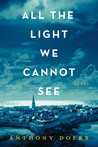
All the Light We Cannot See by Anthony Doerr (review by Connie M. ’17)

All the Light We Cannot SeeAll the Light We Cannot See by Anthony Doerr
My rating: 5 of 5 stars

All the Light We Cannot See met and exceeded my high expectations. Doerr’s masterpiece, transitionally smooth between the simultaneous stories of the two main characters, is written eloquently and at times poetically. The plot line is intensely gripping and not only conveys the deep horror and trauma caused by WWII both on the French and the German sides but also reminds us of the beauty and light that exist even in dark times. This book is not a romance — as suggested by the publisher’s book summary. Readers should be prepared for a story that is raw and emotionally moving. The decade Doerr used to write All the Light We Cannot See paid off. – Connie M. ’17

View all my reviews

A Separate Peace by John Knowles (review by Andrew R. ’17)

A Separate PeaceA Separate Peace by John Knowles
My rating: 5 of 5 stars

A Separate Peace is such a refreshing change of pace, it deserves its own genre. Set at a boys’ boarding school in the final years of the World War II draft, it follows the powerful friendship and all-consuming rivalry between Gene and Phineas as the two students battle their teachers, the war, and each other. A Separate Peace is worth a read simply for its historical aspect—written in 1946, it chronicles the overlooked perspective of an adolescent during wartime, and its setting is as far as can be from Normandy and Auschwitz. But Knowles’s true mastery lies in his themes, deeply nuanced and constantly developed to more complex and enlightening forms, and by the end of Gene’s tale he has painted a beautiful portrait of conflict in any setting. A Separate Peace may make a perfect subject for an English essay, but at the same time its gravity and depth merit at least one read from any serious student of the Second World War. – Andrew R. ’17

View all my reviews

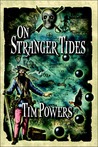
On Stranger Tides by Tim Powers (review by Elisabeth S. ’16)

On Stranger TidesOn Stranger Tides by Tim Powers
My rating: 3 of 5 stars

On Stranger Tides details the adventures of former puppeteer John Chandagnac, whose ship is captured by pirates and who is forced to change sides and become a pirate at gunpoint. He becomes “Jack Shandy,” to the pirates, and he inadvertently saves the pirate captain’s life, thus becoming a full-fledged pirate. The book was neither overwhelming nor underwhelming, neither incredibly avant-garde nor too comfortably formulaic. Jack Shandy made for an enjoyable protagonist, though the novel gets kind of muddled two-thirds of the way through. The pacing felt too slow for the kind of blow-by-blow action-adventure book it’s trying to be. It was also unfortunate that the female character was useless–too much of a damsel in distress. The romantic subplot felt too one-sided and like too much of an afterthought to engage the reader. However, the novel does improve with a highly intriguing magic system and strong characters like Davies, Blackbeard, and even Hurwood. Overall, On Stranger Tides was an entertaining read but not much more than that. – Elisabeth S. ‘16

View all my reviews

Beloved by Toni Morrison (review by Elisabeth S. ’16)

Beloved (Toni Morrison Trilogy #1)Beloved by Toni Morrison
My rating: 4 of 5 stars

A warning: Beloved is not for the light of heart. Sethe is an escaped slave and mother of three that heads for Ohio with her broken family, having lost her husband in flight. The trauma that she has endured as a slave and during her escape haunts her, so she does her best to repress those troubling memories. With the appearance of a figure from her past, however, she slowly begins to question the choices she once made with the interests of her children in mind. This novel is based off of real events and will sicken, disgust, and cause you great despair and shame for the United States and slavery. However, this novel also involves supernatural elements, with the presence of a main supporting character who is a manifest form of Sethe’s dead daughter. Overall, Beloved is recommended to anyone even a little bit interested in slavery for a new perspective, sorely needed as the years progress and the Civil War era seeps into the past. – Elisabeth S. ‘16

View all my reviews

Cloud Atlas by David Mitchell (review by Ravi B. ’14)

Cloud AtlasCloud Atlas by David Mitchell
My rating: 4 of 5 stars

In Cloud Atlas, David Mitchell creates a universe in which multiple characters from various past and future settings fight against repression. The book follows an unconventional narrative construct with six story lines, beginning with an American notary in the 19th century and ending with a child in a post-apocalyptic future. The stories are initially told in chronological order, but each, except for the last, is interrupted at a critical moment. Following the last story, the book continues in reverse chronological order. I found Mitchell’s technique gave me a greater sense of closure and empathy for the characters as I finished the book. Although the book is especially challenging to start because each ending of a chapter feels somewhat intrusive, completing the novel was rewarding. Additionally, one of the stories is a hilarious relief from the rest of the novel. Someone who enjoys sci-fi fantasy and dystopian novels will find this to be refreshing change of pace. – Ravi B. ‘14

View all my reviews

The Master and the Margarita by Mikhail Bulgakov (review by Agata S. ’15)

The Master and MargaritaThe Master and Margarita by Mikhail Bulgakov
My rating: 5 of 5 stars

Nothing extraordinary happens in 1930s Moscow until Satan, also known as Professor Woland, arrives with his eerie crew of followers. Soon enough, chaos engulfs the city; Russian citizens are captured by the Soviet police, get sent to the insane asylum, and run in the streets stark naked. Surprisingly, this is just the beginning of Bulgakov’s The Master and Margarita, and the masterpiece develops a story within a story that focuses on Pontius Pilate in ancient Jerusalem. Keeping readers glued to the novel’s pages, the genius author intertwines the two tales until they converge at the very end. In my opinion, The Master and Margarita is a must-read with an unparalleled plotline and characters that transform – even physically – in completely unpredictable ways. – Agata S. ‘15

View all my reviews

The Book Thief by Marcus Zusak (review by Shivani A. ’17)

The Book ThiefThe Book Thief by Markus Zusak
My rating: 5 of 5 stars

Markus Zusack’s novel, The Book Thief revolves around Liesel Meminger’s life during the time period of World War II in Nazi Germany. The novel is narrated by an overworked personification of Death, who provides an interesting point of view throughout the story. Liesel first meets Death when she is nine years old, when she is forced to bury her six year old brother. This is also the first time she steals a book, called The Grave Diggers Handbook, the catch is Liesel is unable to read. Later she is deposited into a foster home as Liesel’s mother is unable to take care of her for mysterious reasons, and is handed into the care of the Hubermans. Liesel immediately warms to Hans Huberman with his gentle smile and his harmonious accordion playing. Their bond is only strengthened when Hans begins giving Liesel reading lessons. Through many twists and turns, Liesel soon befriends finds herself rebelling against Hitler in small ways. I found this book extraordinary with cunning wordplay, and depicting a variety of emotions including abandonment, insecurity, fear, and loss. Though the book was long, the emotions it evokes make it unforgettable. I found it an amazing, captivating read, as it kept me up for a ten hour plane ride. In my opinion, this book is more than worthy of five stars. – Shivani A. ‘17

View all my reviews