Tag Archives: Magic

Hell Bent By Leigh Bardugo (Review By Tara N. ’26)

Hell Bent (Alex Stern, #2)Hell Bent by Leigh Bardugo
My rating: 2 of 5 stars

Spoiler warning: no major spoilers, but a lot of minor ones. This also won’t make any sense unless you’ve actually read the book.

I reread this book two years after it dropped in hopes that I had hallucinated it having been bad (I only remembered one plot point. I’ll give you a hint: it was glowing.) I was sorely disappointed.

Many elements of the book were a let-down, and it’ll be difficult for me to articulate why. I think the most pressing issue is that Hell Bent tries to pack too much plot into too short of a book and leaves character development by the wayside.

The central mystery of Ninth House is not who killed Tara Hutchins; it’s who Alex Stern is, and by extension who Darlington is, who Hellie and Len are, where did they go, why do we care. These are the questions the reader is trying to answer as they work their way through the book.

But Hell Bent just focuses on its moving parts—Eitan, Anselm, Reiter, Michelle, Walsh-Whitley, Darlington himself. In a Goodreads Q&A, Leigh Bardugo mentioned that the Alex Stern series was originally going to be, like, 12 books, then got shortened to 5, then 3, because they took so long to research… and unfortunately, that’s very apparent. Hell Bent felt like it was the premise of several different books frankensteined together.

Several books’ worth of character development gets awkwardly skipped over. Mercy, Tripp and Turner get awkwardly shoehorned into the main cast, with their character arcs hastily jammed in in the form of supercuts and flashbacks. I say this not because I think they shouldn’t be, but because I think they should’ve been given more screentime and development—each of them deserved their own book in the spotlight.

Tripp was particularly jarring; in the original book, he’s a hapless symbol of white privilege and the infinite second chances given to wealthy young boys. There’s hints of where Bardugo wants to go with his character—the minor reveal that he was instinctively aware of what Blake Keely was came all the way back in book 1—but the transition from set dressing to guy we are supposed to care about just isn’t actually executed. Mercy’s being brought into the fold is also clumsily done. She’s one of my favorite characters, but I think the revelations she has in Hell Bent can’t be contained within the span of a few conversations.

People complained about the pacing of Ninth House, but Ninth House was good because you watched things unravel slowly; Hell Bent sacrifices all of that and thus has the opposite problem (although it wasn’t a problem in the first place). Too much plot is crammed in. Nobody stops to take a breather and emotionally process what’s going on. Ninth House was self-aware in a way that Hell Bent is not.

And I really, truly hate to say this—because this series is not about Darlington, he is not the hero of this story, and that is part of the point. I’ve seen people act like the white man was the best part of the series and it drives me utterly insane—but he really should’ve had more screentime. I would’ve wanted to see his POV earlier. Hell Bent is, ostensibly, about rescuing him. The fun of Ninth House was piecing the story together from the split POVs; perhaps Hell Bent could’ve pulled a similar trick with Alex’s thoughts from above, and Darlington’s thoughts from below. I support him going off the rails, but I want to see that process occurring bit by bit, not just a jump-cut to him suddenly being naked and feral with claws and horns. Darlington’s entire premise is that he’s a gentleman—if he’s not acting the part, we need more than a few sentences on why.

The story read like one of my English essays: a haphazardly jammed-together collection of plot notes, impossible to treat with their proper gravitas. Any legitimately compelling moment fell flat, because there was no real buildup, just payoff, payoff, payoff, except for the payoff didn’t feel like payoff because there was no buildup to make it a payoff, and we didn’t even get the biggest payoff of the series that everybody was hoping for (IYKYK). Alas.

I don’t care if book 3 takes another four years (I actually do, but that’s beside the point)—just please let it make up for this.

View all my reviews

A Court Of Thorns And Roses (Review By Kristiyan K. ’27)

A Court of Thorns and Roses (A Court of Thorns and Roses, #1)A Court of Thorns and Roses by Sarah J. Maas
My rating: 5 of 5 stars

Prepare to be enchanted. Sarah J. Maas’ A Court of Thorns and Roses is more than just a book. It’s a lifestyle, a religion. A whirlwind of passion, danger, and unforgettable characters, this novel will leave your hands shaking, your heart pounding, and your mind reeling. You may think this is yet another corny romantasy book. Trust me, it’s not. It’s THE romantasy book.

From the moment Feyre, a fierce and independent young woman, is dragged into the magical faerie realm of Prythian, you’ll be hooked. As she navigates the dangerous politics and treacherous alliances of Prythian, Feyre must confront her own fears and desires while fighting for her freedom. Her journey is a rollercoaster of emotions, filled with heart-wrenching trials, exhilarating adventures, and a forbidden love story or two that will fill up your soul.

The writing is nothing short of exquisite. Maas paints a world so lyrical and evocative, you’ll feel like you’re right there, amidst the towering trees or the glittering halls of the Spring and Night Courts. The characters are complex, flawed, and utterly captivating. Feyre is a heroine you’ll root for, her strength and resilience shining through even in the darkest of times. The fantasy elements and world-building are equally impressive. Maas creates a rich and detailed world that is filled with fascinating creatures, ancient lore, and dangerous secrets. The action elements and fighting sequences are well-developed and add depth to the story, providing an interesting and fast-paced narrative. To truly immerse yourself within this magical world, I recommend reading the book with a fantasy book playlist. The music will enhance the experience and help you visualize the scenes even more vividly (Velaris has several songs inspired by it…).

But let’s talk about the real magic of this book: the romance. Oh, my goodness, the romance! It’s spicy, it’s passionate, and it’s everything. The enemies-to-lovers trope is executed to perfection, and the tension between Feyre and Tamlin will have you fanning yourself and muttering, “Oh la la.” And don’t even get me started on the plot twists (especially in the second book). These plot twists are canon events, and as such I cannot interfere… even though there is so much I want to write about….

Beyond the romance, the fantasy elements and side character arcs are equally amazing. The faerie politics are fascinating, and the magical creatures are both enchanting and terrifying. And let’s not forget about the lovable and hilarious side characters, like Rhysand, who’s a total dreamboat, and Cassian, who’s just… Cassian. You’ll know what I mean. Anyways, what I was getting at is that once you finish reading ACOTAR you’ll feel like a part of a big and happy family.

In conclusion, A Court of Thorns and Roses is an absolute must-read for any fan of fantasy, romance, or both, or neither. It’s a spicy, plot-twisting adventure that will leave you breathless. So grab your favorite beverage (be careful near the book), get comfy, and prepare to be enchanted. Just a warning: once you finish this book, you might find yourself experiencing a severe case of post-ACOTAR-depression; the next ten books you read will be dry as bricks. Trust me though, it’s totally worth it. This book/series is five stars for a reason!

View all my reviews

Lightlark By Alex Aster (Review By Kristiyan K. ’27)

Lightlark (Lightlark, #1)Lightlark by Alex Aster
My rating: 4 of 5 stars

Ugh, Lightlark. My go-to birthday present to all my book besties. Let’s talk about it. The book’s premise immediately drew me in with its concept of an island that reappears once every hundred years, setting the stage for a dangerous game of deceit and conflict among century-old rulers striving to break their kingdoms’ curses. Picture the intensity of the Hunger Games intertwined with fantasy, a cute and steamy romance, magical powers, hidden agendas, alliances, and betrayals. The world-building and lore were very strong, painting a vivid backdrop for the story.

However, I must admit that the writing style left something to be desired. While some parts were super scream-into-a-pillow good, the overall flow felt somewhat stiff and forced at certain points. Thankfully, the quality of the prose noticeably improves later, in the sequel.

But don’t let the writing throw you off! The plot twists? Oh my gosh, I was NOT expecting those. They hit out of nowhere, and they hit HARD. I had to pause and reread parts because I was so shook. This book wins the gold for best plot twists against every other book I’ve read. Sorry, Agatha Christie!

And the characters? They were a whole rollercoaster of emotions. I was rooting for one guy, then the other, then both, then neither? This was a love triangle done right! This book puts a huge focus on the “romance” in romantasy, if you’re into that kind of thing, and let me tell you, the enemies-to-lovers and friends-to-lovers tropes were done right.

I usually never read books in one sitting, but for this one I did. I stayed up way too late reading this book. I’m talking past 1 a.m. late. I was so invested in these characters and what was going to happen next. The ending? Don’t even get me started. I’m still mad about it, and I doubt I’ll ever get over it.

In conclusion, Lightlark is an exhilarating rollercoaster of a read. It’s packed with action, drama, and romance, culminating in a cliffhanger that will leave you begging for the next book. However, I must warn you that the writing style in the first book may come across as cringey at times. Despite that, I wholeheartedly recommend giving it a read – just make sure to have Nightbane (the sequel) ready to satisfy your craving for more. Be prepared to have your heart thoroughly tugged and twisted! —Review by Kristiyan K. ’27

View all my reviews

A Deadly Education By Naomi Novik (Review By Lily P. ’27)

A Deadly Education (The Scholomance, #1)A Deadly Education by Naomi Novik
My rating: 4 of 5 stars

I came into A Deadly Education without very high expectations, since I’ve been told people found this “boring,” but I cannot express how much I enjoyed this book. While I do agree that there is plenty of info-dumping (which probably makes up 50% of the book), I thoroughly enjoyed it, as it mimicked a train of thought that suited the narration. I found the elements of the magic system and the worldbuilding to be quite well done: while I admit it was excessive at times, it helped me disconnect from reality for some time, as all good fantasies tend to do.

I am a total sucker to all things with a magic school involved, and the Scholomance did not disappoint. Novik used quite a different approach from the usual magic academies – the Scholomance is a school that appears evil, with hoards of monsters ready to tear apart the students. This school isn’t trying to be what it’s not. In a way, it has its own personality, and its goal is to be as aggravating and dangerous to the students as possible. While it kills many students, the school’s method also helps train the rest and acclimate the strongest to the real world. It’s survival of the fittest.

Speaking of the fittest, take our main girl, Galadriel or El. The unique characters were by far my favorite parts of the book. They might at first seem unlikable or naive, but as the story progresses, these characters and their interactions with others are golden. El is moody, antagonistic, and relatively unfriendly, and her slightly ominous personality seeps into the narration. However, it becomes quite clear that underneath gloomy and slightly obnoxious exterior, El is brave, thoughtful, and caring, more than she herself would care to admit. She empathizes with people despite her best efforts to remain aloof, and she understands what it’s like to be at the bottom of the food chain. However, she also knows that she alone can do nothing to truly bring change. El goes through a serious mental shift when she reassesses her goals and morals, and if I go on more I’ll probably spoil the beautiful thought dumps she has. Trust me, it’s heartwarming. There’s nothing better than a character whom you feel for deeply, and I’m happy to say that El truly became a protagonist I could cheer for.

(Side note–this book does a pretty decent exploration of the elite and the underprivileged and all the interactions between these two pretty distinct groups. It has that conflict central to dark academia but in a more lighthearted tone and setting. So if you’re interested in that, definitely check this out!)

Another character I loved was our shining hero, Orion Lake, who goes around saving the day and pretty much messing up the whole balance of the school. While at first he appears clueless and naive, his banter with Galadriel rivals that of the best romance novels. Their relationship progresses rather slowly, but it’s that background burn that always hits different. They’re just so awkward and endearing. I love it. In addition to our two mains, Galadriel makes more friends and forms a found family that genuinely supports one another in a way quite rare in the cutthroat academy. Their whole little group are such cinnamon rolls.

This isn’t a perfect book. The narration drags on sometimes, the explanations are a little confusing at times, and the plot is a little nonexistent. But even with these characteristics, I thoroughly enjoyed A Deadly Education.

Be warned–don’t expect a complex plot when going into this book. In fact, I’d say that the dark academia vibes and actual worldbuilding took a big priority over plot (if it exists). If you’re someone who is all about fast-paced books without too much convoluted explanation or prefer intrinsically likable characters, maybe stray away from this book. But if anything else from this review sounded like it might be up your alley, I’d strongly recommend you check this book out!

BTW, thanks for listening to my ranting. I appreciate you! 🙂 —Review by Lily P. ’27

View all my reviews

Ninth House by Leigh Bardugo (Review by James B. ’24)

Ninth House (Alex Stern, #1)Ninth House by Leigh Bardugo
My rating: 3 of 5 stars

TW for the book: Drug Overdose, Murder, Sexual Assault

As Leigh Bardugo’s debut into Adult Fantasy, Ninth House is a stunning dark thriller that takes place on the modern day Yale campus. Be aware that this book may make you question your college apps however, as there is much murder and magic afoot.

The book follows Galaxy (Alex) Stern, a freshman with an unusual ability, through various timelines as she attempts to piece together the details of an oddly familiar murder and figure out how it relates to her mentor’s disappearance. You see, Alex is by no means qualified to study at Yale, but has rather been enlisted by a governing body that oversees the activities of the university’s ancient secret societies. It is through her ability to see ghosts, called Greys in the book, that Alex is recruited as Lethe House’s new Dante, serving under the previous Dante, now Virgil, Daniel Arlington. From a hospital bed after being found overdosed on the scene of a brutal killing, to controlling the magical powers of several groups of entitled rich kids at one of the most prestigious schools in the country, Alex Stern must fight for her life and the promise of a better future.

For the record, I wanted to like this book so badly, and even having finished it I still want to. The world-building is incredible and Leigh Bardugo once again proves that somehow she can still create new magic systems as well as lovable morally-grey characters. Alex Stern had potential to be among my favorite characters I’ve read in fantasy; she’s dynamic, persistent, and brutal while also remaining very human (ever when she is very much not). This book had all the makings to be a favorite and somehow it all just fell flat.

I am by no means a slow reader, but Ninth House took me months to conquer. It’s not that there isn’t plenty of hard-hitting action, but the back and forth between timelines quickly became dizzying. I found myself frustrated that another segment had gone by without answering my biggest questions, and even once they were answered, it didn’t feel satisfying. One of my biggest red flags for a book is whether it makes me question if I, the reader, am reading it incorrectly somehow. Too often I felt I was slipping off the hook, like the line itself was too taut for me to think about anything else.

Having said that, there are some truly gorgeous scenes in this book that stand extremely well on their own, and I think it is worth reading if you have the patience for a lot of unanswered questions. Just be sure to prepare yourself as Ninth House does explore some intense topics that might be upsetting, and that I was frankly unprepared for. —Review by James B. ’24

View all my reviews

The House in the Cerulean Sea by T.J. Klune (Review by James B. ’24)

The House in the Cerulean SeaThe House in the Cerulean Sea by T.J. Klune
My rating: 4 of 5 stars

T.J. Klune’s The House in the Cerulean Sea is a comforting tale of an orphanage for magical children, although it isn’t an orphanage because no one goes there to adopt. What initially appears to be a light-hearted criticism of the corporate machine becomes a bright story of found family and finding your place in a world who would very much not like you around.

Most remarkable about the book is the ease with which it builds the world around the story. From only the first few pages you already know that this is a world in which magical creatures are not uncommon, but oppressed. Magical children are abandoned in “orphanages” overseen by a corporate giant. Our protagonist is Linus Baker, a caseworker at DICOMY given a top secret case by the Extremely Upper Management. It is on this case that Linus meets Arthur Parnassus, the Headmaster of an orphanage housing the six-year-old anti-christ, Lucy. It is this boy as well as many others that, despite the fact that they aren’t human, teach Linus about humanity.

I very much enjoyed this book, although I was under the incorrect pretense that it was a Queer romance first and adventure second. The romance is there, but it is far overshadowed by the odd but lovable found-family and delve into everyday oppression. Each child earns their own heart-warming spotlight, and as V. E. Schwab’s testimony on the cover says, it is indeed like being wrapped in a big gay blanket.

I don’t have any specific complaints about the book, as I’m aware that I went into it with the wrong idea of what it would be, so keep in mind that while there are elements of romance, I would not call it a romance. Either way, it’s a very fun title to add to your shelf and the characters are extremely well-done. Even though I found it underwhelming, I will be reading more T. J. Klune in the future because I fell in love with his style. —Review by James B. ’24

View all my reviews

Books That Defy Genres! (by Ms. Pelman)

One of the easiest ways to talk about books is by genre. We say, do you like mysteries? What about fantasy, or sci-fi? It’s a great way to find common ground and to seek out, or give, recommendations.

Did you know that genres follow a formula? It’s true! If you read enough mysteries or romance books, you’ll begin to see patterns. Some people really dig this for their reading, as familiarity can be comforting. Often people return to the same author over and over again because they know just what to expect.

Of course, there are times when you crave something out of the ordinary. And when that happens, books that break the mold are the most satisfying. When you want to expect the unexpected, here are a few books that blur the lines of categorization in interesting ways:


Midnight at the Electric by Jodi Lynn Anderson

The year is 2065, Adri has been preparing her whole life to be an astronaut who will help colonize Mars, and she is elated when she is chosen for the mission. When she moves from Miami to Kansas for training, she discovers a journal written by someone who lived in her house over one hundred years ago. Adri becomes increasingly absorbed in the fates of the people contained within the journal.

Since the book is told in multiple timelines, and across vast geographies, it is a satisfying blend of science fiction and historical fiction, complete with secrets, betrayals, and heartbreak.


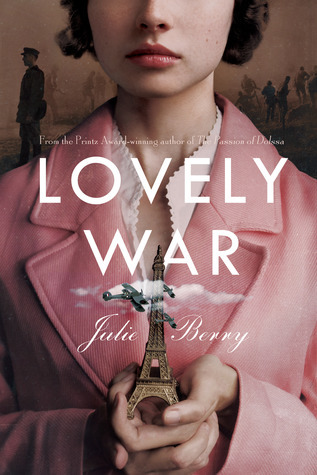
Lovely War by Julie Berry

Romance, history, and wartime, but with a mythological kick.

When Hephaestus finds his wife Aphrodite cheating on him with his brother Ares, he convenes a trial in which Aphrodite must defend herself and her actions. To do so, she relays a harrowing story about interracial love, music, and friendship during World War I.

Beautifully written and captivating, while not shying away from historically accurate portrayals of racism and sexism, this soaring book makes a compelling case for the enduring human spirit as told by the goddess of love herself.


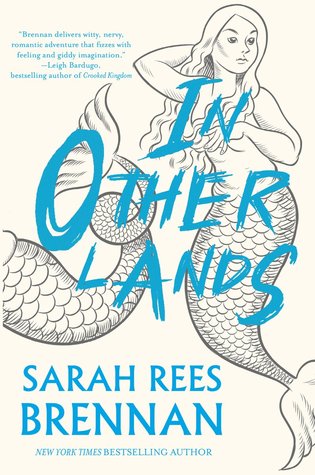
In Other Lands by Sarah Rees Brennan

If you think you know all about books where teenagers go to magical schools, think again.

When the obnoxious and unloved Eliot winds up in a magical realm called the Borderlands (protected by an invisible wall), he meets elves, mermaids, and other magical people. It seems like his dreams will be realized, but this is a place where expectations, stereotypes, and other prejudices are thrown out in place of the unpredictable. Eliot will fall in love and make an unexpected friend, but can he save the world while doing it?

This funny novel plays with fantasy tropes, but more than that, it turns preconceived notions of gender, colonialism, and sexism upside down and inside out.


Slaughterhouse-Five by Kurt Vonnegut

A classic work of literature by an author whose work has produced a rabid and devoted fanbase.

In this book the protagonist, Billy Pilgrim, has become “unstuck in time” so the story does not follow a linear timeline. It jumps around all over the place featuring different moments of Billy’s life.

Vonnegut’s unique writing style is at times humorous, sometimes derisive, but always memorable and moving.


Noggin by John Corey Whaley

When the story begins, Travis is a 16-year-old suffering from cancer. Once he realizes that he will not survive the illness he agrees to participate in an experimental procedure in which, after he dies, his head will be removed from his body and cryogenically frozen, to then be attached to a new body if and when the technology allows…

…It doesn’t take long and Travis is born again 5 years later, albeit with a new body. He would like, and expects, to pick up his life where he left it, but that won’t be so simple. Some of the most important people in his life, namely his girlfriend and his best friend, have been living, loving, and changing in the time that he was gone and Travis must figure out where he fits in.

This strange tale raises both philosophical and existential questions about life, wrapped up in a funny and heartfelt story about love and the nature of being.

Have you read any other books that defy genres? Share them in the comments!

The Poppy War by R. F. Kuang (Review by Anika F. ’21)

The Poppy War (The Poppy War, #1)The Poppy War by R.F. Kuang
My rating: 5 of 5 stars

Even though this was the first book I read in 2021, I’m pretty sure that this will be one of my favorites from this year. The Poppy War is a grimdark east-Asian inspired historical fantasy centers around the a young girl named Rin. She is a war orphan from the first Poppy War, raised in a poor, opium-smuggling family that treats her as a servant. Rin’s only escape from a forced marriage is to pass a merit-based exam to enter Sinegard, Nikara’s elite military academy. In a surprising shock of events, Rin places into Sinegard, but finds that the experience is not what she expects: She is isolated as a poor and dark-skinned girl from the south, but as she rises in the academy ranks, she begins to realize that the gods of legend aren’t as fictional as people think. As a war is brewing, will she be able to survive and save her nation?

Normally, novels tend to excel in one of two categories: character development or plot development. Very few manage to do both well, but The Poppy War does and does so exceptionally. All character storylines are extremely interesting to follow, and the plot is well-paced, complex, and fascinating. Rin is a determined and headstrong protagonist who makes a lot of choices that readers probably will not agree with. However, her confidence and assertiveness compels the reader to support her no matter what gory or twisted option she chooses. Each detail is action-packed and engrossing, and all the battle scenes delivered believable and heartbreaking consequences.

Lastly, this book tackles some difficult themes. It retells the Rape of Nanking, in which Japanese troops attacked China during the Second Sino-Japanese War. The impact of war on civilization is heavily discussed along with colorism and colonization. Multiple chapters delve deep into graphic scenes that involve murder, violence, and sexual assault, as well as exploring drug addiction, trauma, and self-harm. So if you do decide to try this book, please read with caution. —Review by Anika F. ’21

For those who enjoyed this book, Anika has recommended The Priory of the Orange Tree for you to check out!

View all my reviews

The Queen of Nothing by Holly Black (Review by Angela J. ’22)

The Queen of Nothing (The Folk of the Air, #3)The Queen of Nothing by Holly Black
My rating: 3 of 5 stars

I read The Cruel Prince a couple years ago before the second two books came out and recently returned to the trilogy to get out of a reading slump. The Queen of Nothing was much like the first two: a fun and interesting read, but nothing that stood out as impressive. It’s your standard YA fantasy series: seemingly ordinary heroine, powerful and attractive love interest, adventure and twists along the way.

The Queen of Nothing itself wasn’t a particularly intense culmination of the trilogy and its flow was very similar to the first two books. The plot is very up-down, up-down with an obstacle introduced, resolved, introduced, resolved, rather than a spectacular ending that neatly ties up a huge jumbled mess that doesn’t seem resolvable (my preferred conclusion style). The characters other than the protagonist and her father feel pretty flat and under-developed, especially the love interest, and the romance definitely feels forced.

What stood out in particular was the protagonist’s voice. She was incredibly self-aware and honest with herself about her weaknesses and vulnerabilities. Her self-reflection and narration of why she became who she has become was the main reason why I kept reading, and her dynamic with her father was especially interesting. However, I do think there was wasted potential in possible character development–as complicated of a character she is, she hasn’t changed much since the first book.

Nevertheless, I would suggest this read for anyone who wants a regular fantasy series that you can easily move on from without having to ponder major plot twists or suffer intense emotional turmoil. -Review by Angela J. ’22

View all my reviews

The Night Circus by Erin Morgenstern (Review by Lizzie B. ’24)

The Night CircusThe Night Circus by Erin Morgenstern
My rating: 4 of 5 stars

The Night Circus by Erin Morgenstern is an eloquent urban fantasy that takes place from 1873 to 1902. It follows Celia Bowen, born with magical ability, and Marco Alisdair, trained in magic from a young age, as they battle head-to-head in a competition with no clear rules or boundaries. The story twists and turns back and forth through time, flashing between the perspectives of different characters and concluding in a satisfying if not perfect ending. Morgenstern’s mastery over description brings Le Cirque de Rêves to life and the discourse between characters proves engaging if not a bit complicated.

I enjoyed the book greatly because all my questions were answered by the end of the book and I fell in love with the characters and little romances. With that having been said, the story has plenty of complexities that might make this read difficult if you aren’t willing to stick it out. I loved those complexities as they added depth to the story and I absolutely loved the idea of being among the Rêveurs or attending one of the Circus Dinners. As much as I enjoyed it and will encourage others to read it, it is certainly not for everyone. –Review by Lizzie B. ’24

View all my reviews