Tag Archives: Mystery

Hell Bent By Leigh Bardugo (Review By Tara N. ’26)

Hell Bent (Alex Stern, #2)Hell Bent by Leigh Bardugo
My rating: 2 of 5 stars

Spoiler warning: no major spoilers, but a lot of minor ones. This also won’t make any sense unless you’ve actually read the book.

I reread this book two years after it dropped in hopes that I had hallucinated it having been bad (I only remembered one plot point. I’ll give you a hint: it was glowing.) I was sorely disappointed.

Many elements of the book were a let-down, and it’ll be difficult for me to articulate why. I think the most pressing issue is that Hell Bent tries to pack too much plot into too short of a book and leaves character development by the wayside.

The central mystery of Ninth House is not who killed Tara Hutchins; it’s who Alex Stern is, and by extension who Darlington is, who Hellie and Len are, where did they go, why do we care. These are the questions the reader is trying to answer as they work their way through the book.

But Hell Bent just focuses on its moving parts—Eitan, Anselm, Reiter, Michelle, Walsh-Whitley, Darlington himself. In a Goodreads Q&A, Leigh Bardugo mentioned that the Alex Stern series was originally going to be, like, 12 books, then got shortened to 5, then 3, because they took so long to research… and unfortunately, that’s very apparent. Hell Bent felt like it was the premise of several different books frankensteined together.

Several books’ worth of character development gets awkwardly skipped over. Mercy, Tripp and Turner get awkwardly shoehorned into the main cast, with their character arcs hastily jammed in in the form of supercuts and flashbacks. I say this not because I think they shouldn’t be, but because I think they should’ve been given more screentime and development—each of them deserved their own book in the spotlight.

Tripp was particularly jarring; in the original book, he’s a hapless symbol of white privilege and the infinite second chances given to wealthy young boys. There’s hints of where Bardugo wants to go with his character—the minor reveal that he was instinctively aware of what Blake Keely was came all the way back in book 1—but the transition from set dressing to guy we are supposed to care about just isn’t actually executed. Mercy’s being brought into the fold is also clumsily done. She’s one of my favorite characters, but I think the revelations she has in Hell Bent can’t be contained within the span of a few conversations.

People complained about the pacing of Ninth House, but Ninth House was good because you watched things unravel slowly; Hell Bent sacrifices all of that and thus has the opposite problem (although it wasn’t a problem in the first place). Too much plot is crammed in. Nobody stops to take a breather and emotionally process what’s going on. Ninth House was self-aware in a way that Hell Bent is not.

And I really, truly hate to say this—because this series is not about Darlington, he is not the hero of this story, and that is part of the point. I’ve seen people act like the white man was the best part of the series and it drives me utterly insane—but he really should’ve had more screentime. I would’ve wanted to see his POV earlier. Hell Bent is, ostensibly, about rescuing him. The fun of Ninth House was piecing the story together from the split POVs; perhaps Hell Bent could’ve pulled a similar trick with Alex’s thoughts from above, and Darlington’s thoughts from below. I support him going off the rails, but I want to see that process occurring bit by bit, not just a jump-cut to him suddenly being naked and feral with claws and horns. Darlington’s entire premise is that he’s a gentleman—if he’s not acting the part, we need more than a few sentences on why.

The story read like one of my English essays: a haphazardly jammed-together collection of plot notes, impossible to treat with their proper gravitas. Any legitimately compelling moment fell flat, because there was no real buildup, just payoff, payoff, payoff, except for the payoff didn’t feel like payoff because there was no buildup to make it a payoff, and we didn’t even get the biggest payoff of the series that everybody was hoping for (IYKYK). Alas.

I don’t care if book 3 takes another four years (I actually do, but that’s beside the point)—just please let it make up for this.

View all my reviews

The Wings By Yi Sang (Review By Jason S. ’25)

The WingsThe Wings by Yi Sang
My rating: 5 of 5 stars

Want to see a Korean take on bite-sized psychologically gripping novellas like The Stranger and The Metamorphosis? Look no further than The Wings, by the early 20th century modernist Yi Sang.

These comparisons are of course not made to suggest that Yi is derivative in any way. Rather, it is a testament to the sheer amount of pain and alienation Yi can convey in as little as 40 pages. The story follows an unnamed 26 year-old narrator who is completely ignorant of human society. Manipulated by his wife Yeonsim, he languishes in the darkness of his room and accepts the vast inequality between his and Yeonsim’s lifestyle. Nevertheless, he wonders what her occupation is, and his attempt to learn more about her and humanity has tragic consequences.

While reading through the novella, I was struck by the childlike naïveté with which our narrator approaches the world. For instance, he concludes from his observations that the reason people exchange coins is that there is some pleasure inherent to bartering, and becomes immensely happy just from giving Yeonsim some coins. This simplicity makes his eventual loss of innocence even more crushing as we attempt to piece together Yeonsim’s circumstances.

I also found it incredibly interesting to read The Wings in the context of Yi’s life. Without giving too much away, The Wings is a semi-autobiographical piece of literature and mirrors Yi’s own relationship with his wife, who had an occupation he was deeply ashamed of. In addition, Yeonsim’s treatment of the narrator parallels the colonial Japanese oppression of the Korean identity, and Yeonsim’s occupation ends up being incredibly relevant to Japanese abuses of power during Yi’s lifetime.

The Wings manages to pack raw emotion and several layers of analysis into 40 pages. It’s no wonder many Korean high school curricula teach it to this day. I highly recommend it.

If you enjoyed The Wings, I’d highly suggest checking out Osamu Dazai’s novel No Longer Human, which I’ve reviewed on the Book Blog! It is similarly a bite-sized semi-autobiography, written by an Asian author in the proximate context of Japanese imperialism, and touches on themes of an alienated individual attempting to understand society.

As previously alluded to, The Stranger by Albert Camus and The Metamorphosis by Franz Kafka are also nice bite-sized novellas about people alienated for either their psychology or physical form. Bonus points to The Stranger to also having a colonial context.

And lastly, if you enjoy experiencing narratives through microtransaction-light video games, I suggest looking into Limbus Company. It’s a Korean-developed gacha RPG available for free on Steam and mobile with characters from literature such as Meursault (The Stranger), Gregor Samsa (The Metamorphosis), Yi Sang himself, and more. Surprisingly deep story, and it’s always fun to watch Heathcliff from Wuthering Heights beat up Don Quixote.

View all my reviews

Ninth House by Leigh Bardugo (Review by James B. ’24)

Ninth House (Alex Stern, #1)Ninth House by Leigh Bardugo
My rating: 3 of 5 stars

TW for the book: Drug Overdose, Murder, Sexual Assault

As Leigh Bardugo’s debut into Adult Fantasy, Ninth House is a stunning dark thriller that takes place on the modern day Yale campus. Be aware that this book may make you question your college apps however, as there is much murder and magic afoot.

The book follows Galaxy (Alex) Stern, a freshman with an unusual ability, through various timelines as she attempts to piece together the details of an oddly familiar murder and figure out how it relates to her mentor’s disappearance. You see, Alex is by no means qualified to study at Yale, but has rather been enlisted by a governing body that oversees the activities of the university’s ancient secret societies. It is through her ability to see ghosts, called Greys in the book, that Alex is recruited as Lethe House’s new Dante, serving under the previous Dante, now Virgil, Daniel Arlington. From a hospital bed after being found overdosed on the scene of a brutal killing, to controlling the magical powers of several groups of entitled rich kids at one of the most prestigious schools in the country, Alex Stern must fight for her life and the promise of a better future.

For the record, I wanted to like this book so badly, and even having finished it I still want to. The world-building is incredible and Leigh Bardugo once again proves that somehow she can still create new magic systems as well as lovable morally-grey characters. Alex Stern had potential to be among my favorite characters I’ve read in fantasy; she’s dynamic, persistent, and brutal while also remaining very human (ever when she is very much not). This book had all the makings to be a favorite and somehow it all just fell flat.

I am by no means a slow reader, but Ninth House took me months to conquer. It’s not that there isn’t plenty of hard-hitting action, but the back and forth between timelines quickly became dizzying. I found myself frustrated that another segment had gone by without answering my biggest questions, and even once they were answered, it didn’t feel satisfying. One of my biggest red flags for a book is whether it makes me question if I, the reader, am reading it incorrectly somehow. Too often I felt I was slipping off the hook, like the line itself was too taut for me to think about anything else.

Having said that, there are some truly gorgeous scenes in this book that stand extremely well on their own, and I think it is worth reading if you have the patience for a lot of unanswered questions. Just be sure to prepare yourself as Ninth House does explore some intense topics that might be upsetting, and that I was frankly unprepared for. —Review by James B. ’24

View all my reviews

Books That Defy Genres! (by Ms. Pelman)

One of the easiest ways to talk about books is by genre. We say, do you like mysteries? What about fantasy, or sci-fi? It’s a great way to find common ground and to seek out, or give, recommendations.

Did you know that genres follow a formula? It’s true! If you read enough mysteries or romance books, you’ll begin to see patterns. Some people really dig this for their reading, as familiarity can be comforting. Often people return to the same author over and over again because they know just what to expect.

Of course, there are times when you crave something out of the ordinary. And when that happens, books that break the mold are the most satisfying. When you want to expect the unexpected, here are a few books that blur the lines of categorization in interesting ways:


Midnight at the Electric by Jodi Lynn Anderson

The year is 2065, Adri has been preparing her whole life to be an astronaut who will help colonize Mars, and she is elated when she is chosen for the mission. When she moves from Miami to Kansas for training, she discovers a journal written by someone who lived in her house over one hundred years ago. Adri becomes increasingly absorbed in the fates of the people contained within the journal.

Since the book is told in multiple timelines, and across vast geographies, it is a satisfying blend of science fiction and historical fiction, complete with secrets, betrayals, and heartbreak.


Lovely War by Julie Berry

Romance, history, and wartime, but with a mythological kick.

When Hephaestus finds his wife Aphrodite cheating on him with his brother Ares, he convenes a trial in which Aphrodite must defend herself and her actions. To do so, she relays a harrowing story about interracial love, music, and friendship during World War I.

Beautifully written and captivating, while not shying away from historically accurate portrayals of racism and sexism, this soaring book makes a compelling case for the enduring human spirit as told by the goddess of love herself.


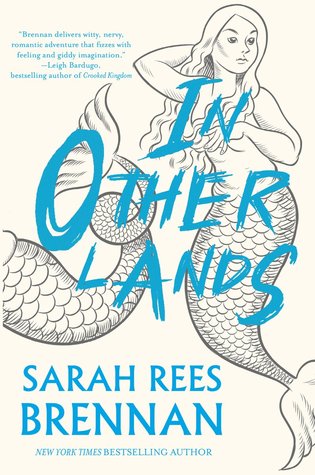
In Other Lands by Sarah Rees Brennan

If you think you know all about books where teenagers go to magical schools, think again.

When the obnoxious and unloved Eliot winds up in a magical realm called the Borderlands (protected by an invisible wall), he meets elves, mermaids, and other magical people. It seems like his dreams will be realized, but this is a place where expectations, stereotypes, and other prejudices are thrown out in place of the unpredictable. Eliot will fall in love and make an unexpected friend, but can he save the world while doing it?

This funny novel plays with fantasy tropes, but more than that, it turns preconceived notions of gender, colonialism, and sexism upside down and inside out.


Slaughterhouse-Five by Kurt Vonnegut

A classic work of literature by an author whose work has produced a rabid and devoted fanbase.

In this book the protagonist, Billy Pilgrim, has become “unstuck in time” so the story does not follow a linear timeline. It jumps around all over the place featuring different moments of Billy’s life.

Vonnegut’s unique writing style is at times humorous, sometimes derisive, but always memorable and moving.


Noggin by John Corey Whaley

When the story begins, Travis is a 16-year-old suffering from cancer. Once he realizes that he will not survive the illness he agrees to participate in an experimental procedure in which, after he dies, his head will be removed from his body and cryogenically frozen, to then be attached to a new body if and when the technology allows…

…It doesn’t take long and Travis is born again 5 years later, albeit with a new body. He would like, and expects, to pick up his life where he left it, but that won’t be so simple. Some of the most important people in his life, namely his girlfriend and his best friend, have been living, loving, and changing in the time that he was gone and Travis must figure out where he fits in.

This strange tale raises both philosophical and existential questions about life, wrapped up in a funny and heartfelt story about love and the nature of being.

Have you read any other books that defy genres? Share them in the comments!

The Secret History by Donna Tartt (Review by Alysa S. ’22)

The Secret HistoryThe Secret History by Donna Tartt
My rating: 3 of 5 stars

TW for The Secret History: references to alcohol and substance abuse, self-harm, murder

In many ways, The Secret History was one of the most baffling, difficult, and frustrating books that I’ve ever read in my entire life. I’ve never read anything quite like this.

First, I’ll start with the good: Donna Tartt is a beautiful, sophisticated prose writer with a distinct style. The vocabulary used only serves to emphasize the academic, intellectual university setting of the novel and the exclusive, Classics-educated group of students that protagonist Richard Papen so desperately wishes to assimilate into. As a fellow Californian used to the fast-paced craze of the West, I see quaint New England as a fascinating wonderland through Richard’s fresh perspective: all falling autumn leaves, dusty and antique libraries, and elite, old-money academics.

However, the rest of the novel immediately takes a dark turn, exploring bacchanal, unthinkable concepts of evil in human nature. First of all, I consider myself sufficiently patient when it comes to arduously long books, but the sheer page count of this book became increasingly difficult to get through as each page revealed yet another shocking truth about the ostensibly perfect characters that grudgingly accepted Richard into their group: twins Camilla and Charles, Francis, and Henry (Yes, he is an enigma. Yes, I find his dark and brooding, extremely intelligent, unofficial leader of the group qualities extremely appealing).

Along with the dense chapters, I also think the emotional baggage is extremely heavy. This is not a book for light reading, nor does it have a definite beginning and ending that follow your usual story arc. As much as I enjoyed the detail and the moments of surprise, the evolving relationships of the six characters that catalyze a downward spiral of events dragged on too long for me, and the psychological thriller aspect of the book left me extremely depressed and upset with our reality. For anyone considering this book, I would probably ask you to reconsider. But if you’re into dark academia and extensive analysis of the depths of evil in the human soul, well, all I can say is brace yourself. —Review by Alysa S. ’22

View all my reviews

Lock Every Door by Riley Sager (Review by Varun F. ’24)

Lock Every DoorLock Every Door by Riley Sager
My rating: 4 of 5 stars

Lock Every Door by Riley Sager is a gothic thriller which follows Jules Larsen, who takes up a job apartment-sitting at the Bartholomew, one of Manhattan’s most mysterious buildings, after she has lost her job and boyfriend. Jules investigates the disappearance of fellow apartment sitter Ingrid and discovers the secrets of the Bartholomew.

While I normally don’t read many thrillers, this book kept me on the edge of my seat for the entirety of it with its suspenseful scenes and made me properly terrified of old buildings. The characters are likable (for the most part) and Jules is a well-developed protagonist, but the book utilizes many clichés, and I often find myself doubting the sanity of some of the characters due to their truly abysmal decisions.

Even with these flaws, I still enjoyed the majority of the plot, and Riley Sager’s writing was brilliant. The mysterious and eery tone of this book worked hand in hand with the well-thought-out plot. So, if you’re a thriller fan or just in need of a good read, I highly recommend this book for you! –Review by Varun F. ’24

For those who enjoyed this book, Varun has recommended Home Before Dark and Mexican Gothic for you to check out!

View all my reviews

Cemetery Boys by Aiden Thomas (Review by Anika F. ’21)

Cemetery BoysCemetery Boys by Aiden Thomas
My rating: 4 of 5 stars

If you are looking for an emotional young adult story with paranormal elements, Cemetery Boys is the perfect book for you. Cemetery Boys follows a teenaged transgender male named Yadriel who is trying to prove his identity to his family. After a string of murders, Yadriel decides to summon a ghost with his brujo powers, but ends up summoning the wrong spirit.

The strong points of the book include (but are not limited to) the characters and the culture. When I initially read that the ghost summoned would be the “high school bad boy,” I was convinced that I would not like the character. However, as I read more and more, I found Julian’s personality to be so much more than the synopsis gives him credit for: He is loyal, brave, and accepting while also being funny and sarcastic. Similarly, I found Yadriel’s character to be a delight to follow. His journey with identity is so wonderfully done; you can see his struggles and successes as he proves to his family that he truly is a brujo. Latinx culture is also seamlessly mixed with the story. There are some beautiful scenes about Día de los Muertos, where Yadriel is able to communicate with his ancestors who have passed on. In particular, this book thrives when discussing the intersection of Yadriel’s gender identity and his cultural background.

My main complaint with this book has to do with the predictability of the plot. In essence, the story is a murder mystery where a few men end up dead. I guessed the murderer at around page 50 and was not surprised at all by the ending. My second plot critique does involve some spoilers, but to keep it vague: I like when decisions have consequences. Some of these characters seemed to make tough calls, but not face adequate repercussions.

Do I think these criticisms break the book? Absolutely not. Cemetery Boys is much deeper than the plot. Rather than being about a murder-mystery, this story is about love, identity, and family. And in those aspects, this book truly shines. –Review by Anika F. ’21

For those who enjoyed this book, Anika has recommended Felix Ever After for you to check out!

View all my reviews

He Started It by Samantha Downing (Review by Anika F. ’21)

He Started ItHe Started It by Samantha Downing
My rating: 2 of 5 stars

October has officially begun, and it is finally socially acceptable to start sharing some mystery, thriller, and horror reads. To begin, here is a 2020 release: He Started It, by Samantha Downing, tells the recreation of a childhood road trip by adult siblings Eddie, Beth, and Portia, as instructed by their grandfather’s will. Although they oblige, their relationships reveal avarice, family tensions, and ongoing conflicts as the storyline progresses with the trip.

Personally, I have a criteria when it comes to thrillers. Firstly, and most importantly, the ending needs to be satisfying and make sense based off of the clues revealed along the way. Secondly, the plot leading up to the final twist needs to be captivating enough to hold my interest, maybe through small turns here and there that can introduce some shock value. And if I ever feel like putting the book down mid-read, it is not a good sign.

For these reasons, He Started It truly disappointed me. The events leading up to the final reveal were honestly underwhelming. I thought the ending might save the storyline, but once I reached it, I found myself slightly annoyed. The book provided me no way to piece together the preceding events and how each scene led to the resolution. Nothing made sense.

If you have the time to spare, I suppose you could give it a try. But if not, sit this one out and pick up My Lovely Wife, another one Samantha Downing’s works that will definitely be more worth your time. —Review by Anika. F ’21

View all my reviews

Carry On by Rainbow Rowell (Review by Emily M. ’24)

Carry On (Simon Snow, #1)Carry On by Rainbow Rowell
My rating: 4 of 5 stars

Carry On by Rainbow Rowell tells the story of Simon Snow and Baz Pitch—roommates for seven years, instant enemies, and living at the Watford School of Magicks. There is a war happening in the World of Mages between the old families, the Mage, and an entity called the Humdrum. Simon and Baz must decide who to fight for. This book technically counts as a sequel. The characters are originally from the world of a fanfiction written by the main character in another Rainbow Rowell novel called Fangirl. I did not read Fangirl before reading this, but I found no issues in understanding the plot. The author develops the characters perfectly, and the plot of the story is paced well and leads up to a stunning conclusion. I was pleasantly surprised, and I absolutely loved both Baz and Simon and how their relationship plays out by the end of the novel. Carry On has a sequel out now, and it is planned to become a trilogy soon. Readers of Harry Potter will love this new magical world. —Review by Emily M. ’24

View all my reviews

The Twisted Ones by T. Kingfisher (Review by Hita T. ’23)

The Twisted OnesThe Twisted Ones by T. Kingfisher
My rating: 4 of 5 stars

Melissa, known to close family and friends as Mouse, only had one job: clean her late grandmother’s house in North Carolina. Her grandmother was unfortunately a hoarder, but she could clean it up. No problem at all. However, in the process, she discovers her late step-father’s journal, which is filled with seemingly nonsensical rants. Mouse is quick to disregard the rambling, chalking it up to his deteriorating health, but when strange happenings start to occur, it becomes increasingly clear that perhaps his journal held more than just the ramblings of an old man. Driven to figure out what’s going on and spooked by an unplanned night stroll (courtesy of her dog Bongo), Mouse begins to uncover secrets in the woods, and the deeper she digs into it, the more terrifying it becomes…
Kingfisher does a brilliant job of spinning a modern take on the folklore of The White People, as it is horrifying yet entertaining at the same time. The narrative is filled with realistic humor and conversations and during the more action packed scenes, the reaction seems to be just right; there is no exaggeration of fear nor is there apathy towards the events. Even though I’m not the most avid horror reader, I absolutely loved this book and would definitely recommend it. —Review by Hita T. ’23

View all my reviews