Tag Archives: Tragedy

The Chosen and the Beautiful By Nghi Vo (Review By Tara N. ’26)

The Chosen and the BeautifulThe Chosen and the Beautiful by Nghi Vo
My rating: 4 of 5 stars

The Chosen and the Beautiful is a retelling of The Great Gatsby from Jordan’s perspective with some fantasy elements. I loved this book! It’s explicitly in conversation with the themes and motifs of the original, rather than being its own story or trying to be quirky and twist things up— it takes Fitzgerald’s throwaway references to the dynamics of race, class and sexuality and makes those undertones explicit. The prose is gorgeous and well-paced. I often found myself rereading sentences and paragraphs just to bask in the beauty of Vo’s language. I finished this in two days, even though I knew how the story ended, or perhaps because I did. It was very refreshing to have a light read after several months in the APUSH textbook trenches.

The magic system is based off of cultural superstition/myths—I would’ve liked to see Black and Native American tradition dealt with beyond a few offhand references, especially considering how Vo relates them to Gatsby, but I also get that the author may not have felt that it was her story to tell. Regardless, the omission is a bit awkward in a story meant to fill these sorts of omissions in the original. Fitzgerald already does an excellent job of writing Daisy, but seeing her flaws through the lens of a close friend makes the banality of her cruelty feel more real. I really DO know people like that—people who can be carelessly kind and good without changing their fundamental nature, who are self-centered without being genuinely evil.

The Chosen and the Beautiful doesn’t really stand on its own; to me, that’s more of a feature than a bug, but I understand the complaint. Vo is adapting and staying faithful to a plot centered around Jay Gatsby in a book that is not about Jay Gatsby—Jordan doesn’t always meaningfully engage with the central events of the book, which can get a little awkward. Vo does a good job of filling in the gaps with Jordan’s own introspection and Jordan’s own character arc, but the story of Jordan Baker and the story of Jay Gatsby sometimes tug against each other. My biggest qualm is the ending—it doesn’t really measure up to the sense of catharsis and full-circle completion of the original. It’s not satisfying in the same way. And the magic system has some utterly insane implications that aren’t really dealt with, but perhaps the forthcoming companion/sequel will fill those gaps.

I heavily recommend reading this book during or after you read Gatsby in English 3. It will make the original feel fresh and interesting if you’re getting bored of the same characters and themes, and you’ll enjoy the essay-writing and discussion process more in class, which will probably result in (gasp!) a better English grade. 3.5 stars, rounded up.

View all my reviews

My Fault By Mercedes Ron (Review By Kristiyan K. ’27)

My Fault (Culpable, #1)My Fault by Mercedes Ron
My rating: 1 of 5 stars

For the record, I hate this book. I only read it because I heard the Netflix movie was good. My Fault by Mercedes Ron is a typical Wattpad story (I haven’t read any, but I’ve heard a lot about them). It’s about an innocent girl with a dark past who meets a guy who also has a dark past, and they fall in love. In this case, the girl, Noah, is forced to move in with her rich stepfather in California and his handsome son, Nick. You know, the classic ‘stepsibling romance’ trope that’s not creepy at all.
First of all, the writing was so bland and lifeless, it was like listening to the Google translate lady read a dictionary. The sentences were dry and repetitive, and the plot was filled with unnecessary fluff. It was as if the author was paid by the word, and they were determined to reach their quota no matter what. The dialogue was so cringeworthy, my face muscles twisted into a million unnatural positions. It reminded me a lot of Anna Todd’s After series, which is a whole other can of worms. In other words, the writing was so bad, it was almost comical. I found myself laughing at the absurdity of it all. Perhaps the poor quality of writing was caused by the fact that the book was originally written in Spanish, and we can blame the translators, but I highly doubt it because the writing itself was definitely not the only tragedy in My Fault.
If the writing didn’t make you want to burn the book, the characters and plot line will definitely do the trick. Noah is basically another Bella Swan, but with a bit more attitude. She’s so superficial and boring, I wanted to DNF the book a million times. Noah’s inner monologue is shallow and self-absorbed, and it’s almost painful to read. She’s constantly obsessing over her appearance, and she has no real depth of character. She exists solely to be the love interest. The only interesting thing about her is her tragic past, which was the only part of the book that made me feel anything other than complete and utter cringe. Her father was abusive, and she’s still dealing with the trauma of that experience. However, even her past is presented in a superficial way. We don’t really get to see how her past has affected her as a person. She’s just a victim who needs to be saved by the handsome hero.
Nick, on the other hand, is your typical bad boy. He’s a gang leader, he parties a lot, and he has a double life. He also has issues with his mom, but we don’t even get to see her! The thing that really grossed me out about him was his internal dialogue. He treats women like objects, and it’s not just in a casual manner. It’s a deep-seated belief that he holds about women. He sees them as possessions, as things to be used and discarded. It’s not just his actions that are problematic, but also his thoughts and attitudes. What threw me off the most was that his actions with Noah are the opposite of that – he is caring and a real gentleman.
The main focus of the book is the romance between Nick and Noah, which is about as healthy as a potato chip. He’s a walking disaster, and she’s the innocent new girl who somehow falls for him. They’re both attracted to each other, but their relationship is a toxic mess. It’s like watching a car crash in slow motion, except the cars are made of glass and filled with explosives. Nick and Noah are constantly hurting each other, and it is so frustrating to watch. It’s like they’re playing a game of “I want you, but I can’t have you” and they’re both losing. It’s not romantic, it’s just headache-inducing. The relationship is a rollercoaster of emotions, and it’s exhausting to follow. One moment, they’re happy and in love. The next moment, they’re arguing and fighting. It’s a never-ending cycle of ups and downs, and it takes a toll on both of them. Noah is constantly trying to fix Nick, but she can’t. He’s too far gone. And Nick is constantly trying to control Noah, but she’s not going to let him. They’re both fighting for their own independence, but they’re also fighting for each other. It’s a complex and messy relationship, and it’s not easy to understand. But one thing is clear: it’s not healthy. The relationship is toxic and destructive, and it’s going to end badly. If you’re looking for a healthy and uplifting romance, this is not the book for you.
Oh, and also let’s not forget the five-year age gap (22 and 17) and the fact that they’re stepsiblings. It’s like something out of a soap opera. I mean, who thought this was a good idea? It’s just creepy. The romance isn’t very spicy, but it’s passionate. The enemies-to-lovers trope is executed poorly, but the tension between them is enough to make you say ‘Dang.’ The book had one plot twist, which was not interesting at all. When it finally got to that point, it was like figuring out that water is wet.
There was one mildly interesting side character, Jenna, but she wasn’t that special. The book made me chuckle a total of three times, and two of those times were because of Jenna. Ultimately, do not read this book. It’s a waste of time. If you want to read about a toxic and questionable relationship, just read the After series. My Fault felt like reading fanfiction written by a 13-year-old. I heard that the second book gets better, but I’m not putting myself through torture just to see where Nick and Noah end up – in the trash can where I would have put my copy of the book if it was not a digital one. If you want to read an actually interesting romance, I would recommend reading Lightlark by Alex Aster or Fourth Wing by Rebecca Yarros.
P.S. Allegedly, Noah gets pregnant in the second book (had to throw that out there)… also the second (and third) movies are coming out soon…

View all my reviews

Stoner by John Williams (Review by Felix C. ’25)

StonerStoner by John Williams
My rating: 4 of 5 stars

The 1965 novel Stoner, by John Williams, is a masterpiece of mid-century American literature. The work follows the life and academic career of William Stoner, born in 1891 to a farmer in rural Missouri. Stoner is a deeply flawed man — though our protagonist, his choices, actions, and personality are often humanly lacking. Williams’s prose is simple and yet descriptive, neither overly ornate nor without emotion and beauty. From the novel’s very earliest words, I was hooked. The almost exceptionally unexceptional life Stoner lives may dissuade some from reading the work, but the focus Williams gives to this life lifts that which could be excruciatingly dull to an enthralling and engaging work. I wish that Williams had explored those characters whom Stoner had impacted throughout his life in greater depth, but admire his choice to reflect how people move in and out of each others’ lives for fleeting moments. Ultimately, though, the focus of the book is William Stoner: through him, Williams presents the full range of human emotion and experience in one short, unremarkable, but utterly human life.

I would recommend this book to anyone who is looking for a quieter book, one with an engrossing story and thoughtful elements. -Review by Felix C. ’25

View all my reviews

Skyscraping by Cordelia Jensen (review by Anya W. ’20)

SkyscrapingSkyscraping by Cordelia Jensen
My rating: 3 of 5 stars

Mira doesn’t know what she would call a major turning point in her life. Was it the walk when she decided that this year’s yearbook theme would be New York City? Was it the day she found her father in bed with his TA? Was it the day when she found out about her parent’s open marriage? Was it the day she found out that her family had no time left?

At some point though, Mira shut down, and she can’t-isn’t-won’t ever be the same again.

Jensen’s novel written in free prose is a heart wrenching expose on the beautiful, terrible mess we call family. She writes unflinchingly of parents’ mistakes and the intolerance of youth, and manages to still infuse it all with a sense of understanding, and of the importance of acceptance and compromise. I love how dynamic her main character is, and how Jensen still allows the side character be multifaceted, with their own emotions and goals. While some plot points may seem trite, they are at least comparatively minor. This is a good, solid read that won’t leave you feeling like you wasted your time. – Anya W. ’20

View all my reviews

The Village Bride of Beverly Hills by Kavita Daswani (review by Anya W. ’20)

The Village Bride of Beverly HillsThe Village Bride of Beverly Hills by Kavita Daswani
My rating: 4 of 5 stars

Priyanka’s aunt told her she would be happiest if she didn’t expect too much from marriage if she was obedient and kept quiet and kept the house. So a week after meeting Sanjay, like a good daughter, she packs up for a new name, a new family, and a new country. Of course then, when her new in-laws inform her that she is to take a job and contribute to the household finances, that’s exactly what she does. She’s still not quite sure how she went from a secretary to a reporter, though.

Kavita Daswani’s bittersweet novel is a story about finding oneself in the midst of difficulties. While I first read the novel several years ago, I feel that a second read allowed me to understand better the facets of the characters: how Priya’s hopeless malleability stems from naivetee and fear, but not weakness of character, Sanjay’s blind but well-intentioned misogyny, and how most characters, no matter how kind or cruel they seem, are simply attempting to fulfill their own motivations, even if it means using Priya, and how her failure to completely escape the cycle that chains her down for being a women is not a romantic ending but a precursor to future tragedies.

At its surface level, The Village Bride of Beverly Hills is an enjoyable beach read; beneath, it has enough questions and conflicts to prompt several essays. – Anya W. ’20

View all my reviews

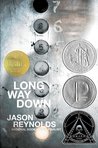
Long Way Down by Jason Reynolds (review by Sofie K. ’20)

Long Way DownLong Way Down by Jason Reynolds
My rating: 5 of 5 stars

“People always love people more when they’re dead.”

In Will’s world, it’s kill or be killed. In this world, you don’t grieve or cry over deaths, you get revenge. That’s what he thinks as he steps onto the elevator, gun tucked in his waistband, ready to kill the man who took his brother’s life. And then the elevator stops, and someone he long thought to be dead enters the elevator and asks him to check if the gun is even loaded.

Long Way Down is not a story about love or happy endings. It’s a story about revenge, morals, and family. It’s about discovering truths hidden under lies, and discerning right from wrong.

It’s also poetry. You don’t see many books written through poetry in the YA genre these days.

In just a single elevator ride, Long Way Down managed to make me feel a myriad of emotions ranging from sadness to anger and shock. The characters were expertly developed, and the concept was gut-wrenchingly original. Each verse of the poems is laced with deep emotion and heavy messages and morals, and it just about makes you scared of what could come through those elevator doors. – Sofie K. ’20

View all my reviews

Sala by Toni Morrison (review by Andrew R. ’17)

SulaSula by Toni Morrison
My rating: 3 of 5 stars

I chose Sula as my first introduction to Toni Morrison’s work because it was slimmer, lighter, and—apparently—easier to understand than her more famous and acclaimed novels, but now that I’ve finished the last chapter I find myself wondering if this book is really representative of Morrison’s greater oeuvre. The plot sounds deceptively peaceful: young black Sula leaves her small hometown behind as she heads off to be educated, and upon her return ten years later (a significant gap in the novel’s chronology), she’s estranged and distrusted by her former friends. You can’t call Sula “peaceful,” though, because Morrison fills its pages with wanton, almost casual violence and death. A mother soaks her son’s mattress in gasoline and sets it alight; a woman burns to death trying to light a yard fire; a little boy slips from his friends’ fingers and falls into the lake, never resurfaces. Hard as I try, I can’t reconcile these near-constant, near-faceless deaths with the practices of “good novel-writing” that I’m used to, and so for the moment Sula seems more off-putting and grim than I’d wish. Maybe someday, when I’m more familiar with the rest of Morrison’s novels, I’ll be able to return to Sula and appreciate, or at least understand, its pervading sense of randomness and cruelty.

View all my reviews

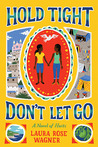
Hold Tight, Don’t Let Go by Laura Rose Wagner (review by Andrew R. ’17)

Hold Tight, Don't Let Go: A Novel of HaitiHold Tight, Don’t Let Go: A Novel of Haiti by Laura Rose Wagner
My rating: 3 of 5 stars

Hold Tight, Don’t Let Go begins with a strangely subdued account of the catastrophic earthquake that killed more than 100,000 Haitians on January 12, 2010. Over the course of a few pages, the teenage narrator, Magdalie, witnesses the almost instantaneous leveling of the city of her childhood. But the reader can’t comprehend the magnitude of the tragedy until, months later, Magdalie forces herself to sit down and pour her memories onto the page, even as she admits that, “It doesn’t change anything if I write it down or not … It doesn’t change a thing.” Only here does the reader stop and say, Oh—she is upset, she is scarred, this is a tragedy. It hurts to read the passage: we feel Magdalie’s pain. The rest of the novel follows a similar trajectory. Intense emotion is the most important element of a story that deals with a disaster on this scale, and while that emotion is very often deferred by stumbling plot-lines and flat characters, it’s never forgotten. Sooner or later, the author’s point hits home, and we can’t help but feel empathy for Magdalie and the hundreds of thousands of real-life Haitians in her situation. In that respect, at least, Hold Tight, Don’t Let Go is a success.

View all my reviews