Battle Hymn of the Tiger Mother by Amy Chua (review by Andrew R. ’17)

Battle Hymn of the Tiger MotherBattle Hymn of the Tiger Mother by Amy Chua
My rating: 1 of 5 stars

When Amy Chua set out to chronicle her struggles with Chinese parenting and her views on Western child rearing in her memoir Battle Hymn of the Tiger Mother, she must have known she was venturing into dangerous territory. Its polarizing messages—that immigrant families suffer “generational decline” as they stray further and further from their mother cultures, that constant interference in a child’s life and education is a way of showing parental love—triggered cries of relief and fury alike. No two readers of Chua’s memoir will have the same opinion about her take on so touchy a topic; the book’s content is utterly un-critiquable. But, if readers manage to overlook the flashy sensationalism of Battle Hymn of the Tiger Mother, they’ll notice certain elements that dilute the value and validity of its message: unsubstantiated research, sweeping generalizations, and, above all, the author’s habit of digressing into vignettes about her children’s scholastic and musical triumphs. Die-hard “Western parents” and aspiring tiger mothers can extol or condemn this memoir as much as they like, but their efforts won’t change its chronic lack of structure and authority. – Andrew R. ’17

View all my reviews

Silence of the Lambs by Thomas Harris (review by Akshay B. ’16)

The Silence of the Lambs  (Hannibal Lecter, #2)The Silence of the Lambs by Thomas Harris
My rating: 5 of 5 stars

FBI agent-in-training Clarice Starling is just as surprised as anyone else when she is called upon to investigate the serial killer Buffalo Bill, who skins his female victims to create a wearable suit. After Starling finds no leads, FBI Director Jack Crawford directs her to request the incarcerated Dr. Hannibal “Hannibal the Cannibal” Lecter for aid. Dr. Lecter develops a personal bond with Starling, and offers her information in exchange for personal details about her early life. However, when a Senator’s daughter is kidnapped by Buffalo Bill, the stakes are raised, and suddenly Dr. Lecter becomes the single most important person in the case. Building upon its prequel, The Silence of the Lambs is an absolutely beautiful masterpiece that blends a relatable protagonist and a despised yet admired cannibal genius, alongside profound symbolism and a twisting plot. Silence of the Lambs is definitely a must for all mature young adults and older. – Akshay B. ’16

View all my reviews

Red Dragon by Thomas Harris (review by Akshay B. ’16)

Red Dragon (Hannibal Lecter, #1)Red Dragon by Thomas Harris
My rating: 4 of 5 stars

Retired FBI profiler Will Graham is sought out by Agent Jack Crawford after a serial killer referred to as “The Tooth Fairy” murders two families, each at a full moon. Unable to glean any insight from the crime scenes, Graham realizes that he must consult Dr. Hannibal Lecter in the Baltimore State Hospital for Criminally Insane. Three years ago, Graham captured Lecter, who later came to be known as “Hannibal the Cannibal,” but was nearly disemboweled by the killer and thus retired. Graham must now face his past with Dr. Lecter and remain level-headed whilst racing to catch the Tooth Fairy before the next full moon. Harris masterfully creates a sympathetic hero and villain, causing the reader to root for both sides. Full of surprises, exquisite detail, and enough gore for a week, fans of thriller and mystery will find Red Dragon an excellent choice for a pleasure-read. – Akshay B. ’16

View all my reviews

David Copperfield by Charles Dickens (review by Andrew R. ’17)

David CopperfieldDavid Copperfield by Charles Dickens
My rating: 5 of 5 stars

According to the introduction to this mainstay of British literature, Tolstoy believed that “if you sift the world’s prose literature, Dickens will remain; sift Dickens, David Copperfield will remain.” What lends David Copperfield its renown and mastery, even among Dickens’s other novels and stories, is the almost unbelievable complexity of its small fifty-character cast, from the ominous, crafty villain Uriah Heep to the protagonist David Copperfield, gallant and righteous despite his crippling naivety. The first third of the novel — which is itself a three-hundred-page section — introduces the major players in Copperfield’s life as he struggles through his childhood, leaving the remainder of the novel to experiment with different mixtures of characters: What happens when the ostentatious pauper Mr. Micawber walks into Heep’s dining room? How will David’s iron stepmother respond when placed in a room with his equally iron great-aunt? The results are often spectacular and always play a role in the larger narrative of David Copperfield’s “personal history.” The humor, symbols, and messages in this novel, still as relevant as they were a century and a half ago, make it worthwhile to any modern reader. – Andrew R. ’17

View all my reviews

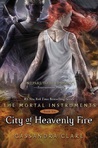
City of Heavenly Fire by Cassandra Clare (review by Catherine H. ’17)

City of Heavenly Fire (The Mortal Instruments, #6)City of Heavenly Fire by Cassandra Clare
My rating: 5 of 5 stars

The sixth and final book of The Mortal Instruments is packed with adventure, action, betrayal, loss, and so much more. Sebastian has begun attacking Institutes and using Lilith’s Infernal Cup to turn Shadowhunters into Endarkened, stripping away their humanity and willpower. Fearing his imminent attack, the Nephilim retreat to their capital in Idris and leave the Downworld free. Vampires, Faeries, Warlocks and Werewolves are left to their own devices and chaos erupts. Clary, Jace, and their friends go searching for Sebastian and look for the best way to defeat him. I thought this book was a good conclusion to this series, and appreciate how sacrifices needed to be made in order to resolve the conflict. I would recommend this series to anyone looking for a good read. – Catherine H. ’17

View all my reviews

Four by Veronica Roth (review by Catherine H. ’17)

Four: The Transfer (Divergent, #0.1)Four: The Transfer by Veronica Roth
My rating: 4 of 5 stars

Four is a collection of several short stories that help clarify the background of the character Four in Veronica Roth’s Divergent series. This book has several sections that begin with his Choosing Ceremony and end a short while after he meets Tris. I found this an intriguing read and thought it was nice for a quick read. I would recommend this to anyone who read and enjoyed the Divergent series. – Catherine H. ’17

View all my reviews

Do Androids Dream of Electric Sheep? by Philip K. Dick (review by Lauren L. ’17)

Do Androids Dream of Electric Sheep?Do Androids Dream of Electric Sheep? by Philip K. Dick
My rating: 3 of 5 stars

Set in a dystopian future after a devastating war, Do Androids Dream of Electric Sheep? later became the inspiration for the film Blade Runner and cleverly utilizes the unspoken need for company and labor that created the market demand for androids in the first place to emphasize the empathy and lack of appearing in the human race. The protagonist, Rick Deckard, is a bounty hunter who finds and kills rogue androids for the police on a dying Earth where animals have become a precious rarity and owning and caring for one is an indication of humanity. Most people have left to colonize Mars, and Deckard is trapped in a claustrophobic marriage with ownership of only a single animal- an android sheep. Though the writing itself didn’t appear to be anything special, the plot and the action are transfixing enough for any sci-fi reader to enjoy. – Lauren L.’17

View all my reviews

The Da Vinci Code by Dan Brown (review by Daphne Y. ’16)

The Da Vinci Code (Robert Langdon, #2)The Da Vinci Code by Dan Brown
My rating: 5 of 5 stars

The Da Vinci Code begins with a dramatic standoff between the curator of the renowned French museum, the Louvre, and a mysterious hooded figure. By the end of the first chapter Dan Brown is already leaving the reader with an insatiable hunger for more. Full of absolutely ingenious wordplay, puzzles, and riddles with one plot twist or cliffhanger following another, Brown manages to keep readers on their toes and dying to read the next chapter. He also switches points of views in each chapter from one main character to the next, and even includes the voices of the antagonists, thus providing a comprehensive and omniscient understanding of all the characters in the book. Overall, The Da Vinci Code is the kind of novel that is simply impossible to put down; riveting and genius from start to finish! – Daphne Y. ’16

View all my reviews

Not a Penny More, Not a Penny Less by Jeffrey Archer (review by Andrew R. ’17)

Not a Penny More, Not a Penny LessNot a Penny More, Not a Penny Less by Jeffrey Archer
My rating: 2 of 5 stars

When a millionaire pulls off an elaborate scheme to steal money from other millionaires, it’s up to the conned millionaires to chase the criminal millionaire around to all his high-society haunts so that they can surreptitiously extract their fortunes from him and become millionaires once more. As a non-millionaire, it’s hard to sympathize with all these fabulously wealthy characters whose most important traits are their holdings in African gold and their prize-winning orchid collections. Archer is wedded to elaborate scene descriptions, from the exact years of every expensive bottle of wine the characters enjoy to the brand and tailor of each of their suits. To provide these details, Archer often draws a little too far on his narrative omniscience. By the fifth chapter, he’s revealed all but one plot twist in the entire novel, leaving the reader to tag along on the protagonists’ journeys to Wimbledon and Monte Carlo without caring too much who will succeed and who will fail. Not a Penny More, Not a Penny Less is a good fit for readers who share the author’s penchant for finances, but at 300 pages, the novel isn’t prepared to offer much else. – Andrew R. ’17

View all my reviews

The Raven Boys by Maggie Stiefvater (review by Catherine H. ’17)

The Raven Boys (The Raven Cycle, #1)The Raven Boys by Maggie Stiefvater
My rating: 4 of 5 stars

Ever since she was six, Blue Sargent has been told by her family of psychics that if she kisses her true love, he will die. She decided she wouldn’t fall in love, but when she’s sixteen, she meets and becomes included in a group of boys. Specifically Aglionby boys, called Raven boys. Their quest for something supernatural draws Blue in, and her knack for making supernatural occurrences stronger accelerates their pace. This book introduces us to a great variety of characters, all of them eccentric in their own way. I found that Maggie Stiefvater keeps a good pace throughout the book, picking up towards the end and leaving us at a cliffhanger. Though I originally thought I would be reading a novel filled with romance, it was surprisingly low in the romance and tragedy department. I hope to find more romance, mystery, and action in the next two books in The Raven Cycle. – Catherine H. ’17

View all my reviews