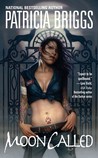
Moon Called by Patricia Briggs (review by Elisabeth S. ’16)

Moon Called (Mercy Thompson, #1)Moon Called by Patricia Briggs
My rating: 4 of 5 stars

A solid urban fantasy novel, Moon Called gives readers a healthy dose of independent, headstrong female characters, solid world building, and complex character depth. It succeeds in avoiding the usual tropes of urban fantasy or giving them new twists to keep things fresh. The series details the life of skinwalker Mercedes Thompson, a mechanic who toes the line that divides the society of fae, werewolves, vampires, and other monsters from normal humans. As a skinwalker, Mercedes can turn at will into a coyote–though she is not entirely a werewolf, she was raised by the werewolf community as one of their own until she leaves of her own accord after a decisive incident. Trouble brews when the neighboring pack has one of their children stolen. Overall, I would recommend Moon Called to fans of all fantasy, whether specifically urban or otherwise, for a fast-paced and entertaining read. – Elisabeth S. ’16

View all my reviews

Rebel Spring by Morgan Rhodes (review by Maya V. ’17)

Rebel Spring (Falling Kingdoms, #2)Rebel Spring by Morgan Rhodes
My rating: 5 of 5 stars

The sequel to Falling Kingdoms, Rebel Spring is extraordinary. The first novel, following the stories of young adults from different kingdoms of Mytica, ended at the point in which all of the characters met. Now, the teenagers live in a time of greater turmoil than they had lived in before. Whether controlled by murderous parents or harassed by brutal soldiers of other kingdoms, they must constantly watch their backs to avoid death. In such circumstances, the characters have to find a way to not only bring back peace to their land, but also manage their personal issues. If you expect a typical continuation of the story in which the teens team up and fight resistance as best friends forever, you are most definitely mistaken. You will be stunned at the turn of events that occur instead. Incorporating the side characters from the previous novel as main characters in the sequel, one can develop a broader view of the situation, given the several new perspectives. Containing even more gut-gripping moments, horrific murders, mystery, romance, and excellent writing, Rebel Spring is a must read! – Maya V. ‘17

View all my reviews

Autobiography of Red by Anne Carson (review by Elisabeth S. ’16)

Autobiography of RedAutobiography of Red by Anne Carson
My rating: 5 of 5 stars

Anne Carson’s compelling language makes this book a masterpiece in verse. Autobiography of Red is a coming-of-age story loosely based on the story of Herakles’ tenth labor (stealing the cattle of the monster Geryon). This version is set in the modern day–Geryon is still a red monster with wings, but he’s also a photographer with his own familial troubles and thirst for adventure. He meets Herakles, and they fall in love, but Herakles departs from his life shortly after, not to be seen again until years later when Geryon is taking a trip through South America. Carson’s use of unlikely yet apt description and Geryon’s singular, confused voice makes this book utterly unforgettable. His trials with an abusive brother, a feeble mother, and lost love make it surprisingly easily to empathize with the red monster. Overall, this book is recommended to all fans of poetry and mythology. – Elisabeth S. ’16

View all my reviews

For the Win by Cory Doctorow (review by Andrew R. ’17)

For the WinFor the Win by Cory Doctorow
My rating: 4 of 5 stars

On the one hand, For the Win reads like a video game ad. Cory Doctorow describes, with childlike delight, his ideas for massive multi-player online role-playing games with titles like “Svartalfheim Warriors” and “Zombie Mecha” in such painstaking detail that the reader has to wonder why he chose a career as a novelist instead of a game designer. But then the other face of the book shows itself, the professional, educational side that balances out Doctorow’s nerdy fantasies with lessons on economics, of all things. At first, pairing unions and finance with video games seems an odd strategy, but when Doctorow starts drawing parallels between the two, the offline world he’s created is fleshed out as fully as his online ones. There are characters, mostly impoverished gold farmers and corrupt businessmen; there’s a plot, even if it only appears between video game descriptions and economics lessons. But the real meat of the book, the part that Cory Doctorow fans old and new will recognize as part of the author’s style, has nothing to do with the characters or plot. Rather, all the substance lies in novel’s empowering message, its inspiring moral about equality, freedom—and video games. Andrew R. ’17

View all my reviews

Sophie’s World by Jostein Gaarder (review by Elisabeth S. ’16)

Sophie's WorldSophie’s World by Jostein Gaarder
My rating: 5 of 5 stars

Sophie’s World is a delightful Intro to Philosophy course wrapped in several layers to make it easier to stomach. It begins innocuously enough, with young 14-going-on-15-year-old Sophie Amundsen receiving a letter in the mail and finding herself suddenly involved in a correspondence-based philosophy course with a mysterious teacher. Sophie runs through a comprehensive history of philosophy through her letters, while also trying to figure out the secret behind the many “Happy Birthday, Hilde!” messages hidden throughout her own narrative. Soon, she begins to question whether she herself is even real. This book is highly recommended for those interested in philosophy whether already well-versed in it or not. It provides a great starting platform for those who are just getting started and an excellent diversion for those that are already experienced in the field. – Elisabeth S. ’16

View all my reviews

Plague by Michael Grant (review by Andrew R. ’17)

Plague (Gone, #4)Plague by Michael Grant
My rating: 1 of 5 stars

By the beginning of the fourth book of Michael Grant’s FAYZ series, the situation is grim: deadly epidemics sweep the population, young children resort to cannibalism to survive, an invincible sadistic demon prowls the streets, mutant insects lay eggs inside humans so their larvae can gnaw their way free upon birth…If this description of events makes this book sound over-the-top gruesome, that’s because it is. Grant forgoes any semblance of a plot in favor of graphic death after graphic death, introducing scores of characters whose sole purpose is to be eaten or burnt or flayed or stabbed, and he often undercuts the horror of his plot by going too far with his ideas. Sure, wasps with bulletproof carapaces that can gnaw through stone are scary enough, but making them the size of minivans and perching undead whip-wielding demons on their shoulders is such absurd overkill as to make them seem ridiculous, not frightening. I could go on about the story’s repetitiveness, its clichéd characters, its depressing love interest, or its awful attempts at humor, but I’ll have to be content with warning potential readers that the FAYZ takes a serious turn for the worse at this point in the series. – Andrew R. ’17

View all my reviews

Uninvited by Sophie Jordan (review by Sophia S. ’15)

Uninvited (Uninvited, #1)Uninvited by Sophie Jordan
My rating: 3 of 5 stars

A teenager manages to obtain a gun and uses that weapon in a public place, causing panic and terror, all of which is publicized in the media. Sound familiar? Jordan explores a world where violent behavior is spawned by the Homicidal Tendency Syndrome (HTS). And the country representative of the free world is the leader of the international movement to oppress the doomed individuals who carry the HTS gene. But do genes define who you are? Davy Hamilton used to think so, at least before she tested positive for the HTS gene. Can a harmless, popular, Julliard-bound high school girl be the chillingly mindless killer society thinks she is? The only thing “chilling” about this novel is the possibility of this society arising from a government desperate to appease the terrified victims of violence. Jordan taps into the deep well that is speculation of societal behavior but shies away from that meaningful subject to lash together a rote chick flick. Select parts of the story are stimulating, but the majority of Uninvited is mind numbingly cliché. Recommended for readers in a mood for light reading. – Sophia S. ’15

View all my reviews

Jim Henson: The Biography by Brian Jay Jones (review by Andrew R. ’17)

Jim Henson: The BiographyJim Henson: The Biography by Brian Jay Jones
My rating: 4 of 5 stars

“Jim Henson” never quite became a household name, but his creations are known across the world: Kermit, Miss Piggy, Big Bird, the Great Gonzo…This biography, however, isn’t the story of the Muppets or Sesame Street, and it’s not a list of the wildly successful movies Henson produced in his day. Accomplished biographer Brian Jay Jones paints a picture of the man who launched some of the 20th century’s most successful ventures in entertainment, tracking his rise from madcap coffee advertisements to the creation of the “Muppet Show,” and even beyond, with films like Labyrinth and The Dark Crystal. Jones has done his research well, and the book’s pages are scattered liberally with wistful insights from Henson’s children, friends, and coworkers. Most remarkably, the book’s atmosphere is light and readable, a tribute to Henson’s love of simplicity and entertainment. Any reader with time to spare should pick up Jim Henson: The Biography—not because it’s an insightful or meaningful experience, just because it’s a fun look into the life and legacy of a this astoundingly creative man. – Andrew R. ’17

View all my reviews

Pyramids by Terry Pratchett (review by Mr. Silk)

Pyramids (Discworld, #7)Pyramids by Terry Pratchett
My rating: 3 of 5 stars

Fans of science fiction with a twist of Egyptology will really enjoy this entry into the Discworld series. “Pyramids” is basically an alternate history, asking what if the ancient pyramids really held magical powers, and what if those powers got out of hand? There is plenty of action, adventure, and comedy throughout the book as we follow the dead king – frustrated that he is being mummified, the new king and his camel (a brilliant mathematician; the camel, not the new king), and the pyramid builders as their world starts to unravel around them. Not for everyone, but if you like stories that are a bit “wacky” this one is for you. – Mr. Tony Silk (Harker teacher)

View all my reviews

Girlfriend in a Coma by Douglas Coupland (review by Elisabeth S. ’16)

Girlfriend in a ComaGirlfriend in a Coma by Douglas Coupland
My rating: 4 of 5 stars

Girlfriend in a Coma is an excessively thought-provoking look at the world in the present and the future. The book details the lives of a group of high school friends whose lives fall apart after one of them, Karen, goes into a coma for 17 years without any explanation. Karen’s boyfriend Richard is left with a letter she wrote the day before about disturbing visions of the future she had been having. Well written to an extreme (and quotable to an extreme), this novel is filled with wry wisdom through the various POV characters’ thoughts, especially Karen’s perspective, because she can note exactly how the world changed between when she went to sleep and when she woke up, and the changes are not always positive. Another highlight is Jared, the other protagonist who also happens to be dead. Towards the end, the novel has an apocalyptic twist that eventually serves to comment on the general condition of adults at the turn of the century. Overall, though the novel was excellent, I would caution against it for readers who get bored easily with the mundanities of life. – Elisabeth S. ’16

View all my reviews