Babel by R.F. KuangĀ (Review by James B. ’24)

Babel, Or the Necessity of Violence: An Arcane History of the Oxford Translators' RevolutionBabel, Or the Necessity of Violence: An Arcane History of the Oxford Translators’ Revolution by R.F. Kuang
My rating: 3 of 5 stars

This is an incredibly frustrating book. Definitively, I know that it was well-written and that I mostly enjoyed reading it, especially with all the little etymology lessons. Having said that, I identified some major pitfalls that made it more miss than hit for me personally.

Babel by R. F. Kuang, author of The Poppy War trilogy, is the alternate-history story of a cohort of translation students at Oxford in the 1830s, and how their struggle to be accepted in a culture that will only recognize them as foreigners lends to a greater debate on the ethics of colonization and the necessity of violence.

Whenever I’ve told someone about this book I’ve been sure to mention the full title, as I think it also serves as a rather good summary: Babel, or The Necessity of Violence: An Arcane History of the Oxford Translators’ Revolution. Keep in mind that this is *alternative* historical fiction, so it presents events that could have happened in history but didn’t really.

The world-building is fairly strong, though I’ve heard complaints about the addition of fantasy in the way of silverworking in an already very dense book. I believe that the politics are familiar enough to the reader, and the addition of silverworking is just a device that compounds a much broader range of goods.

The plot is quite fast-paced, and surprisingly action-heavy especially towards the end of the book. Kuang does a great job of keeping the stakes high even when the main characters are just attending classes. I actually really enjoyed reading about the academic pressure the characters experience, as would any Harker student because that’s relatable to us.

The message of the novel is very important one, being about the negative impacts of colonization, racism, and cultural genocide. Having said that, there’s no nuance to how it’s delivered, as the author would seemingly rather shove it in your face at every opportunity, which makes the message a lot weaker in my opinion.

Now, the weak point of the book: the characters. Our four main characters are so lacking that at multiple points I was ready to abandon the main story entirely to learn more about the side characters.

SPOILERS AHEAD – Do not read this next section if you intend to read the book!

I would have rather read the story of Griffin, Sterling, and Evie’s love triangle and how Sterling was driven to betray the Hermes Society and murder Griffin. I would have rather read about Professor Craft and why she chose to stay in Babel tower to the very end despite being the only professor and a well-off white woman. I would have rather read about Ibrahim and Juliana’s romance, dying in each other’s arms despite their misgivings.

Instead we get Robin, Ramy, Victoire, and Letty. Victoire, for the massive role she plays in the strike, has no defining traits as a character. Ramy is unremarkable, only defined by his death. Robin is more interesting but only because we get to know his every thought, he doesn’t really do all that much without guidance from others. Oddly enough, Letty is the most complex character, but she’s also the least likeable as the lone white person in a group full of immigrants who betrays them because she can’t understand why they aren’t grateful for being colonized. The romance between Robin and Ramy is infuriating because it’s never really touched on until Ramy dies, so we can only imagine how strong their bond was based on Robin’s overwhelming grief. I also think killing off the two queer characters before ever stating or exploring their identities is cheap and baiting. Honestly, I bought and read Babel in part because I was expecting some queer representation.

Most of the reason that these characters feel so empty is because we hardly ever get to see them interact with one another. The whole book they’re either stressed or fighting and avoiding each other, and in the rare moments that they behave like friends the author summarizes their conversations in place of actual dialogue.

Okay, I’m done.
Read this book if you’re interested in learning more about the events leading up to the Opium War or really enjoy etymology and linguistics and enjoy a strong. Do not read this book if you are a character-focused reader, or are looking for a fun dark-academia read with queer representation.

Here are some of my favorite quotes:

“”English did not just borrow words from other languages; it was stuffed to the brim with foreign influences, a Frankenstein vernacular.””

ā€œThis is how colonialism works. It convinces us that the fallout from resistance is entirely our fault, that the immoral choice is resistance itself rather than the circumstances that demanded it.ā€

ā€œThere are no kind masters, Letty,’ Anthony continued. ā€˜It doesn’t matter how lenient, how gracious, how invested in your education they make out to be. Masters are masters in the end.ā€

Happy reading! -Review by James B. ’24

View all my reviews

If We Were Villains by M. L. Rio (Review by James B. ’24)

If We Were VillainsIf We Were Villains by M.L. Rio
My rating: 5 of 5 stars

I have a love-hate relationship with this book, but if I didn’t give it five stars I would be lying to you as well as to myself. It’s a battering-ram to the mind and I loved every minute of it, consuming the entire thing in a single sitting on a five-hour flight.

If We Were Villains is the epic, dark-academia story of a class of seven students at an elite arts school, studying and performing Shakespeare. The story is told by Oliver Marks ten years later, after serving prison time, as he recounts what really happened that year to a detective.

Through his testimony, we learn how an obsessive group of actors began to fulfill their roles off stage, spiraling into violence, betrayal, and murder.

This book is deliciously indulgent, especially for those of us who like some Shakespearean levels of drama. I felt super engaged in pretty much all of the characters, and ravenously followed the twists and turns of the story.

Honestly, If We Were Villains was out of my comfort zone. I don’t usually read thriller/mystery books because I find them too predictable, and while I wouldn’t read this book if you’re expecting a breathtaking twist, it’s so fun to read I didn’t even mind that it was a bit predictable. I would recommend this for anyone who likes melodrama and strong characters, and more specifically those who love found family even more when it’s a little toxic.

Here are some of my favorite quotes:

ā€œFor someone who loved words as much as I did, it was amazing how often they failed me.ā€

ā€œYou can justify anything if you do it poetically enough.ā€

ā€œWhat is more important, that Caesar is assassinated or that he is assassinated by his intimate friends? … That,’ Frederick said, ‘is where the tragedy is.ā€

ā€œI never asked where he went, worried he wouldn’t ask me to follow.ā€

ā€œHow could we explain that standing on a stage and speaking someone else’s words as if they are your own is less an act of bravery than a desperate lunge at mutual understanding?ā€

Happy reading! –Review by James B. ’24

View all my reviews

The House of Mirth by Edith Wharton (Review by Trisha I. ’24)

The House of MirthThe House of Mirth by Edith Wharton
My rating: 4 of 5 stars

You’re a young woman living in the big city. You go to social events, despite some introverted qualms, partly to get some social currency and mostly to meet your charming, lovely friends. You like shopping for new clothes, even if you can’t afford them, because they’re pretty (and your peers expect you to). You like this one boy that you really aren’t supposed to like. What could be more human that?

To me, the saddest thing about Edith Wharton’s The House of Mirth is that, reading it a century after it was written, I could still deeply understand the seemingly shallow yet nuanced societal flaws the novel depicts.

Spoiler alert: You are Lily Bart, the protagonist, and you’re desperately trying to stay financially afloat in New York as the stock markets begin to jump around a little too wildly and the allowance your aunt gives you drains a little too fast. The House of Mirth charts your path after you turn 29 and realizes that the only socially acceptable solution to your financial problems is finding a husband. However, you are attracted to a penniless lawyer rather than the wealthy stock market brokers and other gentlemen who could actually support you in a stable, if boring, future.

The novel’s premise isn’t what makes it relatable, of course; times have changed, and marriage is no longer a woman’s end goal in life. Yet, as Lily sets about her wearying task of finding a rich and dull suitor, she grapples with a subtle snowballing of rumors, backstabbing fair-weather friends, and misunderstanding after misunderstanding that threatens her good name and prospect—and that kind of awkwardness is understandable to the reader.

The consequences Lily faces are bizarrely large in their scope and a consequence of the stricter times she lives in, but what she goes through is ultimately universal. Everyone knows the pain of a lost friendship or the disorienting feeling of having said just the wrong thing to shut down a conversation without knowing.

Wharton’s writing is at its most poetic when writing dialogue, which is just a slew of verbal irony: in an era of glitz and affected lifestyles, no character means what they say. Each conversation challenged me with its subtext. In one powerfully-executed scene, Lily realizes that one character whom she’d previously looked down upon no longer needs her help nor will help her.

With one passionate speech and sparse language, Wharton depicts Lily’s conflicting feelings of shock, regret, acceptance, and sense of dignity. That’s one scene of many that frustrates me with its sadness but stuns me with its simplicity. If you’re looking for a somber but thought-provoking and relatable read, this is the novel for you. —Review by Trisha I. ’24

View all my reviews

Starsight by Brandon Sanderson (Review by Varun F. ’24)

Starsight (Skyward, #2)Starsight by Brandon Sanderson
My rating: 2 of 5 stars

Starsight, by Brandon Sanderson, is the sequel to the incredibly popular young adult science fiction novel Skyward. Starsight expands on the universal adventures of pilot Spensa and her journeys to protect her home planet, Detritus. Although Skyward was an engaging and overall exciting read, Starsight falls short.

Starting with the positives: Brandon Sanderson does not lose his direct writing style and stunning visual imagery of action scenes and new environments that Spensa finds herself in. Spensa’s character remains intriguing, and M-Bot and Spensa’s interactions are still hilarious.

I found Starsight’s plot to be overly complex, with many new characters that aren’t explored fully. While reading the book, I found myself flipping back and forth through the pages to remind myself of who each of the characters were and what they looked like. Unlike that of Skyward, the plot of Starsight feels half-baked, and the ending is anticlimactic and mainly serves to introduce a cliff-hanger for Sanderson’s next novel in this series, Cytonic.

While I certainly enjoyed parts of this novel, I found myself confused about the tangled plot and excess of characters for the most part and was disappointed by the ending.

View all my reviews —Review by Varun F. ’24

Atomic Habits: An Easy & Proven Way to Build Good Habits & Break Bad Ones by James Clear (Review by Ritu B. ’24)

Atomic Habits: An Easy & Proven Way to Build Good Habits & Break Bad OnesAtomic Habits: An Easy & Proven Way to Build Good Habits & Break Bad Ones by James Clear
My rating: 5 of 5 stars

Have you ever wished that you could overcome an addiction to your phone? Or start studying for that math test a week early instead of cramming it all in the night before? Well, to make a big change, you must start with many small changes, which is one of the many lessons I learned from Atomic Habits.

Overall, the book talks about how to create good habits, break bad habits, and achieve more with less effort. No gimmicks involved, just careful structuring of your environment, an intentional shift in your mindset, and the right routine.

Atomic Habits is one of the most approachable and reader-friendly books I’ve ever read. When you open up this book, you will quickly (and happily) notice that it is not written in the style of the great American novel. Rather, it has a conversational tone and is filled with bullet points, charts, and diagrams to break up blocks of text and emphasize key takeaways.

Additionally, the rules that the author outlines are simple enough that you can start implementing them into your life right away. For example, I implemented the first rule of making a bad habit invisible by putting my phone under a blanket and far away from my desk, which has reduced the number of times I pick it up while working.

I highly recommend Atomic Habits to anyone looking to be successful in life. —Review by Ritu B. ’24

View all my reviews

Our Favorite Mysteries!

We are so excited about ā€œBooks with Barskyā€! This is a fun new opportunity on campus—hosted by the venerable head of our Upper School, Mr. Barsky—to gather, gush, and discuss books we’ve read on the pre-decided theme or genre.

In honor of the chosen genre of mystery for our first meeting on December 9th, we’ve compiled some of our favorite twisty, crime-solving-keeps-you-guessing-till-the-end books. Apparently we are fairly loyal to the Queen of Mystery, Agatha Christie, but we have other recommendations as well… Happy solving!

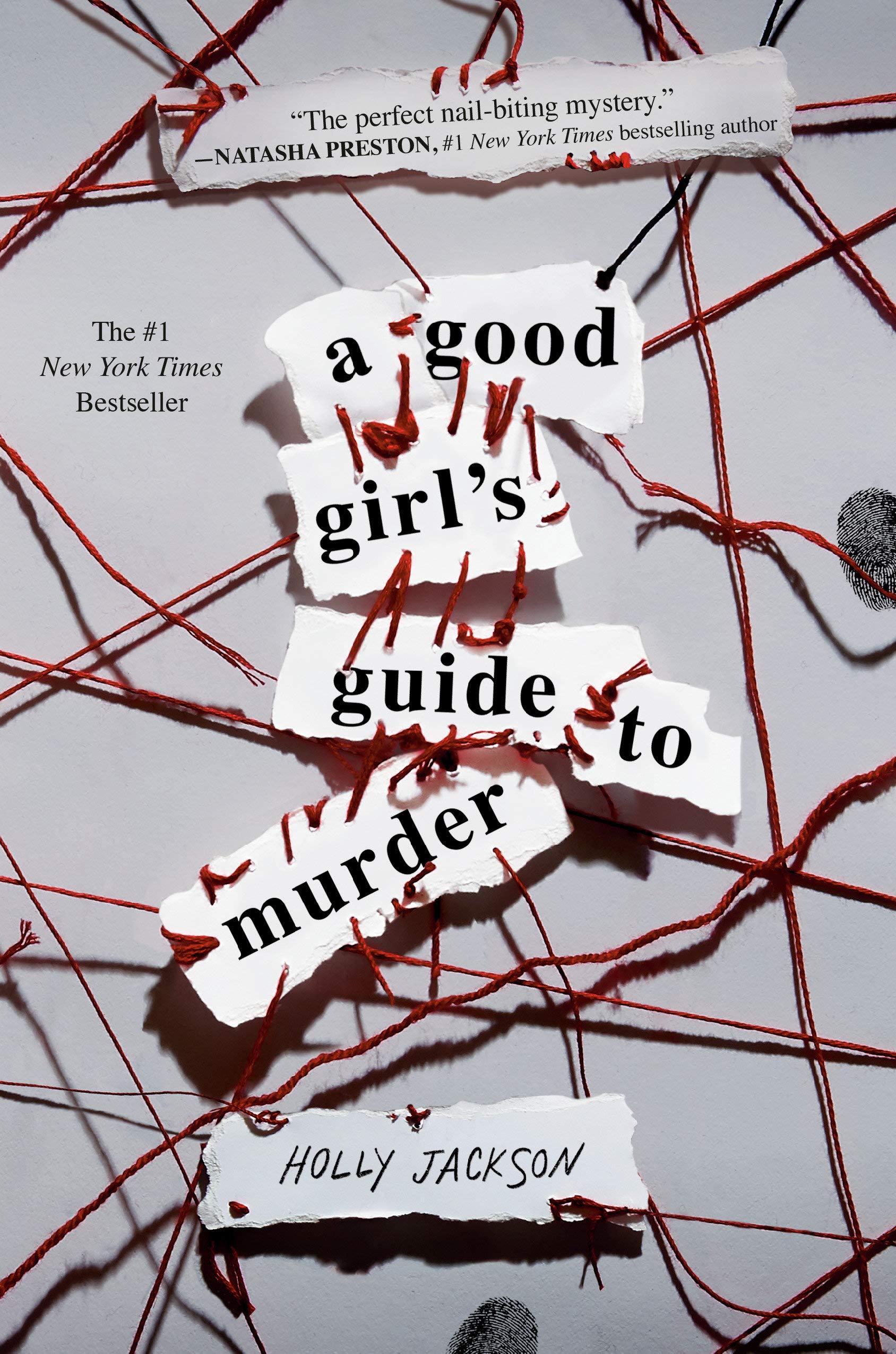
A Good Girl’s Guide to Murder by Holly Jackson was fast-paced, exciting, and engaging. -Anoushka C. ā€˜26

I am currently reading A Good Girl’s Guide to Murder, and I really like the plot sequence and the protagonist. -Alana B. ā€˜26

.

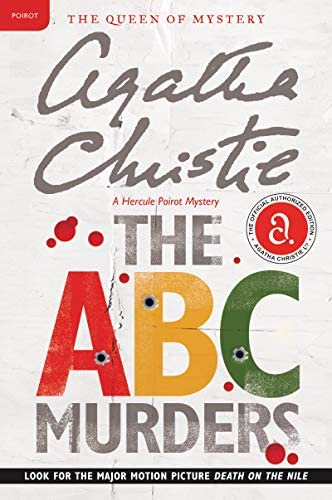
The A.B.C. Murders. One of the funniest murder mystery books I’ve ever read. -Ritu B. ā€˜24

Dark Places by Gillian Flynn. I loved the plot twists and the raw, horrifying narrative that Flynn presented throughout the book. -Hita T. ā€˜23

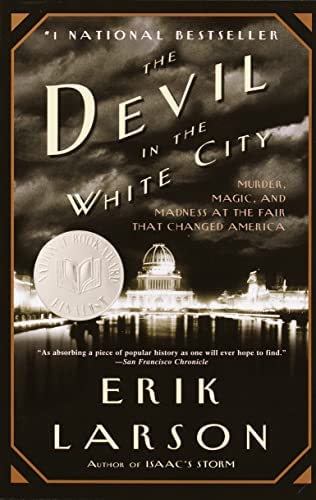
I loved Devil In the White City because it captured glamour and grit all while staying true to nonfiction. -Paulina G. ā€˜23

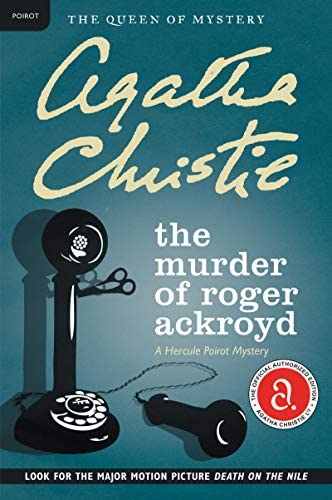
The Murder of Roger Ackroyd is classic Agatha Christie and, moreover, details a thrilling story (those who know, know).Ā -Rupert C. ā€˜23

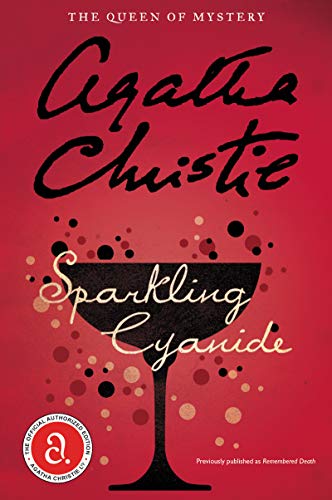
Sparkling Cyanide by Agatha Christie. I was cautious about venturing beyond Poirot to a standalone Christie novel, but this is such a compelling, self-contained mystery with a plot twist and writing voice I’ll never forget; part of the fun, even, is figuring out which characters to trust—and they all have a stake in what truth may come to light—when there’s no omniscient detective, twirling his mustaches, separate from the action. -Trisha I. ā€˜24

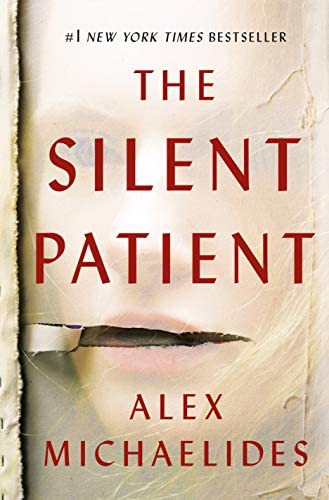
The Silent Patient by Alex Michaelides. I enjoyed it because I have a bad habit of trying to guess the twist in a novel and despite this habit I can confidently say that I never could’ve predicted the truth. -James B. ā€˜24

Fictional Characters & Favorite Songs (By Layla M. ’25)

A melody sings just as profound a story as the written word speaks. Here are a few fictional characters paired with songs that I feel tell their stories, related by either emotion or physical experience. I tried not to reveal too much plot in case you haven’t read some of the books.

ā€œMoneyā€ by Pink Floyd & Napoleon of Animal Farm by George OrwellĀ 

ā€œMoneyā€ describes the greed that Napoleon learned from humans, but with some extra funk and a killer saxophone solo that’s dirtier than pigs.

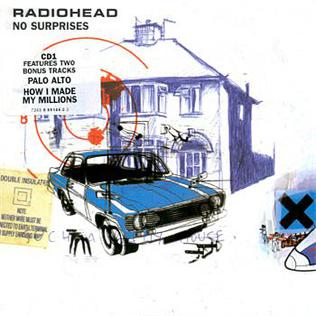
ā€œNo Surprisesā€ by Radiohead & Charlie Gordon of Flowers for Algernon by Daniel Keyes

In ā€œNo Surprises,ā€ a bell chimes the main riff in thirds throughout the entire song. The simple melody is placed in thirds like a child’s lullaby, which creates an innocent, sweet mood that contrasts with the song’s lyrics of giving up by death. After gaining a normal intelligence, Charlie realized the cruelty he mistook for friendship and his childhood’s traumas. At the end of the book Charlie was just as isolated by his intelligence as he was beforehand. I felt Charlie’s sadness in his mental passage from cradle to grave in this song.

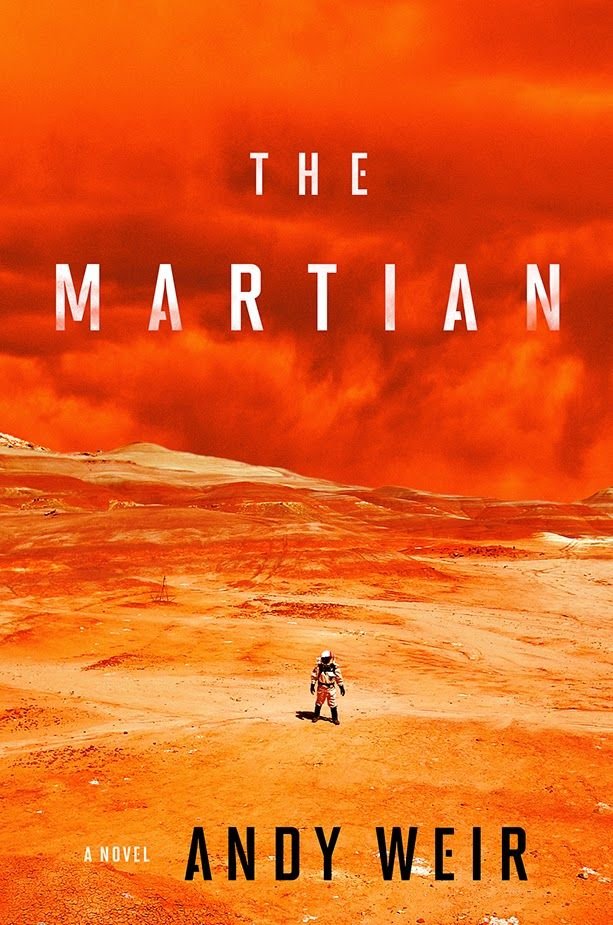
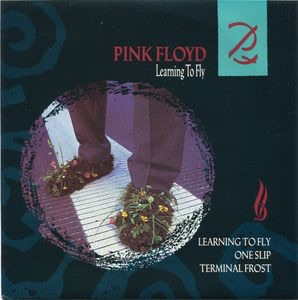
ā€œLearning to Flyā€ by Pink Floyd & Watney of The Martian by Andy Weir

Similarity: Space / Space

ā€œDark Necessitiesā€ by Red Hot Chili Peppers & the society of Fahrenheit 451 by Ray Bradbury

This song’s bass is so clean, almost like the sterile lives of Fahrenheit 451’s world. As for the message, there’s a dark side to the sanitized version of reality.

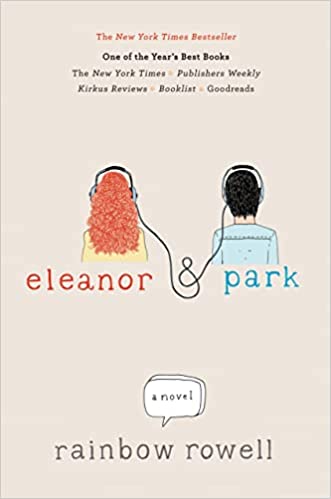
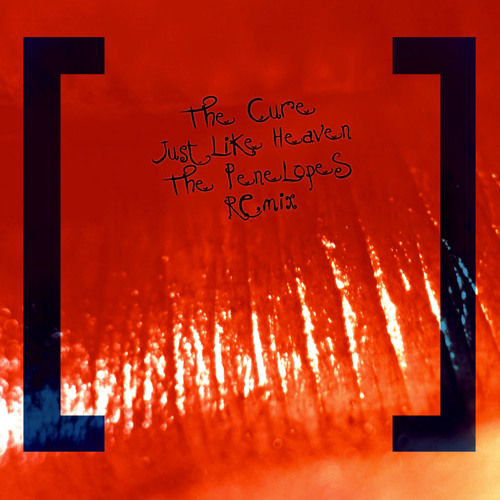
ā€œJust Like Heavenā€ by The Cure & Eleanor and Park by Rainbow Rowell

Imagine thick, saturated drums with gated reverb punctuated by jangling guitars. Drench whatever you thought of in synths, and that is what I would make the soundtrack to Eleanor and Park in movie format. Somehow, in my mind, the lushness of 80s music translates to Park’s falling head over heels for Eleanor.

ā€œFast Carā€ by Tracy Chapman & Lennie and George Of Mice and Men by Ernest Hemingway

ā€œFast Carā€ carries hope of renewal and escape, like Lennie and George’s dreams of starting their own farm.

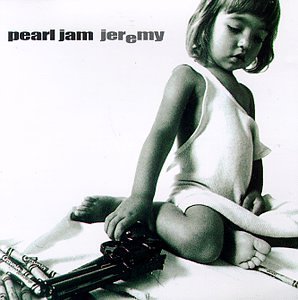
ā€œJeremyā€ by Pearl Jam & the Creature of Frankenstein by Mary Shelley

The bullied becomes the bully in both ā€œJeremyā€ and Frankenstein. I guess what goes around comes around, and it comes back a whole lot worse.

I hope that this article will inspire you to consider giving some new music a listen or new book a read. If this post inspired you to make your own character/song pairings, leave ’em in the comments!

–Layla M.

Creep by Eireann Corrigan (Review by Varun F. ’24)

CreepCreep by Eireann Corrigan
My rating: 2 of 5 stars

Eireann Corrigan’s Creep is a horror novel revolving around the haunted 16 Olcott Place, and its written in a first person point of view from a neighbor of 16 Olcott Place, Olivia.

Let’s start off with the positives. The characters, albeit one-dimensional, are likable and tend to make realistic decisions during the story. The first-person perspective is easy to relate with, and the descriptions of 16 Olcott Place are incredibly illustrative. In addition, Corrigan’s writing style, with frequent uses of foreshadowing, work perfectly within this novel.

When I picked this book up from the library and read through the quick summary on the back of the cover, I expected the novel to have supernatural themes. I was intrigued by “the Sentry” and his mysterious notes, but my excitement was sadly unjustified. The book had no supernatural elements at all, and the only point of conflict between the antagonist and protagonists was at the end of the book. Due to these two elements of the book, I didn’t feel like I was reading a horror novel at all, as it lacked the much-needed scare factor.

I have nothing against this novel, but I certainly won’t be recommending it in the future.—Review by Varun F. ’24

View all my reviews

Announcing the Winners of The Second Annual FanFiction Contest!

This year we had a fantastic turnout consisting of imaginative, fantastic, beautifully written pieces. We are so honored by those who opted to share their passion and talents with us. Thank you to all who submitted their writing. Without further ado:

First Place ($50 Barnes & Noble Gift Card)

 Anatomy by James B. (Frankenstein)

Second Place ($40 B&N Gift Card)

 ęƒ³ć„ć‚ˆć²ćØć¤ć«ćŖć‚Œ – Feelings, Become One by Silver (“Love Live! Sunshine!!ā€)

Third Place ($30 B&N Gift Card)

 A Most Dangerous Squid Game by Jason S. (ā€œThe Most Dangerous Gameā€ x  ā€œSquid Gameā€)

Fourth Place ($30 B&N Gift Card) 

The Man by Jessica W. (The Raven)

These Violent Delights (Review by Sriya B. ’22 )

These Violent Delights (These Violent Delights, #1)These Violent Delights by Chloe Gong
My rating: 4 of 5 stars

TW: gun violence (major), gore (major), transphobia (moderate), racism/xenophobia (minor).
I picked this book up because someone told me it was a Romeo and Juliet retelling, but they didn’t tell me it was a Romeo and Juliet retelling set in 1920s crime-run Shanghai about star-crossed ex-lovers putting aside the blood feud between their gangs to prevent a monster from terrorizing their city.

Between the ruthless gangs, the rekindling of first love, and the dramatic ploys of various nationalities trying to gain control of Shanghai, this story delivers on so many fronts.

I can definitely see how this follows Romeo and Juliet, but at the same time, it feels entirely different. It’s the perfect kind of retelling, with the right balance of new and original. Chloe Gong successfully took a beloved classic and retold it with new culture, queer representation, and modern themes surrounding misogyny and racism, while also staying true to the core themes about love, loyalty, and betrayal.

The writing, while slow and long-winded in some areas (I might have lightly skimmed here and there), has beautiful descriptions and quotes you’ll want to write down and remember forever. As someone who has been reading a lot of YA romance lately, coming back into fantasy was a bit of a shock, but the way Chloe Gong navigated the multiple POVs and plot without confusing me was amazing. Of course, this way of ornate telling might not be your cup of tea, but I recommend you give it a try anyway! Oh, and the ending had me running to the library to get the sequel.—Review by Sriya B. ’22

If you like this book, Sriya also recommends The Gilded Wolves and An Ember in the Ashes.

View all my reviews