Tag Archives: Andrew R. ’17

I Am a Strange Loop by Douglas R. Hofstadter (review by Andrew R. ’17)

I Am a Strange LoopI Am a Strange Loop by Douglas R. Hofstadter
My rating: 4 of 5 stars

In I Am a Strange Loop, Pulitzer Prize-winning professor Douglas Hofstadter proves that nonfiction doesn’t necessarily have to be built on fact; without much more than a lattice of elaborate metaphors and classical allusions to support the credibility of his arguments, he makes a case that’s both cogent and convincing. It boils down to this: in a brain comprised of complex neural symbols, the concept of “I” (also referred to as the “soul” or “self-symbol”) is a self-referential feedback loop of indefinite duration. Hofstadter presents a host of comparisons to better illustrate his abstract point, invoking repeatedly the ideas of a spring-loaded domino circuit, a video camera that points to its own screen, and, most effectively, a famous self-referential theorem by the mathematician Kurt Gödel. (Three chapter are spent providing mathematical context alone.) It’s in these creative metaphors that Hofstadter is most at home, and every time he spins off on a bizarre tangent you can be sure he’ll twist it to make his point even more forceful. In the end, his most abstract ideas were a little hard to swallow, but it’s easy to respect and value his arguments without totally agreeing with them. – Andrew R. ’17
View all my reviews

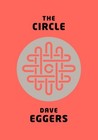
The Circle by Dave Eggers (review by Andrew R. ’17)

The CircleThe Circle by Dave Eggers
My rating: 3 of 5 stars

Privacy in social media and on the Internet is a hot topic these days—the perfect target for some biting satire and not-so-futuristic science fiction. That’s what Dave Eggers is going for in The Circle, at least. He achieves those ends without offering much in the way of plot complexity or meaningful commentary. The storyline follows Mae Holland as she works her way up the corporate ladder of the Circle—a Silicon Valley super-corporation that seems to hold a monopoly over all the social media, scientific research, and Internet services. The section of the narrative where Mae relinquishes all her privacy to improve her standing in the company is chilling, but its impact is lessened by Eggers’s lack of subtlety in exposing the corporation’s tyranny: when the Circle’s executives make SECRETS ARE LIES, SHARING IS CARING, PRIVACY IS THEFT the new company motto, for instance, it’s hard to think of the campus as anything less than a malicious, 1984-like surveillance state. The Circle would have made a potent commentary on one of today’s most-discussed issues if it had spent more time on an intricate plot and less on too-obvious catchphrases and images of corruption. – Andrew R. ’17

View all my reviews

The Return of Jeeves by P.G. Wodehouse (review by Andrew R. ’17)

The Return of Jeeves: A Jeeves and Bertie NovelThe Return of Jeeves: A Jeeves and Bertie Novel by P.G. Wodehouse
My rating: 2 of 5 stars

These days, nearly half a century after the death of P. G. Wodehouse and twice that long since his first books were published, readers tend to remember only one subset of his canon: the Jeeves and Wooster novels, which follow bumbling young aristocrat Bertie and his suave, brilliant butler Jeeves as they dodge the salvos of undesirable jobs (and occasional death threats) hurled at them by Bertie’s overbearing aunts. Well, Wodehouse is worthy of plenty of complimentary adjectives—he’s witty, endearing, and well-paced, to start—but “versatile” isn’t one of them. In The Return of Jeeves, Bertie is off on vacation, so Jeeves has been left to take care of Bill Towcester (pronounced “Toaster”), a bumbling young aristocrat with overbearing female relatives. Sound familiar? And yet, despite the fact that nothing in the plot marks a radical departure from the Jeeves and Wooster pattern, the narrative feels uncomfortable and clunky, more like a Wodehouse impersonator than Wodehouse himself. The humorist is exceedingly good at toying with the same characters in the same situations and same settings, but, as I was disappointed to discover, he has trouble with even the slightest variations on his trademark theme. – Andrew R. ’17

View all my reviews

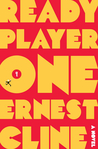
Ready Player One by Ernest Cline (review by Andrew R.’17)

Ready Player OneReady Player One by Ernest Cline
My rating: 4 of 5 stars

Ready Player One has the amusing (if unlikely) premise of a massive ’80s cultural revival in the year 2044 following the death of billionaire video game designer James Halliday. In a famine-stricken vision of future America, Halliday’s will is the last hope for many of the country’s hopeful gamers: it bestows the designer’s entire fortune upon the first person to complete a series of ’80s-themed riddles set in the OASIS, a sprawling virtual-reality videogame that redefines MMORPGs. For a future-world teenager, intrepid fortune-hunter Wade Watts spends a surprising amount of time obsessing over minutiae of ’80s culture that seem more likely to appeal to the author himself. (Case in point: the president of the OASIS is Cline’s fellow science-fiction novelist Cory Doctorow.) My only qualm with this book is that, while the OASIS is constantly glorified, it’s clear that the collapse of the real world is a direct result of the citizenry’s lack of regard for anything outside their alternate-reality visors. One character hints at this, but, of course, he immediately recants his views and never brings them up again. Still, Ready Player One is a fun diversion from the real world—for the author as well as the reader. – Andrew R. ’17

View all my reviews

South of the Border, West of the Sun by Haruki Murakami (review by Andrew R. ’17)

South of the Border, West of the SunSouth of the Border, West of the Sun by Haruki Murakami
My rating: 3 of 5 stars

South of the Border, West of the Sun is infuriating—not in the manner of books that disappoint and disgust from beginning to end, but in the way of plots that, after a few failed early chapters, reward readers with tantalizing tastes of undeniable brilliance. If only Haruki Murakami had seen fit to split the first half of the book, which chronicles the narrator’s over dramatic childhood in a wearyingly trite style, from the second half… Then I could assign a one-star rating to the first segment and forget about it, focusing instead on the simple, understated beauty that underlines the later chapters as they trace the protagonist Hajime’s relationships, past and present, with other characters. But, alas, the tale of Hajime’s later life is tainted by the cringe-worthy opening chapters; there’s no way to get the best parts of the novel without the worst. If there were, though, I would recommend the second half of South of the Border, West of the Sun to anyone and everyone who’s ever laid hands on a book. – Andrew R. ’17

View all my reviews

Cabbages and Kings by O. Henry (review by Andrew R. ’17)

Cabbages and KingsCabbages and Kings by O. Henry
My rating: 2 of 5 stars

You’ve probably heard of O. Henry, the early twentieth-century American author of countless humorous short stories. And the phrase “cabbages and kings” will ring a bell to anyone who’s familiar with Lewis Carroll’s nonsense poems. (One of his most famous, “The Walrus and the Carpenter,” promises to tell the story of “shoes and ships and sealing-wax / And cabbages and kings.”) But you’ve almost certainly never heard them in combination, since Henry’s collection of closely interrelated short stories has not had nearly as much staying power since its 1904 publication as, for instance, “The Ransom of Red Chief” or “The Gift of the Magi” From barbers and tintypists (a hopelessly outdated profession) to diplomats and politicians, ninety percent of the characters populating the stories’ setting, a fictional South American village called Coralio, are American; Henry seeks to satirize supposedly autonomous twentieth-century Caribbean states, whose kings, in reality, had about as much power as cabbages. Cabbages and Kings, like the nonsensical poem that inspired it, doesn’t have much to offer beyond the mildly amusing nonsense of its stories, but any O. Henry fans are still welcome to seek it out on the Harker Library’s Overdrive page in the Project Gutenberg section. – Andrew R. ’17

View all my reviews

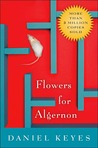
Flowers for Algernon by Daniel Keyes (review by Andrew R. ’17)

Flowers for AlgernonFlowers for Algernon by Daniel Keyes
My rating: 4 of 5 stars

In Daniel Keyes’ beloved short story “Flowers for Algernon,” a mentally retarded adult named Charlie Gordon undergoes a miraculous surgery that nearly triples his IQ, plunging him headfirst into a world of intellectuals even as he comes to terms with his life before the operation. Here, in Keyes’ later novelization of the same narrative, Charlie’s IQ still rockets up at a dangerous pace—but instead of having to accept his shameful past as an adult with the mind of a child, the newly-created genius must also navigate a crushing tide of memories and feelings that his old brain could never have handled. Watching Charlie stumble through his new life, even more confused and emotionally shredded than he had been with his old IQ of 70, is just as tragic as a novel as in the short story format. My only issue is that it was much more difficult to suspend my disbelief about the miraculous surgery and its effects for three hundred pages than it was for thirty. Those who have never read either “Flowers for Algernon” should pick one and get started immediately, but I’m not sure it’s worthwhile to read both variations on the same theme. – Andrew R. ’17

View all my reviews

One Summer by Bill Bryson (review by Andrew R. ’17)

One Summer: America, 1927One Summer: America, 1927 by Bill Bryson
My rating: 3 of 5 stars

Modern American culture doesn’t pay much heed to the events of the 1920s, a decade crowded out by the Great Depression and with two World Wars looming on either side, but this was the decade that gave rise to some of our country’s biggest names. Charles Lindbergh, Henry Ford, Calvin Coolidge, Babe Ruth, F. Scott Fitzgerald, Al Capone—all make appearances in this lengthy work of narrative nonfiction, even if they have to share the stage with a throng of less famous figures (including a frustrating number of forgotten aviators, small-time criminals, and local politicians). Even if One Summer is ostensibly a chronicle of the events of 1927, the year Lindbergh crossed the Atlantic by airplane and Babe Ruth clobbered an especially impressive number of baseballs, Bryson can’t help himself: he constantly backtracks to the 1910s and jumps ahead to the 1930s in search of more and more amusing anecdotes to stuff into his narrative. Some of these historical stories provide necessary context; others feel like dead weight. In the end, One Summer delivers all the information it promised, but the gems of historical factoids are all too often buried in a heap of gratuitous detail. – Andrew R. ’17

View all my reviews

Battle Hymn of the Tiger Mother by Amy Chua (review by Andrew R. ’17)

Battle Hymn of the Tiger MotherBattle Hymn of the Tiger Mother by Amy Chua
My rating: 1 of 5 stars

When Amy Chua set out to chronicle her struggles with Chinese parenting and her views on Western child rearing in her memoir Battle Hymn of the Tiger Mother, she must have known she was venturing into dangerous territory. Its polarizing messages—that immigrant families suffer “generational decline” as they stray further and further from their mother cultures, that constant interference in a child’s life and education is a way of showing parental love—triggered cries of relief and fury alike. No two readers of Chua’s memoir will have the same opinion about her take on so touchy a topic; the book’s content is utterly un-critiquable. But, if readers manage to overlook the flashy sensationalism of Battle Hymn of the Tiger Mother, they’ll notice certain elements that dilute the value and validity of its message: unsubstantiated research, sweeping generalizations, and, above all, the author’s habit of digressing into vignettes about her children’s scholastic and musical triumphs. Die-hard “Western parents” and aspiring tiger mothers can extol or condemn this memoir as much as they like, but their efforts won’t change its chronic lack of structure and authority. – Andrew R. ’17

View all my reviews

David Copperfield by Charles Dickens (review by Andrew R. ’17)

David CopperfieldDavid Copperfield by Charles Dickens
My rating: 5 of 5 stars

According to the introduction to this mainstay of British literature, Tolstoy believed that “if you sift the world’s prose literature, Dickens will remain; sift Dickens, David Copperfield will remain.” What lends David Copperfield its renown and mastery, even among Dickens’s other novels and stories, is the almost unbelievable complexity of its small fifty-character cast, from the ominous, crafty villain Uriah Heep to the protagonist David Copperfield, gallant and righteous despite his crippling naivety. The first third of the novel — which is itself a three-hundred-page section — introduces the major players in Copperfield’s life as he struggles through his childhood, leaving the remainder of the novel to experiment with different mixtures of characters: What happens when the ostentatious pauper Mr. Micawber walks into Heep’s dining room? How will David’s iron stepmother respond when placed in a room with his equally iron great-aunt? The results are often spectacular and always play a role in the larger narrative of David Copperfield’s “personal history.” The humor, symbols, and messages in this novel, still as relevant as they were a century and a half ago, make it worthwhile to any modern reader. – Andrew R. ’17

View all my reviews