Tag Archives: Death

Sala by Toni Morrison (review by Andrew R. ’17)

SulaSula by Toni Morrison
My rating: 3 of 5 stars

I chose Sula as my first introduction to Toni Morrison’s work because it was slimmer, lighter, and—apparently—easier to understand than her more famous and acclaimed novels, but now that I’ve finished the last chapter I find myself wondering if this book is really representative of Morrison’s greater oeuvre. The plot sounds deceptively peaceful: young black Sula leaves her small hometown behind as she heads off to be educated, and upon her return ten years later (a significant gap in the novel’s chronology), she’s estranged and distrusted by her former friends. You can’t call Sula “peaceful,” though, because Morrison fills its pages with wanton, almost casual violence and death. A mother soaks her son’s mattress in gasoline and sets it alight; a woman burns to death trying to light a yard fire; a little boy slips from his friends’ fingers and falls into the lake, never resurfaces. Hard as I try, I can’t reconcile these near-constant, near-faceless deaths with the practices of “good novel-writing” that I’m used to, and so for the moment Sula seems more off-putting and grim than I’d wish. Maybe someday, when I’m more familiar with the rest of Morrison’s novels, I’ll be able to return to Sula and appreciate, or at least understand, its pervading sense of randomness and cruelty.

View all my reviews

The Game of Love and Death by Martha Brockenbrough (review by Andrew R. ’17)

The Game of Love and DeathThe Game of Love and Death by Martha Brockenbrough
My rating: 2 of 5 stars

In The Game of Love and Death, the deities Love and Death come together to play a high-stakes cosmic game of strategy. The board: Jazz-Age Seattle, still deeply rooted in racial prejudice. The pawns: Henry, an affluent white high-school student, and Flora, a black jazz singer (and, improbably, airplane pilot). The objective: for Love to manipulate Henry into winning Flora’s heart, and for Death to twist Flora into rejecting his advances. The stakes: the pawns’ lives. It’s the perfect premise for a historical-fiction-romance-supernatural genre mashup, but from the first chapter it’s clear that Brockenbrough can’t quite pull off the ingenious plot she’s cooked up. The characters are sadly underdeveloped: Henry’s sole obsession is Flora, Flora’s sole obsession is flight, Love is maddeningly altruistic, Death is irrationally destructive. Worse, we’re granted near-omniscience when it comes to the plot, making the entire novel read like a tiresome textbook example of dramatic irony. (Case in point: Henry is convinced that his infatuation is true love, whereas we know from page one that it’s a ridiculous idea planted in his head by a manipulative deity.) Thanks to the wild originality of this novel’s premise, the jacket blurb makes excellent reading; the book itself, though, is a disappointment.

View all my reviews

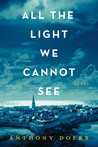
All the Light We Cannot See by Anthony Doerr (review by Connie M. ’17)

All the Light We Cannot SeeAll the Light We Cannot See by Anthony Doerr
My rating: 5 of 5 stars

All the Light We Cannot See met and exceeded my high expectations. Doerr’s masterpiece, transitionally smooth between the simultaneous stories of the two main characters, is written eloquently and at times poetically. The plot line is intensely gripping and not only conveys the deep horror and trauma caused by WWII both on the French and the German sides but also reminds us of the beauty and light that exist even in dark times. This book is not a romance — as suggested by the publisher’s book summary. Readers should be prepared for a story that is raw and emotionally moving. The decade Doerr used to write All the Light We Cannot See paid off. – Connie M. ’17

View all my reviews

The Raven Boys by Maggie Stiefvater (review by Catherine H. ’17)

The Raven Boys (The Raven Cycle, #1)The Raven Boys by Maggie Stiefvater
My rating: 4 of 5 stars

Ever since she was six, Blue Sargent has been told by her family of psychics that if she kisses her true love, he will die. She decided she wouldn’t fall in love, but when she’s sixteen, she meets and becomes included in a group of boys. Specifically Aglionby boys, called Raven boys. Their quest for something supernatural draws Blue in, and her knack for making supernatural occurrences stronger accelerates their pace. This book introduces us to a great variety of characters, all of them eccentric in their own way. I found that Maggie Stiefvater keeps a good pace throughout the book, picking up towards the end and leaving us at a cliffhanger. Though I originally thought I would be reading a novel filled with romance, it was surprisingly low in the romance and tragedy department. I hope to find more romance, mystery, and action in the next two books in The Raven Cycle. – Catherine H. ’17

View all my reviews

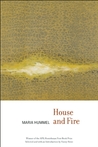
House and Fire by Maria Hummel (review by Andrew R. ’17)

House and FireHouse and Fire by Maria Hummel
My rating: 4 of 5 stars

The poems collected in Maria Hummel’s House and Fire present emotions and dreams in their purest and least inhibited forms. Drawing from a huge variety of poetic forms, from archaic structures like the ghazal (a form of ancient Arabic verse) and the villanelle to sprawling free-verse constructions that span several pages, these pieces revolve around a single theme: the confused and frightened emotions of a mother whose infant son is slowly dying on a hospital bed. The narrative is all the more powerful because Hummel, a mother herself, has suffered through the same trying times as her narrator. With brutal self-reflection and honesty slathered unabashedly across its pages, House and Fire draws on the full potential of the poetic genre to transfer ideas straight from the writer to the reader. Even the most enigmatic and complex of Hummel’s poems will fill poets and non-poets alike with the raw emotion of the speaker and of the author herself.

View all my reviews

Dreams of Gods & Monsters by Laini Taylor (review by Maya V. ’17)

Dreams of Gods & Monsters (Daughter of Smoke & Bone, #3)Dreams of Gods & Monsters by Laini Taylor
My rating: 5 of 5 stars

The last book in its trilogy, Dreams of Gods and Monsters is a warming, heart wrenching, and fulfilling finale. After years of the chimaera and seraphim warring brutally against each other, the two races are devastated. The few chimaera monsters left are being resurrected regularly after losing battles. The seraphim race has split into two armies: one led by the new king, Jael, who plans to invade Earth, and another called the Misbegotten. In this sequel, Karou of the chimaera, the main character of this trilogy, and her love interest Akiva of the Misbegotten unite their races to defeat Jael. With their shared dream of uniting their people forever, they fight to bring harmony to the land of Eretz. This novel completes the epic trilogy with no questions unanswered. Every detail of the characters’ lives, the history behind the land of Eretz, and the mystery of the seraphim’s magical powers are explained magnificently. The interesting look into the side characters’ personalities makes the novel even richer with side stories and backgrounds. However, to thoroughly enjoy and appreciate this novel, it is vital to read the preceding two books. This title is a must-read for young adults! – Maya V. ’17

View all my reviews

Falling Kingdoms by Morgan Rhodes (review by Maya V. ’17)

Falling Kingdoms (Falling Kingdoms, #1)Falling Kingdoms by Morgan Rhodes
My rating: 4 of 5 stars

The three kingdoms of Auranos, Paelsia, and Limeros are divided by power struggles, wealth, and conflicting ideas. In this time of peril, four young people from these kingdoms are fighting to protect their homelands: Cleo, the princess of Auranos; Jonas, a rebel fighting for the rights of the Paelsian people; Magnus, the Limerian prince and successor to the King of Blood; and Lucia, the sister of Magnus, princess, and sorceress of Limeros. As they fight each other’s lands to protect their own, they soon find their lives intertwined with one another. An adventure and fantasy novel with a sufficient amount of drama, this book will appeal to many young readers. The characters’ thoughts are written in great depth and honesty, which allows the reader to truly connect with the young adults of the story. The recurring theme of independence and how one can still reach his or her goals without the support from adults provides motivation to those in similar situations. The setting and plot development are gripping, and you will not be able to put the book down. With several perspectives, detail, adventure, and violence, Falling Kingdoms is an extremely enjoyable read! – Maya V. ‘17

View all my reviews

Damned by Chuck Palahniuk (review by Elisabeth S. ’16)

Damned (Damned #1)Damned by Chuck Palahniuk
My rating: 2 of 5 stars

Palahniuk is known for hyperbolizing his characters to accentuate their faults (and thus, by proxy, humanity or society’s faults) and his gruesome, gritty imagery, as shown through his bestsellers Fight Club and Invisible Monsters. After the first few books, though, the same techniques get drier and drier until you end up with a book like Damned. Damned is tale of young adult Madison who ends up in hell after a marijuana overdose at her boarding school and of her further adventures with her unlikely “inmates.” This story is made unique because of Madison’s singular voice. Palahniuk’s characters are the antithesis of perfect, so flawed that readers are forced to pay attention with the same sort of attention they give a car accident or train wreck. This can prove effective at times, but in this case, there was very little cogency or cohesiveness to be found in the plot, so the novel fell short. Madison became such a caricature of a normal human being that it was impossible for me to engage and empathize with her feelings about her unlucky situation, and thus the entire novel was made simply not memorable enough to matter, despite its potential in idiosyncratic subject matter. – Elisabeth S. ‘16

View all my reviews

The Five People You Meet in Heaven by Mitch Albom (review by Preethi K. ’17)

The Five People You Meet in HeavenThe Five People You Meet in Heaven by Mitch Albom
My rating: 4 of 5 stars

On Eddie’s 83rd birthday he goes to Ruby Pier, an amusement park, for his job as the maintenance man. When an attraction malfunctions and he tries to save a little girl, he dies. After he arrives in heaven, he meets five people who each had an impact in his life—some he knew, and some he didn’t—and they explain how their lives connected with his, telling him stories about his life on earth. The Five People You Meet In Heaven, is a wonderful book and I would suggest it to people of all age groups due to its interesting storyline and engaging, accessible narration. Albom handles the hardships of life, sacrifice, and why people do what they must with the utmost sensitivity. This heart-touching book gives readers valuable insight into the bonds that make up life.

View all my reviews

The Tibetan Book of Living and Dying by Sogyal Rinpoche (review by Sean K. ’14)

The Tibetan Book of Living and DyingThe Tibetan Book of Living and Dying by Sogyal Rinpoche
My rating: 4 of 5 stars

Rinpoche introduces and applies the values of Tibetan Buddhism to the Western world in a revolutionarily practical way, drawing from his lifetime experience as a monk. Contrary to many religion-oriented texts, Rinpoche’s spiritual classic does not attempt to convert the reader. Rather, it seeks to draw from Buddhist teachings and texts (primarily The Tibetan Book of the Dead) to create a guide to life and death from which people of all religions and faiths can draw upon for peace and consciousness. Moreover, Rinpoche’s frequent excerpts from the lessons of his teachers add a charming personality to his own wise writings. His use of modern scientific research and acknowledgement of current global realities make the book accessible to even the most skeptical Westerners. To the reader who must cope with a recent or near death, or just to someone who might appreciate a refreshing approach to dealing with the stressful ordeals of our materialistic society, I highly recommend this book. – Sean K. ‘14

View all my reviews