Tag Archives: Romance

Astonish Me by Maggie Shipstead (review by Andrew R. ’17)

Astonish MeAstonish Me by Maggie Shipstead
My rating: 3 of 5 stars

A ballerina smuggles a celebrated Russian dancer away from his Soviet handlers and into the United States, where they have a tempestuous love affair; later, said ballerina raises a dance prodigy who himself experiences some painful romance, while all the while minor characters around them (the neighbors, the owner of the ballet company, more haughty defectors from the USSR) fall in and out of their own miniature romantic dramas. As a novel primarily focused on the way dance shapes the lives of those who dedicate their souls to it, Astonish Me sometimes seems to be taking place onstage, what with its preoccupation with beauty and drama and tangled romantic threads, rather than in the Cold War-era society it tries to recreate. That said, though, Shipstead pulls off the intertwining love triangles at the novel’s center with impressive success, and the resolution brought about in the last few chapters feels satisfying without coming off as too neat or too overblown. Fans of ballet, and probably of the domestic drama as a genre, are certain to appreciate this book, but to the wider population the tendency of Astonish Me to prioritize aesthetics over real character development might not be entirely appealing.
View all my reviews

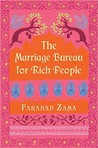
The Marriage Bureau for Rich People by Farahad Zama (review by Shannon H. ’16)

The Marriage Bureau for Rich PeopleThe Marriage Bureau for Rich People by Farahad Zama
My rating: 3 of 5 stars

Overall, this book was a fun read — I enjoyed learning about marriage practices in India (although I am not entirely sure how accurately the practices are portrayed). The depiction of modern India resonates with me; I understood the ever-present inequality and the social turmoil, and I felt the heated debates between traditional cultural values and modern interpretations of humanity. However, I found that the novel dissolved from a potential critique of the system into a contrived love story between a rich Brahmin male (upper class) and a poor, but still Brahmin, working woman. I was mildly disappointed, but I still found The Marriage Bureau for Rich People a quick and fun read.

View all my reviews

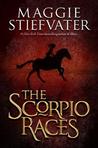
The Scorpio Races by Maggie Stiefvater (review by Emily C. ’18)

The Scorpio RacesThe Scorpio Races by Maggie Stiefvater
My rating: 4 of 5 stars

At the beginning of each November, riders on the tiny island of Thisby attempt to capture and gain control of spirited water horses in a deadly contest: the Scorpio Races. From this fierce battle of horsemanship and grudges two particular individuals emerge–Sean Kendrick and Puck Connolly. Though they ride for different reasons, when their paths cross an unlikely bond is formed. However, the issues Sean and Puck face are not limited to survival in this perilous competition; Stiefvater weaves a web of emotional and practical intricacies that range from sexism to finance to hostile and dangerous schemes. Maggie Stiefvater outdoes herself once again with a singular legend-inspired plot, well-developed characters, and touches of heartwarming loyalty and devotion.

View all my reviews

Rook by Sharon Cameron (review by Andrew R. ’17)

RookRook by Sharon Cameron
My rating: 4 of 5 stars

There are only so many post-apocalyptic dystopia concepts that exist in the world, and, thanks to the mad rush of YA science fiction sprang into being following the enormous success of The Hunger Games, it’s almost—almost—impossible at this point for an author to come up with a brand-new one. In Rook, however, Sharon Cameron may just have pulled it off. The world that protagonists Sophia Bellamy and René Hasard inhabit is full of not-so-subtle overtones of the French Revolution, with lower-class mobs overrunning the Upper City and a massive, blood-spattered blade decapitating enemies of the state. But this isn’t eighteenth-century Paris—this is Europe hundreds of years after the polar shift that wiped out most of humanity. The loss of all pre-apocalypse technology has forced society to backtrack several centuries to a bloodier and more brutal time. The characters are almost as interesting as the setting—Sophia may be a classic YA heroine fighting off the advances of two devilishly handsome suitors, but at least the love triangle has some political intrigue to spice things up. (Nearly all the characters are benevolent criminals of some sort.) Rook is lengthy, but readers will forgive its heft once they get caught up in the engaging narrative and well-conceived setting.

View all my reviews

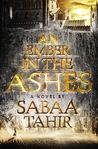
An Ember in the Ashes by Sabaa Tahir (review by Andrew R. ’17)

An Ember in the Ashes (An Ember in the Ashes, #1)An Ember in the Ashes by Sabaa Tahir
My rating: 1 of 5 stars

The Hunger Games. Eragon. Star Wars. Odds are you’re already perfectly familiar with these stories, in which case there is no reason for you to pick up Sabaa Tahir’s new novel. For me, An Ember in the Ashes reads like a half-hearted cut-and-paste of all the fantasy/sci-fi books that came before it, an unapologetic catalog of tired genre clichés—romantic tension! teenagers fighting to the death! orphaned protagonists! unimaginative fantasy names! faceless demonic warlords!—without a single page of original material. Faced with such an apparent lack of inspiration, the author repeats her ideas and plot points thirty times throughout the book. That’s standard practice with many YA authors, unfortunately, when it comes to romance (“Does he love me or doesn’t he?”), but it gets downright tiresome when we have to hear this sentence repeated ad nauseam: “As my grandmother always told me, ‘Where there’s life there’s hope.’” According to the American Library Association, there are approximately 5,000 YA books published per year, and I can safely list (without much exaggeration) about 4,999 new books that are more worth your time than this one. I was not a fan.

View all my reviews

The Game of Love and Death by Martha Brockenbrough (review by Andrew R. ’17)

The Game of Love and DeathThe Game of Love and Death by Martha Brockenbrough
My rating: 2 of 5 stars

In The Game of Love and Death, the deities Love and Death come together to play a high-stakes cosmic game of strategy. The board: Jazz-Age Seattle, still deeply rooted in racial prejudice. The pawns: Henry, an affluent white high-school student, and Flora, a black jazz singer (and, improbably, airplane pilot). The objective: for Love to manipulate Henry into winning Flora’s heart, and for Death to twist Flora into rejecting his advances. The stakes: the pawns’ lives. It’s the perfect premise for a historical-fiction-romance-supernatural genre mashup, but from the first chapter it’s clear that Brockenbrough can’t quite pull off the ingenious plot she’s cooked up. The characters are sadly underdeveloped: Henry’s sole obsession is Flora, Flora’s sole obsession is flight, Love is maddeningly altruistic, Death is irrationally destructive. Worse, we’re granted near-omniscience when it comes to the plot, making the entire novel read like a tiresome textbook example of dramatic irony. (Case in point: Henry is convinced that his infatuation is true love, whereas we know from page one that it’s a ridiculous idea planted in his head by a manipulative deity.) Thanks to the wild originality of this novel’s premise, the jacket blurb makes excellent reading; the book itself, though, is a disappointment.

View all my reviews

Red Queen by Victoria Aveyard (review by Kaitlyn N. ’18)

Red Queen (Red Queen, #1)Red Queen by Victoria Aveyard
My rating: 4 of 5 stars

Aveyard skillfully combines a dystopian society with the world of fantasy in Red Queen, which addresses segregation and the conflict between different social classes. In the genetically modified future, humans are divided into two castes: those with silver blood (Silvers), and those with red (Reds). Those with silver blood enjoy a wealthier lifestyle and magical abilities, while people with red blood work as peasants and slaves. Even so, Mare, a Red, discovers that she straddles the border between the Reds and Silvers, and she is forced to become a princess under the watchful eye of the despotic king and her newly betrothed, the prince. Her plans for a rebellion go unnoticed, but Mare also faces internal struggles within her lovestruck heart and in her decision to sacrifice hundreds of innocent people for the sake of her cause. Aveyard’s unique plot and her taut writing from Mare’s perspective build suspense until the end. However, the lack of description and detail may easily confuse the reader. Fans of fantasy, adventure and strong female leads would certainly enjoy Red Queen.

View all my reviews

Fortress Besieged by Qian Zhong Shu (review by Andrew R. ’17)

Fortress BesiegedFortress Besieged by Qian Zhong Shu
My rating: 4 of 5 stars

It’s a sad fact of English-language literature that the number of books translated from English and shipped around the world far outstrips that of books translated into English from other languages. That means the pool of books available to American readers in translation from, say, Mandarin is relatively limited—only works of scholarly interest, unusual acclaim, or specifically Western appeal make their way to our libraries. Fortunately, Qian Zhongshu’s classic Fortress Besieged meets all three criteria. Not only has it been the object of intense study and widespread consumption in the seventy-five years since its publication, but its consistent references to Western proverbs and literature make it uniquely relatable to an American audience. (The excellent translation by Nathan K. Mao and Jeanne Kelly also helps.) The reader follows Fang Hung-Chien, a graduate student returning home from Europe, as he stumbles through a sticky love triangle, an exhaustive trip to China’s interior, and finally a bitter and loveless marriage. The author’s intent sometimes seems to be to poke fun at every subject he can come up with, from the Chinese to the Jews, from government officials to university professors, from bachelors to husbands to women of every age. None of this, though, changes the novel’s unique and undeniable cultural value. – Andrew R. ’17

View all my reviews

Inamorata by Megan Chance (review by Linus L. ’18)

InamorataInamorata by Megan Chance
My rating: 4 of 5 stars

One of many novels by Megan Chance, Inamorata depicts the incestuous love between Joseph Hannigan, a skilled artist, and his sister Sophie and their search for a better future. Told in 19th century Venice, the story gracefully flows through the tale of the siblings’ search for fame, unaware of the darkness that takes on the form of Odilé, a powerful succubus. Chance dexterously intertwines imagery and irony to fully capture the attention of the reader, constructing ethereal images of the Italian landscape. A powerful book with an interesting plot, Inamorata’s ending twist blows the expectations of the reader out of the water. I thoroughly enjoyed imagining the scenes of the novel with the aid of its skillfully woven language, and I slowly became further enraptured by the plotline. However, I was somewhat startled by the hinted incest in the beginning of the story. While the author does introduce it with grace, the concept does require a warning for readers who would be uncomfortable with such content. – Linus L. ’18

View all my reviews

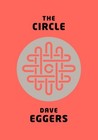
The Circle by Dave Eggers (review by Andrew R. ’17)

The CircleThe Circle by Dave Eggers
My rating: 3 of 5 stars

Privacy in social media and on the Internet is a hot topic these days—the perfect target for some biting satire and not-so-futuristic science fiction. That’s what Dave Eggers is going for in The Circle, at least. He achieves those ends without offering much in the way of plot complexity or meaningful commentary. The storyline follows Mae Holland as she works her way up the corporate ladder of the Circle—a Silicon Valley super-corporation that seems to hold a monopoly over all the social media, scientific research, and Internet services. The section of the narrative where Mae relinquishes all her privacy to improve her standing in the company is chilling, but its impact is lessened by Eggers’s lack of subtlety in exposing the corporation’s tyranny: when the Circle’s executives make SECRETS ARE LIES, SHARING IS CARING, PRIVACY IS THEFT the new company motto, for instance, it’s hard to think of the campus as anything less than a malicious, 1984-like surveillance state. The Circle would have made a potent commentary on one of today’s most-discussed issues if it had spent more time on an intricate plot and less on too-obvious catchphrases and images of corruption. – Andrew R. ’17

View all my reviews