All posts by mspelmanlibrarian

Heller’s Tale by David Pablo Cohn (review by Amelia H. ’19)

Heller's Tale: an Antarctic NovellaHeller’s Tale: an Antarctic Novella by David Pablo Cohn
My rating: 4 of 5 stars

Heller’s Tale is a novella that follows Andrew Heller, a welder working at the South Pole, as an intended adventure with his friends goes, well, south. The details of the setting are based off Cohn’s own experience working in Antarctica and give a fantastical feeling to the story, particularly for those of us who have never actually been to Antarctica. Multiple timelines are also used to great effect by interspersing events so that they continuously build up the plot, instead of by chronology. The novella format keeps the story from dragging, while still allowing for complexity. I would recommend Heller’s Tale to anyone looking for an immersive, setting-driven story. – Amelia H. ’19

View all my reviews

11/22/63 by Stephen King (review by Simar B. ’20)

11/22/6311/22/63 by Stephen King
My rating: 3 of 5 stars

11/22/63 by Stephen King is a novel about Jake Epping, a high school English teacher, who travels back in time to try to save President John F. Kennedy’s life. He meets his friend Al Templeton who tells him that he has discovered a way to go back in time. However, Al is dying, and he entrusts Jake to fulfill his life mission to save President Kennedy, thinking that the world would be much better off had Kennedy survived. Jake is apprehensive but takes on Al’s mission and travels back into 1958. Jake bides his time for three years, slowly making his way to Dallas to stop the assassination. Unfortunately, time also moves on sluggishly for the reader, and it is quite difficult to not put the book aside because it drags on and on. The gist of 1000 pages is Jake bets a lot of money to sustain himself, stalks Oswald for a year, and falls in love with Sadie, a librarian in the school he teaches. It does not feel like a novel, but it feels like a biography of the fictional Jake Epping. Despite all this, the book picks up towards the end. Overall, I enjoyed this book only because of how it ended, but the casual reader might not enjoy it.

View all my reviews

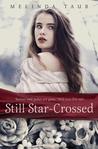
Still Star-Crossed by Melinda Taub (review by Prameela K. ’19)

Still Star-CrossedStill Star-Crossed by Melinda Taub
My rating: 3 of 5 stars

After reading Romeo and Juliet, I couldn’t help but wonder: “What happens now?”

Melinda Taub’s novel aims to answer that question, and many of the other ones that readers may ask after finishing Romeo and Juliet. Unsurprisingly, the Montagues and Capulets–who entered a dubious truce in the aftermath of their children’s deaths–are still feuding, unable to suppress the animosity rooted in their bloodline. Intending to quell the dissension that is plaguing his city, Prince Escalus of Verona devises a plan in which he arranges for a member of the house of Montague–Benvolio, Romeo’s cousin– to marry a member of the house of Capulet–Rosaline, Juliet’s cousin and Romeo’s first love (before he meets Juliet). Neither Benvolio nor Rosaline are thrilled about the prospect of an arranged marriage with one another, and they form an initially unenthusiastic alliance in order to put an end to their engagement.

Rosaline is independent and strong-willed, and she develops as a character. While Benvolio also undergoes a significant amount of moral growth, his personality is rather muted, but his chemistry with Rosaline makes up for his blandness. While their relationship is the main highlight of the novel,
another surprisingly appealing element is mystery. There are clues, red herrings, buildup, and an ultimate reveal that is well-executed though somewhat predictable. It’s no Agatha Christie mystery, but it’s interesting enough.

One of the most interesting aspects of the novel is the dialogue. All characters speak Shakespearean English, complete with “thees” and “thous”. The setting is undoubtedly Shakespearean, and the re-imagining of supporting characters from Romeo and Juliet makes Taub’s continuation of the tragedy vivid and creative. Yet one of the weakest points of the novel (and one of the main reasons why I rate this book three stars and not four) is the inclusion of a love triangle–one with a predictable outcome–that distracts from the mystery at the core of the plot and slows the story progression.

Overall, Still Star-Crossed is a good book with an enjoyable plot and a compelling protagonist, and I’m looking forward to seeing how Shondaland’s new show will provide its own take on the novel! – Prameela K. ’19

View all my reviews

Binti by Nnedi Okorafor (review by Amelia H. ’19)

Binti (Binti, #1)Binti by Nnedi Okorafor
My rating: 4 of 5 stars

Binti is a teenage girl traveling to a university called Oomza Uni on another planet, the first in history of the Himba people to be admitted. On the way there, her ship is attacked by the Meduse, an alien race with a vendetta against humans. Binti is short, but it packs in the same complex world-building and characters as a SciFi novel three or four times its length. The book is a little slow in introducing the main conflict, considering that the story is only ninety pages, but that is made up for by the excellence of the writing. Okorafor’s prose is eloquent and yet concise, immersing the reader in the story. A quick read that will inspire thought long after the last page is turned. – Amelia H. ’19

View all my reviews

Heartless by Marissa Meyer (review by Prameela K. ’19)

HeartlessHeartless by Marissa Meyer
My rating: 4 of 5 stars

As a fan of Marissa Meyer and her science fiction fantasy Lunar Chronicles series, I was eager to read her standalone debut. Once I learned that Heartless was a fairy tale origin story with a Victorian setting, my anticipation only heightened. A fantasy period novel based on Alice in Wonderland? Count me in.

Heartless draws upon many aspects of Lewis Carroll’s whimsical world in Meyer’s re-imagination of the Kingdom of Hearts, where Wonderlandesque oddities and the social constructs of Victorian-era England intermingle to create a setting equally strange and captivating.

At the center is Catherine, a teenage girl with big dreams and an even bigger heart. Unlike many young adult protagonists, she is not overbearing or infuriating, and her kindness is admirable. She is a lover of all things sweet, and her aspiration in life is to open up a bakery–but her parents have different plans for her and aim to consolidate her marriage to the foolish, and incredibly annoying, King of Hearts.

Oh, but of course, there is a love interest: Jest, the roguish and devilishly handsome court jester. He has a mysteriously magical past and the obscurity of his identity may be frustrating at times, but he makes up for it with his humor and charm. He and Cath have instant chemistry and their interactions are chock-full of witty repartee. Oh, and do not forget Jest’s equally mysterious raven, who is reminiscent of Edgar Allen Poe’s famous poem and only speaks in, well, poetry. Jest is also a friend of the famed Hatter, who was really quite a hunk back in the day — before he went mad and all.

Because Cath starts out as a well-rounded character with a strong sense of right and wrong, there is little room for moral development. Instead, Meyer focuses on her progression from being an aspiring young baker to being the Queen of Hearts. The plot is filled with twists and turns as Catherine embarks on a journey to fulfill her goals and discover who she truly is. While the novel has its fair share of romance, the action is what truly captivated me–Cath’s bravery shines through when it matters the most.

At points, the plot progresses slowly, but as the page count dwindled I found myself more and more enthralled in the characters’ fates. Whopping revelations, nail-biting action sequences, and heart-wrenching plot twists combine to form a stress-inducing final 100 pages that culminate in an ending that is, at first, shocking. But after a few days of deep thinking, I realized that the plot had really been going in that direction all along, and one of the main reasons why Heartless made such a strong impression. – Prameela K. ’19

View all my reviews

Mountains Beyond Mountains: The Quest of Dr. Paul Farmer, A Man Who Would Cure the World by Tracy Kidder (review by Simar B. ’20)

Mountains Beyond Mountains: The Quest of Dr. Paul Farmer, A Man Who Would Cure the WorldMountains Beyond Mountains: The Quest of Dr. Paul Farmer, A Man Who Would Cure the World by Tracy Kidder
My rating: 4 of 5 stars

Mountains Beyond Mountains by Tracy Kidder is a thrilling biography of Dr. Paul Farmer, treats millions of patients from Haiti to Siberia with his charity Partners in Health. Dr. Farmer epitomizes the founding tenets of medicine, devoting himself to curing patients of their ailments regardless of their socio-economic status. He commits himself to serving the poor and the needy, trying to treat poverty and one of its symptom: sickness. The book is absolutely riveting and inspiring, putting you in the eyes of Dr. Farmer. This is a man who does not take “no” for an answer and will see everything to the end. He truly does change the world one patient at a time. Among other good works, the book describes how Dr. Farmer is able to reduce the cost of second-line drugs for multi-drug resistant tuberculosis by ninety-five percent and establishes a free clinic in Cange, a desolate region in Haiti. Overall, I loved how Kidder portrays Farmer and allows you to understand the motivation that pushes this man to give up everything for a cause. It reminds you that there are people in this world who will “fight the long defeat,” as Kidder puts it, to do the right thing and help the impoverished of the world (257). – Simar B. ’20

View all my reviews

Dawnthief: Chronicle of the Raven by James Barclay (review by Amelia H. ’19)

Dawnthief: Chronicles of the Raven: Book OneDawnthief: Chronicles of the Raven: Book One by James Barclay
My rating: 1 of 5 stars

Dawnthief is a fantasy novel centered around a group of warriors called the Raven, who are tasked with helping a mage save the kingdom from evil creatures called the Wytch Lords, who are assisting barbaric tribes in invading the kingdom. The characters on the whole seem to be motivated solely by what will drive the plot forward. The Raven is joined along the way by a notable cast of characters including numerous people who turn evil for no discernible reason, feuding barons whose conflicts are given more paragraphs than they deserve, and women whose importance to the plot depends on their relationships with men. Indeed, the only woman particularly central to the plot is relegated to being a healer even though she has the same warrior capabilities as the men in the Raven, and it is vaguely mentioned that she will have amazingly powerful children, which is why she is important. There are elves, indistinguishable from humans except for being able to see in the dark and being referred to as elves. Additionally, the prose is clunky, with awkward phrasing that disrupts the flow of the writing, inconsistent dialogue, and inaccurate wording. Dawnthief is an interesting concept, carried out very poorly. – Amelia H. ’19

View all my reviews

Royal Bastards by Andrew Shvarts (review by Anya W. ’20)

Royal BastardsRoyal Bastards by Andrew Shvarts
My rating: 3 of 5 stars

When Princess Lyriana herself decides to sit down at the Bastard’s table at a feast thrown by Tilla’s father, Tilla (herself a bastard) knows that it won’t be any ordinary night- but even she didn’t expect it to be so monumental. When a certain group of misbegotten teenagers witnesses a crime they most definitely were not supposed to, it sets off a chain of events that will make or break a kingdom and change the tide of a war. A novel detailing a journey in a medieval realm, with a magical undertone, Royal Bastards is a fun read. While I wish the male characters had been fleshed out with more vivid personalities, the characters and their relationships were believable and somewhat relatable. The world building was also pretty good, especially for what is apparently Shvarts’ first novel. While the end of the book leaves us with some unanswered questions and heavy foreshadowing of the future, indicating that there will at least be a sequel, if not an entire series to come, I believe this book is probably going to be best as a standalone. – Anya W. ’20

View all my reviews

Dear Friend, from My Life I Write to You in Your Life by Yiyun Li (review by Andrew ’17)

Dear Friend, from My Life I Write to You in Your LifeDear Friend, from My Life I Write to You in Your Life by Yiyun Li
My rating: 3 of 5 stars

A few months after I finished Gold Boy, Emerald Girl, the Chinese-born writer Yiyun Li’s 2010 story collection, only one piece lingered in my mind: a novella, entitled “Kindness,” about a girl’s complex relationship with her female commander in the Chinese army. The storytelling style of “Kindness” is pretty run-of-the-mill realism, but there was something in the narrative, some hint toward a deeper melancholia, that stuck with me. Li’s brand-new memoir, Dear Friend, from My Life I Write to You in Your Life, helps pinpoint what that profound sadness is and where it comes from. Li wrote these essays during her years-long struggle with suicidal depression, but most often she presents recollections from earlier in her writing life. One essay deals with her decision to forsake Chinese entirely and write in English, another with her unlikely friendship with the legendary Irish writer William Trevor, a third with her mentor at the Iowa Writers Workshop, a man just as flawed as the commander from “Kindness.” The publisher bills this memoir as a “richly affirming examination of what makes life worth living.” It’s not. The essays here are pained and painful, meditative and often oppressively sad. Readers willing to brave all that will find insight on nearly every page into the particular somberness of Li’s life and art. – Andrew R. ’17

View all my reviews

The Bloody Chamber and Other Stories by Angela Carter (review by Andrew R. ’17)

The Bloody Chamber and Other StoriesThe Bloody Chamber and Other Stories by Angela Carter
My rating: 5 of 5 stars

It won’t take the reader long to realize that the stories in The Bloody Chamber, the most famous book by the late British master Angela Carter, seem strangely familiar. In fact, each of the ten pieces in this collection is a direct descendent of a well-known fairy tale. “The Company of Wolves,” for instance, in which a vulnerable young girl travels alone through a wood infested with monstrous wolves, brings “Little Red Riding Hood” irresistibly to mind; and the lovers at the center of “The Courtship of Mr. Lyon” clearly represent Beauty and the Beast. Carter is much too canny a writer to freshen up these worn-out fairy tale narratives by changing the plot: none of the stories is given a modern setting, at least not overtly, and many end with “happily ever afters” if the original versions require it. What sets the stories in The Bloody Chamber apart from the tales that inspired them is a subtler kind of magic. Carter weaves a spell with her dispassionate, often slightly ironic narrative voice, which heightens the qualities of the original fairy tales—particularly their undertones of violence and sexuality—to make familiar narratives seem suddenly oppressive and strange. In Carter’s hands, even a tale ending “happily ever after” isn’t for the faint of heart. – Andrew R. ’17

View all my reviews