Tag Archives: Historical Fiction

Dream of the Red Chamber By Cao Xueqin (Review By Jason S. ’25)

Dream of the Red ChamberDream of the Red Chamber by Cao Xueqin
My rating: 4 of 5 stars

“The Dream of the Red Chamber is a peculiar novel to write a review for. I’ve been reading it on-and-off over the course of the last three months, and I’ve had to reread my favorite sections to really collect my thoughts. In reflecting, I’ve come to the conclusion that the novel is pretty worthwhile.

For the uninitiated, The Dream of the Red Chamber is an 18th-century Qing Chinese novel, among the Four Great Classical Novels of Chinese literature. In the frame narrative, a humble primordial stone begs a Buddhist monk and a Taoist priest to help him experience the pleasures of the mortal “red dust.” The stone is thus incarnated as the pampered heir Jia Baoyu, who cultivates a doomed love for his cousin Lin Daiyu in the pleasurable Daguanyuan garden and navigates the declining fortunes of four aristocratic families. Due to my limited knowledge of Chinese, I elected to read Chi-chen Wang’s translation using the Wade-Giles romanization (I will refer to the characters in pinyin). Although Wang ultimately abridged the 120-chapter novel into 40 chapters and removed much of the poetry and nuance introduced by Cao, I found his adaptation to be suitable for a first read-through where those details would have been inevitably glossed over anyways.

The story reads in an almost episodic fashion, with various courtly vignettes informing an overall metanarrative of societal decline. Due to this structure, most of the characters in this novel are static, and as the novel progressed, quickly made themselves unlikeable to me, either through their actions or ignorance. Baoyu, our protagonist, was a prime example. His petulance, passivity, lust, and hedonism deeply frustrated me as the troubles of his family became clearer. In fact, at times he literally sits and stares catatonic as events unfold around him. Don’t mistake this for a negative, though — his inability to take responsibility enhanced for me the message that all pleasure regresses into dust, and a certain turning point in the middle of the book made me feel really sorry for him. The only characters I could truly root for were the truly innocent who underwent horrible psychological and physical abuse at the hands of others, usually female servants victimized by either Baoyu’s ignorance or the Macchiavellian antiheroine Wang Xifeng.

My main criticism is with the pacing. Perhaps it is a consequence of Wang’s effort to compress 120 chapters into 40, but I found myself incredibly confused as to who was who. It took me a solid few minutes with a family tree online to truly understand the complex relationships between the four families. I’d sometimes start reading a chapter and give up halfway through because I didn’t know who any of the characters were, which really hurt the episodic nature of the text and made it harder to connect with the characters. It wasn’t a huge issue, though. In my opinion, all that means is that this text will take extra effort to digest.

I want to end this review by talking about the ending (in a spoiler-free way). The thing is, it completely contradicts everything that’s been established about the characters, and subverts the overarching narrative Cao was building up. Yet it contained some of the most beautiful literature I had the pleasure of reading in the book. Puzzled, I sleuthed online and learned quickly that the last 40 chapters of the original 120 had been written by an unknown author with completely different intentions from Cao. In other words, for the last third of the book, I too was a captive of the “red dust,” too blinded by the feel-good writing to question its authenticity. Yet I maintain that the ending is beautiful, and I think its dubious authorship enhances its value. Is Baoyu’s happy conclusion illusory by necessity? This is a question I hope to revisit upon future examinations of this text later in life. The truth is that we will never know, and accepting that fact is our first step to abjuring the red dust.”

View all my reviews

The Meursault Investigation By Kamel Daoud (Review By Jason S. ’25)

The Meursault InvestigationThe Meursault Investigation by Kamel Daoud
My rating: 3 of 5 stars

“The Meursault Investigation takes place in the same world as Albert Camus’s The Stranger, and tells those events from the perspective of the younger brother of the unnamed Arab murdered by Meursault, who published The Stranger upon his release from prison. In its frame story, the reader takes the role of a voiceless college student who interviews Harun, the brother of Meursault’s “unnamed Arab.” The novel gives the “unnamed Arab” his name — Musa — and provides a unique anticolonial Algerian viewpoint on the philosophical side of Camus’s work through the jaded, unreliable narrator’s picaresque experiences as a fence-sitter during the Algerian Revolution.

The Meursault Investigation is a novel I enjoyed much more in concept than execution. My main issue with it was that its attempts to juxtapose Meursault and Harun were too heavy-handed, with Harun’s narrative having blatant parallels to nearly every major scene in Camus’s novel (with varying levels of success). This became especially noticeable pacing-wise in the second half of the book, into which most of Harun’s plot is crammed; I nearly rolled my eyes when I realized that Meriem, Harun’s love interest, was meant to be a foil to Marie Cardona. It was almost too obvious.

Despite this gripe, the book held my attention throughout its relatively short 191 page duration. Two interesting insights into The Stranger struck me in particular: first, regarding the absurdity of ‘just’ violence and the ethics of liberatory war in Harun’s interrogation; and second, a passage in which Harun praises The Stranger despite his hatred of Meursault because its economy of language allowed it to convey the last words of a person close to death. I also greatly enjoyed the attention devoted to Harun and Musa’s mother, who was a deeply complex character and a highlight in a way her counterpart in The Stranger was not.

If you haven’t read it already, I recommend considering this book after you’ve read The Stranger (perhaps in your first semester of AP Literature), just because it’s refreshing to read such a different take on it. Though it has problems, it’s a thought-provoking supplement that relevantly excoriates the blind spots of Camus’s contribution to the Western canon.”

View all my reviews

The Bronzed Beasts by Roshani Chokshi (Review by Trisha I. ’24)

The Bronzed Beasts (The Gilded Wolves, #3)The Bronzed Beasts by Roshani Chokshi
My rating: 5 of 5 stars

The Bronzed Beasts by Roshani Chokshi felt bittersweet from the first page. As the final book of her Gilded Wolves trilogy, I’ve had this book on preorder for nearly half a year and knew that it would provide a realistic conclusion—not satisfying, but rather one just as painful and fulfilling as the twisted character arcs of the first two books set up—to a saga, and six characters, that I’ve been invested in for the better half of three years. And I think Chokshi delivered on the nuanced ending this series deserved, following five characters as they solve Da Vinci Code-esque puzzles in a race to stop evil and gain power beyond belief, the power to make their historical world anew again. She maintained her signature writing style: sensuous, precise, and almost bleeding with description and sensory imagery. She redeemed the characters who were broken—Séverin, mostly, but also Eva, who turned out to be more compassionate than the second book indicated—and gave purpose to the characters—Zofia, Hypnos, and especially my sweet history buff baby Enrique, with whom I connect on a spiritual level—who were downtrodden; and we can’t forget about quasi-Mary Sue Laila, who energizes the plot’s pacing with her literal countdown to her nineteenth birthday (and death)—Laila doesn’t need redemption or purpose, but she does get joy. If I had to nitpick, I’d say that the historical setting of this book didn’t influence this plot as strongly as in the previous two, which were brimming with descriptions of the people and places of Europe in 1890. I also felt that the character development of Hypnos, whose perspective Chokshi didn’t write until the end of book two, felt a tad rushed.

But while Chokshi didn’t tie up all her plot threads neatly or nicely—there is a good dollop of cognitive dissonance and angsty dialogue and all that jazz—I didn’t expect her to. For a series that has challenged the inclusivity and colonialist bias in history right from the author’s note of the first book, it wouldn’t make sense for these characters to end up with perfect endings in a perfect world that runs in a perfectly sensible way. They have to adjust to changes, obstacles, and losses like the rest of us do. They banter too much, but then again, they are teenagers. They get lost but find themselves again, which is all that I as a reader can ask for. I felt the need to slow down and really absorb every rich word of the last chapters, because I was saying goodbye to people I’d grown to love and leaving them in a more hopeful world—a changed world but, as the characters see it, better even if not entirely good. In a way, matching in a way the strong theme of a kind of exchange between losing something dear to gain something equally valuable permeating this series conclusion, leaving its world different from how it started but, as the characters see it, better even if not entirely good. -Review by Trisha I. ’24

View all my reviews

The House of Mirth by Edith Wharton (Review by Trisha I. ’24)

The House of MirthThe House of Mirth by Edith Wharton
My rating: 4 of 5 stars

You’re a young woman living in the big city. You go to social events, despite some introverted qualms, partly to get some social currency and mostly to meet your charming, lovely friends. You like shopping for new clothes, even if you can’t afford them, because they’re pretty (and your peers expect you to). You like this one boy that you really aren’t supposed to like. What could be more human that?

To me, the saddest thing about Edith Wharton’s The House of Mirth is that, reading it a century after it was written, I could still deeply understand the seemingly shallow yet nuanced societal flaws the novel depicts.

Spoiler alert: You are Lily Bart, the protagonist, and you’re desperately trying to stay financially afloat in New York as the stock markets begin to jump around a little too wildly and the allowance your aunt gives you drains a little too fast. The House of Mirth charts your path after you turn 29 and realizes that the only socially acceptable solution to your financial problems is finding a husband. However, you are attracted to a penniless lawyer rather than the wealthy stock market brokers and other gentlemen who could actually support you in a stable, if boring, future.

The novel’s premise isn’t what makes it relatable, of course; times have changed, and marriage is no longer a woman’s end goal in life. Yet, as Lily sets about her wearying task of finding a rich and dull suitor, she grapples with a subtle snowballing of rumors, backstabbing fair-weather friends, and misunderstanding after misunderstanding that threatens her good name and prospect—and that kind of awkwardness is understandable to the reader.

The consequences Lily faces are bizarrely large in their scope and a consequence of the stricter times she lives in, but what she goes through is ultimately universal. Everyone knows the pain of a lost friendship or the disorienting feeling of having said just the wrong thing to shut down a conversation without knowing.

Wharton’s writing is at its most poetic when writing dialogue, which is just a slew of verbal irony: in an era of glitz and affected lifestyles, no character means what they say. Each conversation challenged me with its subtext. In one powerfully-executed scene, Lily realizes that one character whom she’d previously looked down upon no longer needs her help nor will help her.

With one passionate speech and sparse language, Wharton depicts Lily’s conflicting feelings of shock, regret, acceptance, and sense of dignity. That’s one scene of many that frustrates me with its sadness but stuns me with its simplicity. If you’re looking for a somber but thought-provoking and relatable read, this is the novel for you. —Review by Trisha I. ’24

View all my reviews

Books That Defy Genres! (by Ms. Pelman)

One of the easiest ways to talk about books is by genre. We say, do you like mysteries? What about fantasy, or sci-fi? It’s a great way to find common ground and to seek out, or give, recommendations.

Did you know that genres follow a formula? It’s true! If you read enough mysteries or romance books, you’ll begin to see patterns. Some people really dig this for their reading, as familiarity can be comforting. Often people return to the same author over and over again because they know just what to expect.

Of course, there are times when you crave something out of the ordinary. And when that happens, books that break the mold are the most satisfying. When you want to expect the unexpected, here are a few books that blur the lines of categorization in interesting ways:


Midnight at the Electric by Jodi Lynn Anderson

The year is 2065, Adri has been preparing her whole life to be an astronaut who will help colonize Mars, and she is elated when she is chosen for the mission. When she moves from Miami to Kansas for training, she discovers a journal written by someone who lived in her house over one hundred years ago. Adri becomes increasingly absorbed in the fates of the people contained within the journal.

Since the book is told in multiple timelines, and across vast geographies, it is a satisfying blend of science fiction and historical fiction, complete with secrets, betrayals, and heartbreak.


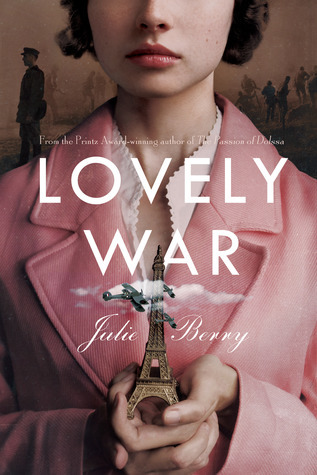
Lovely War by Julie Berry

Romance, history, and wartime, but with a mythological kick.

When Hephaestus finds his wife Aphrodite cheating on him with his brother Ares, he convenes a trial in which Aphrodite must defend herself and her actions. To do so, she relays a harrowing story about interracial love, music, and friendship during World War I.

Beautifully written and captivating, while not shying away from historically accurate portrayals of racism and sexism, this soaring book makes a compelling case for the enduring human spirit as told by the goddess of love herself.


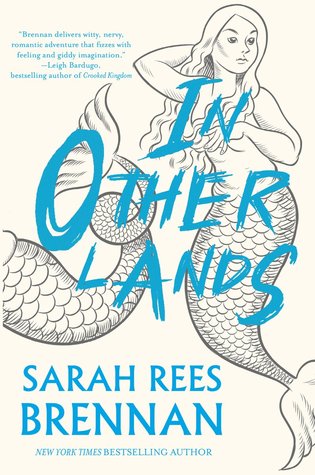
In Other Lands by Sarah Rees Brennan

If you think you know all about books where teenagers go to magical schools, think again.

When the obnoxious and unloved Eliot winds up in a magical realm called the Borderlands (protected by an invisible wall), he meets elves, mermaids, and other magical people. It seems like his dreams will be realized, but this is a place where expectations, stereotypes, and other prejudices are thrown out in place of the unpredictable. Eliot will fall in love and make an unexpected friend, but can he save the world while doing it?

This funny novel plays with fantasy tropes, but more than that, it turns preconceived notions of gender, colonialism, and sexism upside down and inside out.


Slaughterhouse-Five by Kurt Vonnegut

A classic work of literature by an author whose work has produced a rabid and devoted fanbase.

In this book the protagonist, Billy Pilgrim, has become “unstuck in time” so the story does not follow a linear timeline. It jumps around all over the place featuring different moments of Billy’s life.

Vonnegut’s unique writing style is at times humorous, sometimes derisive, but always memorable and moving.


Noggin by John Corey Whaley

When the story begins, Travis is a 16-year-old suffering from cancer. Once he realizes that he will not survive the illness he agrees to participate in an experimental procedure in which, after he dies, his head will be removed from his body and cryogenically frozen, to then be attached to a new body if and when the technology allows…

…It doesn’t take long and Travis is born again 5 years later, albeit with a new body. He would like, and expects, to pick up his life where he left it, but that won’t be so simple. Some of the most important people in his life, namely his girlfriend and his best friend, have been living, loving, and changing in the time that he was gone and Travis must figure out where he fits in.

This strange tale raises both philosophical and existential questions about life, wrapped up in a funny and heartfelt story about love and the nature of being.

Have you read any other books that defy genres? Share them in the comments!

Celebrating AAPI Literature (By Ms. Pelman)

Out of countless prodigious options, here are four books that I’ve read recently written by Asian American authors. They each represent just one facet (of infinite) perspectives. While these books take on wildly different subject matter, each one is fascinating, eye-opening, and riveting in its own right.


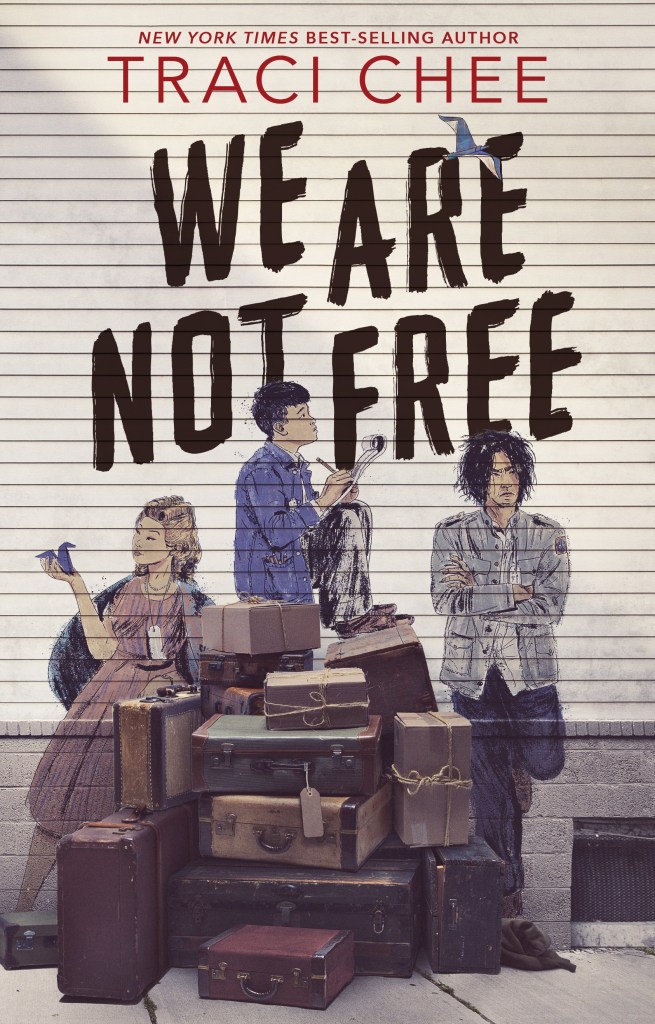
We Are Not Free by Traci Chee

This work of historical fiction follows a group of Japanese American teens who live in San Francisco during World War II. Their lives are thrown into tumult and their bonds are tested as some of them face the decision to fight in the war, and others are sent to an internment camp. If you like books told from multiple perspectives, you won’t be let down by this vivid and moving book.


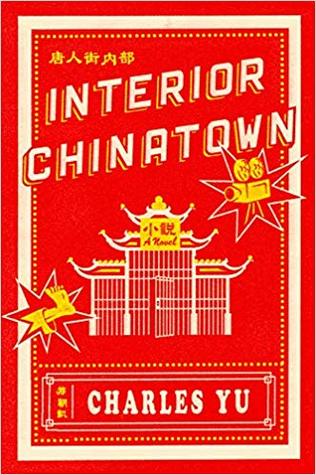
Interior Chinatown by Charles Yu

This offbeat National Book Award winner is written in a screenplay format. Willis Wu is a Chinese American actor who hopes to graduate from the bit parts of “generic Asian man” to the ultimate role for Asian men: Kung Fu Guy. Clever, funny, and fast-paced, this book skewers Hollywood in the most satisfying way.


Last Night at the Telegraph Club by Malinda Lo

Another historical fiction set in San Francisco, though this one follows Lily, a shy and obedient girl living in Chinatown in the 1950s. As Lily navigates a growing discomfort with her family, culture, and best friend, she discovers truths about herself and her sexuality that will change her life forever. A lovely tribute to self-discovery amidst painful realities.

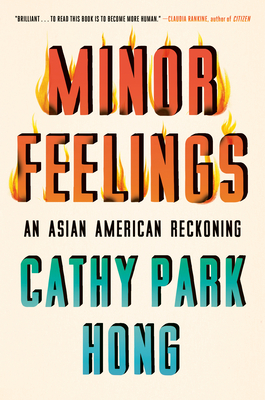
Minor Feelings by Cathy Park Hong

This nonfiction book of essays contains brilliant commentary and criticism on race in the United States as the author explores and explains her Korean American identity. It is also beautifully written and complemented by memoir-like personal experiences. A memorable experience that makes you think and feel.

Have you read any great books by AAPI authors? Share them in the comments!

The Burning God By R. F. Kuang (Review by Alysa S. ’22)

The Burning God (The Poppy War, #3)The Burning God by R.F. Kuang
My rating: 3 of 5 stars

Two years after The Poppy War, the first part of this trilogy series, was placed into my hands, I finally finished this emotional roller coaster. By the time we reach The Burning God, Rin is no longer the petty, lost child she once was, but I became increasingly frustrated with her blunt attitude and actions, now as a war-hardened general and a powerful shaman finally in control of her powers. It takes some willpower to move past the first 8 chapters of Rin’s ruthless carnage before we see more into her reasoning and limitations.

In terms of the storyline, R.F. Kuang seamlessly maps the history of 20th century China, from millenniums of imperial rule to the Republic of China to the ensuing revolts to western imperialism, into a narrative complete with ancient Chinese mythology, folklore, and war tactics. Though we finally see an end to the war, this last book especially taught me the demanding, cutthroat decisions that political and military leaders were forced to make for the sake of their country. This insight is made all the more heartbreaking as Rin grows increasingly vulnerable to war paranoia, factional infighting, and betrayals. The added issue of defending Nikan against the technologically advanced Hesperian nation also allows readers to understand the deep history of racism and subjugation that western powers inflicted upon 20th century China.

Kuang especially highlights a universal message: history moves around in vicious circles, and Rin is no exception to that pattern. Beyond the grim storyline and much, much, much more mature issues, Kuang continues to deliver on the evocative imagery of Rin’s divine firepower, as well as develop her complicated love-hate friendships with Kitay and Nezha. Side note: I think Nezha is a beautiful character (think broken redemption arc deserving Draco Malfoy), and I love how Kuang describes his aristocratic but scarred persona. However, I wanted to see more of Nezha’s reasoning and thoughts, and I had hoped for more insight into the pain he deals with as the opposition. I gave this book three stars because, like the author says, this ending may not be satisfactory for everyone (as it wasn’t for me). However, this is still one of the most unique and exciting books that I’ve read in a while, and I hope everyone gives the series a try. —Review by Alysa S. ’22

View all my reviews

Gods of Jade and Shadow by Silvia Moreno-Garcia (Review by Anika F. ’21)

Gods of Jade and ShadowGods of Jade and Shadow by Silvia Moreno-Garcia
My rating: 4 of 5 stars

At this point in my fantasy journey, it’s hard for stand-alones to impress me. Some are too short and don’t allow for enough world building or character development. Others are large tomes (like The Priory of the Orange Tree) that are pretty much a full series condensed into a brick. Similarly, Young Adult fantasy is not something I reach for, since I prefer the depth and nuance of New Adult or Adult novels.

Yet, somehow, Gods of Jade and Shadow, clearly both a decently lengthy stand-alone and a Young Adult fantasy, surprised me. While the characters and plot are interesting, what really drew me to the book was the descriptions and the storytelling. Silvia Moreno Garcia creates these lush settings with hints of magic, crossing the boundaries between our world and mythology.

Even if you’re not a big YA fantasy reader, I still think there’s a lot to gain from this book. It discusses racism and discrimination, feminism and misogyny, and the importance of charting your own path, even when your family holds you back. —Review by Anika F. ’21

View all my reviews

Outrun the Moon by Stacey Lee (reviewed by Anya W. ’20)

Outrun the MoonOutrun the Moon by Stacey Lee
My rating: 4 of 5 stars

It’s tough to be an American born Chinese girl in San Francisco in 1906, and Mercy Wong knows all about it. But, for all that she was born and raised in chinatown, she’ll let it shape her but not define her. So, after she finishes her last year at the only public school in the city open to kids from chinatown, she seizes the first opportunity she can get to con (beg, borrow, barter, blackmail) her way into a better school. After all, St. Clare’s will help her get a foot in the business world, so one day her weak younger brother won’t have to take over her father’s laundry business. Things go all right, at first. Then they devolve. But when the going gets tough, the tough get going, and Mercy is nothing if not tough.

Lee’s Outrun the Moon is a riveting tale of prejudice, friendship, and loss, set against the wonderfully dramatic background of the 1906 San Francisco earthquake. Her characters are dynamic and multifaceted, each with their own stories, weaving a well-built picture of many different lives converging by chance. Lee paces her story well for the most part, and my only request is an extra hundred or so pages in the middle to allow more time for characterization. Even though the romance is predictable, it is still fairly sweet, and the rest of the novel more than makes up for it. I would definitely recommend this book to anyone who enjoys historical fiction. – Anya W. ’20

View all my reviews

The Gentleman’s Guide to Vice and Virtue by Mackenzie Lee (review by Tasha M. 20)

The Gentleman's Guide to Vice and Virtue (Montague Siblings, #1)The Gentleman’s Guide to Vice and Virtue by Mackenzi Lee
My rating: 5 of 5 stars

When Henry “Monty” Montague embarks on a Grand Tour of Europe with his best friend, he expects a year of glitz, of parties and flirting, and just generally enjoying himself. He does not expect to be the target of a manhunt.

The Gentleman’s Guide to Vice and Virtue is easily the best historical fiction I’ve ever read. Without bogging the reader down with details, Lee weaves in a few key historical points. Additionally, the tone of the writing was perfect – right from the first page, I knew that Monty was part of the British aristocracy simply from the narrative style. The plot was engaging right from the start, accelerating beautifully right up until the end. I also appreciated the lack of an “epilogue” chapter that only serves to tie up loose ends.

Lee develops her characters spectacularly. I found myself invested in Monty’s growth from a devil-may-care attitude to someone who genuinely cared for the people he was close to. The romance was believable; Monty and Percy did fight as opposed to staying in a utopian love the entire time.
In short, The Gentleman’s Guide blew me away in every respect, and I would recommend it to anyone looking for a good fiction book. – Tasha M. ’20

View all my reviews