All posts by mspelmanlibrarian

Cabbages and Kings by O. Henry (review by Andrew R. ’17)

Cabbages and KingsCabbages and Kings by O. Henry
My rating: 2 of 5 stars

You’ve probably heard of O. Henry, the early twentieth-century American author of countless humorous short stories. And the phrase “cabbages and kings” will ring a bell to anyone who’s familiar with Lewis Carroll’s nonsense poems. (One of his most famous, “The Walrus and the Carpenter,” promises to tell the story of “shoes and ships and sealing-wax / And cabbages and kings.”) But you’ve almost certainly never heard them in combination, since Henry’s collection of closely interrelated short stories has not had nearly as much staying power since its 1904 publication as, for instance, “The Ransom of Red Chief” or “The Gift of the Magi” From barbers and tintypists (a hopelessly outdated profession) to diplomats and politicians, ninety percent of the characters populating the stories’ setting, a fictional South American village called Coralio, are American; Henry seeks to satirize supposedly autonomous twentieth-century Caribbean states, whose kings, in reality, had about as much power as cabbages. Cabbages and Kings, like the nonsensical poem that inspired it, doesn’t have much to offer beyond the mildly amusing nonsense of its stories, but any O. Henry fans are still welcome to seek it out on the Harker Library’s Overdrive page in the Project Gutenberg section. – Andrew R. ’17

View all my reviews

The Blood of Olympus by Rick Riordan (review by Catherine H. ’17)

The Blood of Olympus (The Heroes of Olympus, #5)The Blood of Olympus by Rick Riordan
My rating: 4 of 5 stars

The fifth and final installment in Rick Riordan’s Heroes of Olympus series fails to impress. As the demigods of the prophecy travel on the Argo II to save the world, Reyna, Nico, and Coach Hedge struggle to travel across the world to deliver the Athena Parthenos to the Greeks as a peace offering. The gods are still split into their Greek and Roman selves due to the Romans preparing to attack the Greeks at Camp Half Blood. The Earth Mother, Gaea, is close to waking and the monsters are eager to spill demigod blood to wake her. It has its funny moments, but did not leave a lasting impression on me. In fact, the ending is incredibly cliché and nothing was particularly memorable. The series has dragged on for long enough and I’m glad that it has finally come to an end. The Blood of Olympus is alright and provides a satisfactory ending, but I only recommend it to fans of Riordan’s works. – Catherine H. ’17

View all my reviews

The Sense of an Ending by Julian Barnes (review by Lauren L. ’17)

The Sense of an EndingThe Sense of an Ending by Julian Barnes
My rating: 4 of 5 stars

The Sense of an Ending is a remarkable story spanning forty years stemming from the protagonist’s acquaintance with a man he had known for less than a decade before the man unexpectedly commits suicide. It is blunt in its telling, the protagonist exposing his own ignorance throughout life as well as the many inadvisable decisions he had made and interspersing among them happier memories. It is refreshing to see his joys and regrets, all reluctantly accepted, and they reveal what he truly values in his life. The ending is unexpected and somewhat confusing; however, when the full implications of what had happened are understood, the shock value is enough for the book, and the questions it provokes, to linger in the reader’s mind for days afterward. Though it may not be enjoyable for all, I firmly believe that everyone should at least read the first few pages before deciding definitively whether or not The Sense of an Ending is to their taste. – Lauren L. ’17

View all my reviews

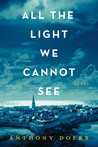
All the Light We Cannot See by Anthony Doerr (review by Connie M. ’17)

All the Light We Cannot SeeAll the Light We Cannot See by Anthony Doerr
My rating: 5 of 5 stars

All the Light We Cannot See met and exceeded my high expectations. Doerr’s masterpiece, transitionally smooth between the simultaneous stories of the two main characters, is written eloquently and at times poetically. The plot line is intensely gripping and not only conveys the deep horror and trauma caused by WWII both on the French and the German sides but also reminds us of the beauty and light that exist even in dark times. This book is not a romance — as suggested by the publisher’s book summary. Readers should be prepared for a story that is raw and emotionally moving. The decade Doerr used to write All the Light We Cannot See paid off. – Connie M. ’17

View all my reviews

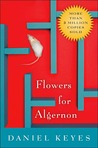
Flowers for Algernon by Daniel Keyes (review by Andrew R. ’17)

Flowers for AlgernonFlowers for Algernon by Daniel Keyes
My rating: 4 of 5 stars

In Daniel Keyes’ beloved short story “Flowers for Algernon,” a mentally retarded adult named Charlie Gordon undergoes a miraculous surgery that nearly triples his IQ, plunging him headfirst into a world of intellectuals even as he comes to terms with his life before the operation. Here, in Keyes’ later novelization of the same narrative, Charlie’s IQ still rockets up at a dangerous pace—but instead of having to accept his shameful past as an adult with the mind of a child, the newly-created genius must also navigate a crushing tide of memories and feelings that his old brain could never have handled. Watching Charlie stumble through his new life, even more confused and emotionally shredded than he had been with his old IQ of 70, is just as tragic as a novel as in the short story format. My only issue is that it was much more difficult to suspend my disbelief about the miraculous surgery and its effects for three hundred pages than it was for thirty. Those who have never read either “Flowers for Algernon” should pick one and get started immediately, but I’m not sure it’s worthwhile to read both variations on the same theme. – Andrew R. ’17

View all my reviews

One Summer by Bill Bryson (review by Andrew R. ’17)

One Summer: America, 1927One Summer: America, 1927 by Bill Bryson
My rating: 3 of 5 stars

Modern American culture doesn’t pay much heed to the events of the 1920s, a decade crowded out by the Great Depression and with two World Wars looming on either side, but this was the decade that gave rise to some of our country’s biggest names. Charles Lindbergh, Henry Ford, Calvin Coolidge, Babe Ruth, F. Scott Fitzgerald, Al Capone—all make appearances in this lengthy work of narrative nonfiction, even if they have to share the stage with a throng of less famous figures (including a frustrating number of forgotten aviators, small-time criminals, and local politicians). Even if One Summer is ostensibly a chronicle of the events of 1927, the year Lindbergh crossed the Atlantic by airplane and Babe Ruth clobbered an especially impressive number of baseballs, Bryson can’t help himself: he constantly backtracks to the 1910s and jumps ahead to the 1930s in search of more and more amusing anecdotes to stuff into his narrative. Some of these historical stories provide necessary context; others feel like dead weight. In the end, One Summer delivers all the information it promised, but the gems of historical factoids are all too often buried in a heap of gratuitous detail. – Andrew R. ’17

View all my reviews

The Restaurant at the End of the Universe by Douglas Adams (review by Lauren L. ’17)

The Restaurant at the End of the Universe (Hitchhiker's Guide, #2)The Restaurant at the End of the Universe by Douglas Adams
My rating: 5 of 5 stars

The second installation of Adams’ Hitchhiker’s Guide series, The Restaurant at the End of the Universe continues the adventures of the three-headed, two-armed ex-president of the universe, his cousin, his girlfriend, and an unfortunate and bewildered human being. (And a depressed robot, but of course, everybody’s already forgotten about him.) Just as absurd as the first book of the series, Restaurant, reveals the man who actually controls the entirety of the universe and sends Arthur and Ford to Earth two million years ago, where they find that a group of telephone sanitizers, hairdressers, and marketers aren’t the best people to start a new civilization, since sticks are best used as curling tongs, and to discover fire, you need to first research it to find what people want from it. Just like the previous book, The Restaurant at the End of the Universe will be enjoyable to all . Lauren L. ’17

View all my reviews

The Golden Spiders by Rex Stout (review by Connie M. ’17)

The Golden Spiders (Nero Wolfe, #22)The Golden Spiders by Rex Stout
My rating: 2 of 5 stars

The Golden Spiders started out with an intriguing hook but it didn’t really follow through. The plot also dragged on and did not feel resolved at the end. Detective Wolfe accepts a case for a cheap price (one of the main factors that actually convinced me to read the book), but really he only does it because he is paid his usual high price by someone else who is also involved in the case. Thus, unlike other popular classic detective stories (e.g. Sherlock Holmes, Hercule Poirot, Miss Marple), the detective is investigating the case largely because of the payment and not because they love the job (which, in my opinion, makes them better detectives). Furthermore, Wolfe’s assistant, Archie Goodwin, often runs errands for Wolfe that are promising in terms of leading up to a plot twist, but when Wolfe finally explains the solution, little of the rest of the book seems to relate to the answer. Anyway, this book seemed promising, but really didn’t live up to expectations set by the summary.- Connie M. ’17

View all my reviews

Battle Hymn of the Tiger Mother by Amy Chua (review by Andrew R. ’17)

Battle Hymn of the Tiger MotherBattle Hymn of the Tiger Mother by Amy Chua
My rating: 1 of 5 stars

When Amy Chua set out to chronicle her struggles with Chinese parenting and her views on Western child rearing in her memoir Battle Hymn of the Tiger Mother, she must have known she was venturing into dangerous territory. Its polarizing messages—that immigrant families suffer “generational decline” as they stray further and further from their mother cultures, that constant interference in a child’s life and education is a way of showing parental love—triggered cries of relief and fury alike. No two readers of Chua’s memoir will have the same opinion about her take on so touchy a topic; the book’s content is utterly un-critiquable. But, if readers manage to overlook the flashy sensationalism of Battle Hymn of the Tiger Mother, they’ll notice certain elements that dilute the value and validity of its message: unsubstantiated research, sweeping generalizations, and, above all, the author’s habit of digressing into vignettes about her children’s scholastic and musical triumphs. Die-hard “Western parents” and aspiring tiger mothers can extol or condemn this memoir as much as they like, but their efforts won’t change its chronic lack of structure and authority. – Andrew R. ’17

View all my reviews

Silence of the Lambs by Thomas Harris (review by Akshay B. ’16)

The Silence of the Lambs  (Hannibal Lecter, #2)The Silence of the Lambs by Thomas Harris
My rating: 5 of 5 stars

FBI agent-in-training Clarice Starling is just as surprised as anyone else when she is called upon to investigate the serial killer Buffalo Bill, who skins his female victims to create a wearable suit. After Starling finds no leads, FBI Director Jack Crawford directs her to request the incarcerated Dr. Hannibal “Hannibal the Cannibal” Lecter for aid. Dr. Lecter develops a personal bond with Starling, and offers her information in exchange for personal details about her early life. However, when a Senator’s daughter is kidnapped by Buffalo Bill, the stakes are raised, and suddenly Dr. Lecter becomes the single most important person in the case. Building upon its prequel, The Silence of the Lambs is an absolutely beautiful masterpiece that blends a relatable protagonist and a despised yet admired cannibal genius, alongside profound symbolism and a twisting plot. Silence of the Lambs is definitely a must for all mature young adults and older. – Akshay B. ’16

View all my reviews