Category Archives: Uncategorized

Fortress Besieged by Qian Zhong Shu (review by Andrew R. ’17)

Fortress BesiegedFortress Besieged by Qian Zhong Shu
My rating: 4 of 5 stars

It’s a sad fact of English-language literature that the number of books translated from English and shipped around the world far outstrips that of books translated into English from other languages. That means the pool of books available to American readers in translation from, say, Mandarin is relatively limited—only works of scholarly interest, unusual acclaim, or specifically Western appeal make their way to our libraries. Fortunately, Qian Zhongshu’s classic Fortress Besieged meets all three criteria. Not only has it been the object of intense study and widespread consumption in the seventy-five years since its publication, but its consistent references to Western proverbs and literature make it uniquely relatable to an American audience. (The excellent translation by Nathan K. Mao and Jeanne Kelly also helps.) The reader follows Fang Hung-Chien, a graduate student returning home from Europe, as he stumbles through a sticky love triangle, an exhaustive trip to China’s interior, and finally a bitter and loveless marriage. The author’s intent sometimes seems to be to poke fun at every subject he can come up with, from the Chinese to the Jews, from government officials to university professors, from bachelors to husbands to women of every age. None of this, though, changes the novel’s unique and undeniable cultural value. – Andrew R. ’17
View all my reviews

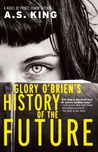
Glory O’Brien’s History of the Future by A. S. King (review by Mrs. Vaughan, Harker librarian)

Glory O'Brien's History of the FutureGlory O’Brien’s History of the Future by A.S. King
My rating: 4 of 5 stars

Glory O’Brien is about to graduate from high school but her future remains uncertain despite her apparent talents and a supportive single father. Glory remains haunted by the suicide of her artistic and even more talented mother fourteen years previous. Confident in her tendency to eschew the passing trends celebrated by teens around her, Gloria is nonetheless crippled by the fear that she harbors some unidentified trait that will lead her down the un-understandable path her mother traveled long ago. In a bizarre twist, Glory acquires the ability to see people’s futures and a terrifying dystopia, in which girls and women are reduced to less than chattel, reveals itself in sudden flashes as she encounters friends and strangers. By accident of circumstance, Glory not only needs to reconcile her identity and future, but ward off the impending devolution of society.

The beauty of King’s story is the character of Glory — a fully realized personality that subtly draws the reader into what at first seems a compelling coming-of-age story. Indeed, the much more frightening threat of societal dissolution is beautifully cloaked in the power of Glory’s story. Glory is a character drawn of perfectly believable contradictions: she simultaneously exudes self confidence and self questioning. She is both determined and terrified. Little does she know that the mystery of her personal circumstances may unlock more than her own salvation.

King’s is not a fantastic tale. Beyond the convention of the future visions, the existing discomfort in Glory’s life, the misogynistic forebodings and the novel’s satisfying ending are grounded in reality. Readers who enjoyed Chbosky’s Perks of Being a Wallflower and Lockhart’s We Were Liars, as well as King’s Please Ignore Vera Dietz will be thoroughly pleased with Glory O’Brien’s History of the Future. – Mrs. Vaughan, Harker librarian

View all my reviews

I Am a Strange Loop by Douglas R. Hofstadter (review by Andrew R. ’17)

I Am a Strange LoopI Am a Strange Loop by Douglas R. Hofstadter
My rating: 4 of 5 stars

In I Am a Strange Loop, Pulitzer Prize-winning professor Douglas Hofstadter proves that nonfiction doesn’t necessarily have to be built on fact; without much more than a lattice of elaborate metaphors and classical allusions to support the credibility of his arguments, he makes a case that’s both cogent and convincing. It boils down to this: in a brain comprised of complex neural symbols, the concept of “I” (also referred to as the “soul” or “self-symbol”) is a self-referential feedback loop of indefinite duration. Hofstadter presents a host of comparisons to better illustrate his abstract point, invoking repeatedly the ideas of a spring-loaded domino circuit, a video camera that points to its own screen, and, most effectively, a famous self-referential theorem by the mathematician Kurt Gödel. (Three chapter are spent providing mathematical context alone.) It’s in these creative metaphors that Hofstadter is most at home, and every time he spins off on a bizarre tangent you can be sure he’ll twist it to make his point even more forceful. In the end, his most abstract ideas were a little hard to swallow, but it’s easy to respect and value his arguments without totally agreeing with them. – Andrew R. ’17

View all my reviews

Lost in Shangri-La: A True Story of survival, Adventure, and the Most Incredible Rescue Mission of World War II by Mitchell Zuckoff (review by Akshay B. ’16)

Lost in Shangri-la: A True Story of Survival, Adventure, and the Most Incredible Rescue Mission of World War IILost in Shangri-la: A True Story of Survival, Adventure, and the Most Incredible Rescue Mission of World War II by Mitchell Zuckoff
My rating: 4 of 5 stars

Lost in Shangri-La is the incredible true story of the “Gremlin Special,” which crashed on May 13, 1945, in the uncharted New Guinea region referred to as Shangri-La. Of the original twenty-four officers, only three survived and struggled with their grief and injuries, all while fighting to survive in a harsh and unforgiving jungle surrounded by tribes rumored to be cannibals and Japanese soldiers infamous for their brutality. The narrative’s greatest strength comes from the honest fortitude of the trio, but at the same time Zukoff critiques the Americans for completely altering the way-of-life of the New Guineans. Ultimately, the interaction with the natives mirrors the destructive conflicts between American settlers and Native Americans, in which the latter were at the outset the saviors of colonists but eventually were ruined by them. Thus, though the exterior reality of the rescue tale resounds within the reader, the deeper undertone condemns the methods in which the rescue was achieved. – Akshay B. ’16

View all my reviews

Inamorata by Megan Chance (review by Linus L. ’18)

InamorataInamorata by Megan Chance
My rating: 4 of 5 stars

One of many novels by Megan Chance, Inamorata depicts the incestuous love between Joseph Hannigan, a skilled artist, and his sister Sophie and their search for a better future. Told in 19th century Venice, the story gracefully flows through the tale of the siblings’ search for fame, unaware of the darkness that takes on the form of Odilé, a powerful succubus. Chance dexterously intertwines imagery and irony to fully capture the attention of the reader, constructing ethereal images of the Italian landscape. A powerful book with an interesting plot, Inamorata’s ending twist blows the expectations of the reader out of the water. I thoroughly enjoyed imagining the scenes of the novel with the aid of its skillfully woven language, and I slowly became further enraptured by the plotline. However, I was somewhat startled by the hinted incest in the beginning of the story. While the author does introduce it with grace, the concept does require a warning for readers who would be uncomfortable with such content. – Linus L. ’18

View all my reviews

2001: A Space Odyssey by Arthur C. Clarke (review by Connie M. ’17)

2001: A Space Odyssey (Space Odyssey, #1)2001: A Space Odyssey by Arthur C. Clarke
My rating: 5 of 5 stars

2001: A Space Odyssey depicts the first encounters of humankind with alien intelligence. This story has become one of the most well known sci-fi tales and is written by one of the greats. The story begins as a series of seemingly unconnected accounts, but gathers speed by the time we reach the halfway point. The second half of the novel blazes by in a suspense-filled whirlwind. The last 30 pages of the book holds perhaps as much action as the rest of the book put together, culminating in a thought-provoking and poetic ending. Clarke writes without extravagant vocabulary yet manages to vividly depict the beauty of space. While 2001 has little humor and no romance and thus may not appeal to everyone, it is a must read for any true science fiction lover and contains much food for thought for any reader. – Connie M. ’17

View all my reviews

The October Country by Ray Bradbury (review by Lauren L. ’17)

The October CountryThe October Country by Ray Bradbury
My rating: 3 of 5 stars

The October Country is a collection of short stories in which Bradbury explores the consequences of reality as we know it brushing against a supernatural world. Each story is different – some characters respond with fear, some a determined naiveté and courage. Through them, he explores the flaws and habits of humanity in general as well as of commonplace qualities of the average person. Not every story is as enjoyable as it might be, and in some ways, the stories are too predictable, not in the unimaginative zombie apocalypse or haunted house sort of way, but in that it’s fairly obvious where the plot is going. Nevertheless, they are worth the read. Anyone who enjoys both the supernatural and horror (even if it’s not all that scary) would enjoy The October Country. – Lauren L. ’17

View all my reviews

The Lost Books of The Odyssey by Zachary Mason (review by Allison W. ’16)

The Lost Books of The OdysseyThe Lost Books of The Odyssey by Zachary Mason
My rating: 3 of 5 stars

The Lost Books of the Odyssey consists of short stories that center mainly on well-known parts of The Iliad and The Odyssey, with twists that create new perspectives on well-known mythology. Although each story is engaging and worth reading, the work as a whole is disconnected. Every “book” is independent, with some even contradicting others, which is consistent with the oral tradition of The Iliad and The Odyssey; however, this organization also causes the novel to lose its momentum between stories. A chronological ordering would have been less confusing and potentially more compelling, but even without any clear arrangement, The Lost Books of the Odyssey is worth reading for its interesting additions and alterations to Greek mythology. – Allison W. ’16

View all my reviews

Whiskey, Tango, Foxtrot by David Shafer (review by Mr. Anthony Silk)

Whiskey Tango FoxtrotWhiskey Tango Foxtrot by David Shafer
My rating: 3 of 5 stars

Do you like books that feed your fear that there is an evil corporation ready to take over the world? If so, you will enjoy Whiskey Tango Foxtrot, a fast-paced thriller that ties NGOs, conspiracy theorists, and self-help gurus together as they try to first unravel and then foil a chillingly subversive plot. The book does take a little while to get started, and after the first 50 pages or so may be asking yourself the title of this book. But if you hold on you’ll find a zippy, and mostly believable ride full of nefarious characters, chases, and lots of clever, well-written dialog. Be warned, though, with 50 pages left you may worry that there is no way it will all get wrapped up, and you’d be right. But like the big blockbuster movies, this one is about the journey, not the destination. Definitely 16+ for lots (and lots) of language and drug/alcohol use (but minimal violence). Mr. Anthony Silk (Harker Teacher)

View all my reviews

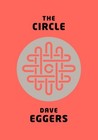
The Circle by Dave Eggers (review by Andrew R. ’17)

The CircleThe Circle by Dave Eggers
My rating: 3 of 5 stars

Privacy in social media and on the Internet is a hot topic these days—the perfect target for some biting satire and not-so-futuristic science fiction. That’s what Dave Eggers is going for in The Circle, at least. He achieves those ends without offering much in the way of plot complexity or meaningful commentary. The storyline follows Mae Holland as she works her way up the corporate ladder of the Circle—a Silicon Valley super-corporation that seems to hold a monopoly over all the social media, scientific research, and Internet services. The section of the narrative where Mae relinquishes all her privacy to improve her standing in the company is chilling, but its impact is lessened by Eggers’s lack of subtlety in exposing the corporation’s tyranny: when the Circle’s executives make SECRETS ARE LIES, SHARING IS CARING, PRIVACY IS THEFT the new company motto, for instance, it’s hard to think of the campus as anything less than a malicious, 1984-like surveillance state. The Circle would have made a potent commentary on one of today’s most-discussed issues if it had spent more time on an intricate plot and less on too-obvious catchphrases and images of corruption. – Andrew R. ’17

View all my reviews