Category Archives: Uncategorized

Walk Me Home by Catherine Ryan Hyde (review by Melissa K. ’18)

Walk Me HomeWalk Me Home by Catherine Ryan Hyde
My rating: 4 of 5 stars

After their mother dies, two sisters Carly and Jen trek from New Mexico to California in hopes of living with her ex-boyfriend. Trying to dodge Child Protective Services, they risk hitchhiking with strangers, dehydration in the desert, and stealing for sustenance. They pass small towns and encounter an odd variety of people, whose quirks are the highlight of the novel. Even the minor characters have distinctive voices. Catherine Ryan Hyde manages to convey regional accents so naturally that the reader barely notices them. The downside of the novel was the overuse of fragments, which distracts from the plot. If that annoys you, avoid this book. Otherwise, Walk Me Home is an easy, satisfying read. – Melissa K. ’18

View all my reviews

The Return of Jeeves by P.G. Wodehouse (review by Andrew R. ’17)

The Return of Jeeves: A Jeeves and Bertie NovelThe Return of Jeeves: A Jeeves and Bertie Novel by P.G. Wodehouse
My rating: 2 of 5 stars

These days, nearly half a century after the death of P. G. Wodehouse and twice that long since his first books were published, readers tend to remember only one subset of his canon: the Jeeves and Wooster novels, which follow bumbling young aristocrat Bertie and his suave, brilliant butler Jeeves as they dodge the salvos of undesirable jobs (and occasional death threats) hurled at them by Bertie’s overbearing aunts. Well, Wodehouse is worthy of plenty of complimentary adjectives—he’s witty, endearing, and well-paced, to start—but “versatile” isn’t one of them. In The Return of Jeeves, Bertie is off on vacation, so Jeeves has been left to take care of Bill Towcester (pronounced “Toaster”), a bumbling young aristocrat with overbearing female relatives. Sound familiar? And yet, despite the fact that nothing in the plot marks a radical departure from the Jeeves and Wooster pattern, the narrative feels uncomfortable and clunky, more like a Wodehouse impersonator than Wodehouse himself. The humorist is exceedingly good at toying with the same characters in the same situations and same settings, but, as I was disappointed to discover, he has trouble with even the slightest variations on his trademark theme. – Andrew R. ’17

View all my reviews

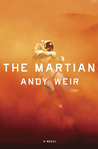
The Martian by Andy Weir (review by Connie M. ’17)

The MartianThe Martian by Andy Weir
My rating: 5 of 5 stars

Looking through Goodreads for a sci-fi book, I found that The Martian was voted the top sci-fi book for 2014, and decided to give it a try. Well, I certainly did not regret that decision.
The Martian was, yes, filled with highly technical scientific explanations. This, however, only added to the legitimacy of the story. But above all, The Martian is one of the most engrossing novels I have ever read. Not only was a stellar sense of humor imbued into multiple characters (I literally laughed out loud multiple times), but as the hero encountered challenge after challenge, I was so terrified of what might happen next. I could only pause my reading when the challenge was resolved. This was partly because of how realistic the story was. All challenges seemed completely plausible, and all solutions made complete sense and I was completely drawn into the story.
The Martian is a must read for any sci-fi fan and a wonderful experience for any reader.” -Connie M. ’17

View all my reviews

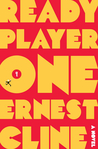
Ready Player One by Ernest Cline (review by Andrew R.’17)

Ready Player OneReady Player One by Ernest Cline
My rating: 4 of 5 stars

Ready Player One has the amusing (if unlikely) premise of a massive ’80s cultural revival in the year 2044 following the death of billionaire video game designer James Halliday. In a famine-stricken vision of future America, Halliday’s will is the last hope for many of the country’s hopeful gamers: it bestows the designer’s entire fortune upon the first person to complete a series of ’80s-themed riddles set in the OASIS, a sprawling virtual-reality videogame that redefines MMORPGs. For a future-world teenager, intrepid fortune-hunter Wade Watts spends a surprising amount of time obsessing over minutiae of ’80s culture that seem more likely to appeal to the author himself. (Case in point: the president of the OASIS is Cline’s fellow science-fiction novelist Cory Doctorow.) My only qualm with this book is that, while the OASIS is constantly glorified, it’s clear that the collapse of the real world is a direct result of the citizenry’s lack of regard for anything outside their alternate-reality visors. One character hints at this, but, of course, he immediately recants his views and never brings them up again. Still, Ready Player One is a fun diversion from the real world—for the author as well as the reader. – Andrew R. ’17

View all my reviews

South of the Border, West of the Sun by Haruki Murakami (review by Andrew R. ’17)

South of the Border, West of the SunSouth of the Border, West of the Sun by Haruki Murakami
My rating: 3 of 5 stars

South of the Border, West of the Sun is infuriating—not in the manner of books that disappoint and disgust from beginning to end, but in the way of plots that, after a few failed early chapters, reward readers with tantalizing tastes of undeniable brilliance. If only Haruki Murakami had seen fit to split the first half of the book, which chronicles the narrator’s over dramatic childhood in a wearyingly trite style, from the second half… Then I could assign a one-star rating to the first segment and forget about it, focusing instead on the simple, understated beauty that underlines the later chapters as they trace the protagonist Hajime’s relationships, past and present, with other characters. But, alas, the tale of Hajime’s later life is tainted by the cringe-worthy opening chapters; there’s no way to get the best parts of the novel without the worst. If there were, though, I would recommend the second half of South of the Border, West of the Sun to anyone and everyone who’s ever laid hands on a book. – Andrew R. ’17

View all my reviews

Cabbages and Kings by O. Henry (review by Andrew R. ’17)

Cabbages and KingsCabbages and Kings by O. Henry
My rating: 2 of 5 stars

You’ve probably heard of O. Henry, the early twentieth-century American author of countless humorous short stories. And the phrase “cabbages and kings” will ring a bell to anyone who’s familiar with Lewis Carroll’s nonsense poems. (One of his most famous, “The Walrus and the Carpenter,” promises to tell the story of “shoes and ships and sealing-wax / And cabbages and kings.”) But you’ve almost certainly never heard them in combination, since Henry’s collection of closely interrelated short stories has not had nearly as much staying power since its 1904 publication as, for instance, “The Ransom of Red Chief” or “The Gift of the Magi” From barbers and tintypists (a hopelessly outdated profession) to diplomats and politicians, ninety percent of the characters populating the stories’ setting, a fictional South American village called Coralio, are American; Henry seeks to satirize supposedly autonomous twentieth-century Caribbean states, whose kings, in reality, had about as much power as cabbages. Cabbages and Kings, like the nonsensical poem that inspired it, doesn’t have much to offer beyond the mildly amusing nonsense of its stories, but any O. Henry fans are still welcome to seek it out on the Harker Library’s Overdrive page in the Project Gutenberg section. – Andrew R. ’17

View all my reviews

The Blood of Olympus by Rick Riordan (review by Catherine H. ’17)

The Blood of Olympus (The Heroes of Olympus, #5)The Blood of Olympus by Rick Riordan
My rating: 4 of 5 stars

The fifth and final installment in Rick Riordan’s Heroes of Olympus series fails to impress. As the demigods of the prophecy travel on the Argo II to save the world, Reyna, Nico, and Coach Hedge struggle to travel across the world to deliver the Athena Parthenos to the Greeks as a peace offering. The gods are still split into their Greek and Roman selves due to the Romans preparing to attack the Greeks at Camp Half Blood. The Earth Mother, Gaea, is close to waking and the monsters are eager to spill demigod blood to wake her. It has its funny moments, but did not leave a lasting impression on me. In fact, the ending is incredibly cliché and nothing was particularly memorable. The series has dragged on for long enough and I’m glad that it has finally come to an end. The Blood of Olympus is alright and provides a satisfactory ending, but I only recommend it to fans of Riordan’s works. – Catherine H. ’17

View all my reviews

The Sense of an Ending by Julian Barnes (review by Lauren L. ’17)

The Sense of an EndingThe Sense of an Ending by Julian Barnes
My rating: 4 of 5 stars

The Sense of an Ending is a remarkable story spanning forty years stemming from the protagonist’s acquaintance with a man he had known for less than a decade before the man unexpectedly commits suicide. It is blunt in its telling, the protagonist exposing his own ignorance throughout life as well as the many inadvisable decisions he had made and interspersing among them happier memories. It is refreshing to see his joys and regrets, all reluctantly accepted, and they reveal what he truly values in his life. The ending is unexpected and somewhat confusing; however, when the full implications of what had happened are understood, the shock value is enough for the book, and the questions it provokes, to linger in the reader’s mind for days afterward. Though it may not be enjoyable for all, I firmly believe that everyone should at least read the first few pages before deciding definitively whether or not The Sense of an Ending is to their taste. – Lauren L. ’17

View all my reviews

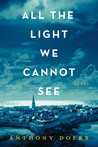
All the Light We Cannot See by Anthony Doerr (review by Connie M. ’17)

All the Light We Cannot SeeAll the Light We Cannot See by Anthony Doerr
My rating: 5 of 5 stars

All the Light We Cannot See met and exceeded my high expectations. Doerr’s masterpiece, transitionally smooth between the simultaneous stories of the two main characters, is written eloquently and at times poetically. The plot line is intensely gripping and not only conveys the deep horror and trauma caused by WWII both on the French and the German sides but also reminds us of the beauty and light that exist even in dark times. This book is not a romance — as suggested by the publisher’s book summary. Readers should be prepared for a story that is raw and emotionally moving. The decade Doerr used to write All the Light We Cannot See paid off. – Connie M. ’17

View all my reviews

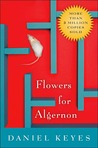
Flowers for Algernon by Daniel Keyes (review by Andrew R. ’17)

Flowers for AlgernonFlowers for Algernon by Daniel Keyes
My rating: 4 of 5 stars

In Daniel Keyes’ beloved short story “Flowers for Algernon,” a mentally retarded adult named Charlie Gordon undergoes a miraculous surgery that nearly triples his IQ, plunging him headfirst into a world of intellectuals even as he comes to terms with his life before the operation. Here, in Keyes’ later novelization of the same narrative, Charlie’s IQ still rockets up at a dangerous pace—but instead of having to accept his shameful past as an adult with the mind of a child, the newly-created genius must also navigate a crushing tide of memories and feelings that his old brain could never have handled. Watching Charlie stumble through his new life, even more confused and emotionally shredded than he had been with his old IQ of 70, is just as tragic as a novel as in the short story format. My only issue is that it was much more difficult to suspend my disbelief about the miraculous surgery and its effects for three hundred pages than it was for thirty. Those who have never read either “Flowers for Algernon” should pick one and get started immediately, but I’m not sure it’s worthwhile to read both variations on the same theme. – Andrew R. ’17

View all my reviews