Tag Archives: Sci. Fi.

Lock In by John Scalzi (review by Catherine H. ’17)

Lock In (Lock In, #1)Lock In by John Scalzi
My rating: 4 of 5 stars

John Scalzi’s Lock In introduces the reader to a world in the near future where millions of people have been affected by a virus that immobilizes the body but leaves the brain fully functional, while others have had their brains altered but still have fully functional bodies. Those who are immobilized are “locked in” and can use “threeps,” or robotic bodies, to interact with others in the physical world; those who have had their brain chemistry changed but have had no other physical effects are called Integrators and can allow those who have been “locked in” to borrow their bodies for a time. Hadens, those who have lost the ability to use their bodies due to this virus, find themselves in a new community that can exist outside of the physical realm, because they are not attached to their bodies. Scalzi does some interesting world-building and purposefully leaves the protagonist, Chris Shane, ambiguous. For example, Chris’s gender and race are hardly mentioned, which leaves the reader to interpret how Chris interacts with the world as an FBI agent looking to solve a murder that may have involved Hadens. I appreciated Scalzi’s subtle inclusion of diversity in the novel, and I look forward to reading more from him.

View all my reviews

The Handmaid’s Tale by Margaret Atwood (review by Andrew R. ’17)

The Handmaid's TaleThe Handmaid’s Tale by Margaret Atwood
My rating: 4 of 5 stars

To call The Handmaid’s Tale a dystopian novel would be to do it a disservice: while the near-future mockery of American society in which the novel is set does, technically, fall under that category, the freedom-fighting and romantic entanglements that we’ve come to associate with the genre have no place in this book. On its surface, the story follows Offred, a young woman assigned to a high-ranking official in the Republic of Gilead and tasked with bearing him children. With birthrates falling below crisis level, Offred and the other “handmaids” of this brutal patriarchy represent the society’s only hope, but Gilead’s fanatical and fundamentalist codes of conduct force all women into submission, their lives characterized only by traumatic memories and a fervent hope for pregnancy. Atwood intends this novel, it seems, to be a thought experiment that extends systemic gender inequalities and the “family values” that perpetuate them to their most oppressive extremes, which may explain why Gilead is sometimes so hard to distinguish from the postmodern America it replaced. The novel’s dystopian conceit is so complete that its cast of characters tends to feel more like symbols than humans in their own right; still, The Handmaid’s Tale achieves a level of social-justice-minded indignation that very few other works of science fiction manage to attain.

View all my reviews

2001: A Space Odyssey by Arthur C. Clarke (review by Connie M. ’17)

2001: A Space Odyssey (Space Odyssey, #1)2001: A Space Odyssey by Arthur C. Clarke
My rating: 5 of 5 stars

2001: A Space Odyssey depicts the first encounters of humankind with alien intelligence. This story has become one of the most well known sci-fi tales and is written by one of the greats. The story begins as a series of seemingly unconnected accounts, but gathers speed by the time we reach the halfway point. The second half of the novel blazes by in a suspense-filled whirlwind. The last 30 pages of the book holds perhaps as much action as the rest of the book put together, culminating in a thought-provoking and poetic ending. Clarke writes without extravagant vocabulary yet manages to vividly depict the beauty of space. While 2001 has little humor and no romance and thus may not appeal to everyone, it is a must read for any true science fiction lover and contains much food for thought for any reader. – Connie M. ’17

View all my reviews

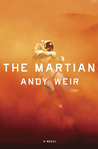
The Martian by Andy Weir (review by Connie M. ’17)

The MartianThe Martian by Andy Weir
My rating: 5 of 5 stars

Looking through Goodreads for a sci-fi book, I found that The Martian was voted the top sci-fi book for 2014, and decided to give it a try. Well, I certainly did not regret that decision.
The Martian was, yes, filled with highly technical scientific explanations. This, however, only added to the legitimacy of the story. But above all, The Martian is one of the most engrossing novels I have ever read. Not only was a stellar sense of humor imbued into multiple characters (I literally laughed out loud multiple times), but as the hero encountered challenge after challenge, I was so terrified of what might happen next. I could only pause my reading when the challenge was resolved. This was partly because of how realistic the story was. All challenges seemed completely plausible, and all solutions made complete sense and I was completely drawn into the story.
The Martian is a must read for any sci-fi fan and a wonderful experience for any reader.” -Connie M. ’17

View all my reviews

Ready Player One by Ernest Cline (review by Andrew R.’17)

Ready Player OneReady Player One by Ernest Cline
My rating: 4 of 5 stars

Ready Player One has the amusing (if unlikely) premise of a massive ’80s cultural revival in the year 2044 following the death of billionaire video game designer James Halliday. In a famine-stricken vision of future America, Halliday’s will is the last hope for many of the country’s hopeful gamers: it bestows the designer’s entire fortune upon the first person to complete a series of ’80s-themed riddles set in the OASIS, a sprawling virtual-reality videogame that redefines MMORPGs. For a future-world teenager, intrepid fortune-hunter Wade Watts spends a surprising amount of time obsessing over minutiae of ’80s culture that seem more likely to appeal to the author himself. (Case in point: the president of the OASIS is Cline’s fellow science-fiction novelist Cory Doctorow.) My only qualm with this book is that, while the OASIS is constantly glorified, it’s clear that the collapse of the real world is a direct result of the citizenry’s lack of regard for anything outside their alternate-reality visors. One character hints at this, but, of course, he immediately recants his views and never brings them up again. Still, Ready Player One is a fun diversion from the real world—for the author as well as the reader. – Andrew R. ’17

View all my reviews

The Restaurant at the End of the Universe by Douglas Adams (review by Lauren L. ’17)

The Restaurant at the End of the Universe (Hitchhiker's Guide, #2)The Restaurant at the End of the Universe by Douglas Adams
My rating: 5 of 5 stars

The second installation of Adams’ Hitchhiker’s Guide series, The Restaurant at the End of the Universe continues the adventures of the three-headed, two-armed ex-president of the universe, his cousin, his girlfriend, and an unfortunate and bewildered human being. (And a depressed robot, but of course, everybody’s already forgotten about him.) Just as absurd as the first book of the series, Restaurant, reveals the man who actually controls the entirety of the universe and sends Arthur and Ford to Earth two million years ago, where they find that a group of telephone sanitizers, hairdressers, and marketers aren’t the best people to start a new civilization, since sticks are best used as curling tongs, and to discover fire, you need to first research it to find what people want from it. Just like the previous book, The Restaurant at the End of the Universe will be enjoyable to all . Lauren L. ’17

View all my reviews

Do Androids Dream of Electric Sheep? by Philip K. Dick (review by Lauren L. ’17)

Do Androids Dream of Electric Sheep?Do Androids Dream of Electric Sheep? by Philip K. Dick
My rating: 3 of 5 stars

Set in a dystopian future after a devastating war, Do Androids Dream of Electric Sheep? later became the inspiration for the film Blade Runner and cleverly utilizes the unspoken need for company and labor that created the market demand for androids in the first place to emphasize the empathy and lack of appearing in the human race. The protagonist, Rick Deckard, is a bounty hunter who finds and kills rogue androids for the police on a dying Earth where animals have become a precious rarity and owning and caring for one is an indication of humanity. Most people have left to colonize Mars, and Deckard is trapped in a claustrophobic marriage with ownership of only a single animal- an android sheep. Though the writing itself didn’t appear to be anything special, the plot and the action are transfixing enough for any sci-fi reader to enjoy. – Lauren L.’17

View all my reviews

For the Win by Cory Doctorow (review by Andrew R. ’17)

For the WinFor the Win by Cory Doctorow
My rating: 4 of 5 stars

On the one hand, For the Win reads like a video game ad. Cory Doctorow describes, with childlike delight, his ideas for massive multi-player online role-playing games with titles like “Svartalfheim Warriors” and “Zombie Mecha” in such painstaking detail that the reader has to wonder why he chose a career as a novelist instead of a game designer. But then the other face of the book shows itself, the professional, educational side that balances out Doctorow’s nerdy fantasies with lessons on economics, of all things. At first, pairing unions and finance with video games seems an odd strategy, but when Doctorow starts drawing parallels between the two, the offline world he’s created is fleshed out as fully as his online ones. There are characters, mostly impoverished gold farmers and corrupt businessmen; there’s a plot, even if it only appears between video game descriptions and economics lessons. But the real meat of the book, the part that Cory Doctorow fans old and new will recognize as part of the author’s style, has nothing to do with the characters or plot. Rather, all the substance lies in novel’s empowering message, its inspiring moral about equality, freedom—and video games. Andrew R. ’17

View all my reviews

Plague by Michael Grant (review by Andrew R. ’17)

Plague (Gone, #4)Plague by Michael Grant
My rating: 1 of 5 stars

By the beginning of the fourth book of Michael Grant’s FAYZ series, the situation is grim: deadly epidemics sweep the population, young children resort to cannibalism to survive, an invincible sadistic demon prowls the streets, mutant insects lay eggs inside humans so their larvae can gnaw their way free upon birth…If this description of events makes this book sound over-the-top gruesome, that’s because it is. Grant forgoes any semblance of a plot in favor of graphic death after graphic death, introducing scores of characters whose sole purpose is to be eaten or burnt or flayed or stabbed, and he often undercuts the horror of his plot by going too far with his ideas. Sure, wasps with bulletproof carapaces that can gnaw through stone are scary enough, but making them the size of minivans and perching undead whip-wielding demons on their shoulders is such absurd overkill as to make them seem ridiculous, not frightening. I could go on about the story’s repetitiveness, its clichéd characters, its depressing love interest, or its awful attempts at humor, but I’ll have to be content with warning potential readers that the FAYZ takes a serious turn for the worse at this point in the series. – Andrew R. ’17

View all my reviews

Uninvited by Sophie Jordan (review by Sophia S. ’15)

Uninvited (Uninvited, #1)Uninvited by Sophie Jordan
My rating: 3 of 5 stars

A teenager manages to obtain a gun and uses that weapon in a public place, causing panic and terror, all of which is publicized in the media. Sound familiar? Jordan explores a world where violent behavior is spawned by the Homicidal Tendency Syndrome (HTS). And the country representative of the free world is the leader of the international movement to oppress the doomed individuals who carry the HTS gene. But do genes define who you are? Davy Hamilton used to think so, at least before she tested positive for the HTS gene. Can a harmless, popular, Julliard-bound high school girl be the chillingly mindless killer society thinks she is? The only thing “chilling” about this novel is the possibility of this society arising from a government desperate to appease the terrified victims of violence. Jordan taps into the deep well that is speculation of societal behavior but shies away from that meaningful subject to lash together a rote chick flick. Select parts of the story are stimulating, but the majority of Uninvited is mind numbingly cliché. Recommended for readers in a mood for light reading. – Sophia S. ’15

View all my reviews